 English
 Français
 Español
 عربى
عربىIndustry News
Home / News / Industry News / Miniature Circuit Breaker Types Explained: Trip Curves, Ratings & How to Choose


Content
A control cabinet for a packaging line was repeatedly tripping on motor startup. The current was well below the MCB rating, yet the breaker opened anyway. Nearby, a solar installation used standard AC breakers in a DC string, and the maintenance team worried about arc extinguishing. Both problems trace back to the same decision point: matching the miniature circuit breaker type to the actual circuit.
The conclusion is straightforward. Select the trip curve first, because it defines the overload and short-circuit range at which the MCB opens. Then verify rated current, breaking capacity, and pole configuration. Get those four parameters right, and the breaker will protect the cable and the load without nuisance trips.
This guide explains the common MCB types, what the letters and numbers on a breaker mean, and how to apply them in residential, commercial, and industrial installations. We also look at where an MCB reaches its limit and when a molded case circuit breaker becomes the better choice.
A miniature circuit breaker is a current-limiting protection device used in low-voltage final circuits. It combines thermal protection for overloads with magnetic protection for short circuits. In practical terms, the "type" is not about brand or frame size; it refers to the tripping characteristic, normally shown by a letter such as B, C, or D on the breaker front.
That letter defines the instantaneous tripping current range. A Type C MCB, for example, is designed to trip when the fault current reaches 5 to 10 times its rated current. The exact multiplier changes the breaker's sensitivity and determines whether it will tolerate inrush currents or will trip on every motor start.
Type B MCBs trip at 3–5 times rated current. They are sensitive enough to protect branch circuits with resistive loads and general outlets in homes and offices. If a circuit feeds lighting, sockets, and small appliances without motor inrush, Type B is usually a safe choice. The low magnetic threshold also reduces the risk of cable overheating during a hard short circuit.
Type C MCBs trip at 5–10 times rated current. This range tolerates the momentary inrush from fluorescent lighting, small transformers, and fractional-horsepower motors. Because most commercial and light industrial circuits include some inductive load, Type C is the default for distribution boards, control panels, and socket outlets that may supply portable tools.
Type D MCBs trip at 10–20 times rated current. They are used where the connected equipment draws a high but short-lived starting current: transformers, welding sets, X-ray machines, and large motors. The higher magnetic threshold prevents nuisance tripping during startup, but it also means the breaker will not clear a low-magnitude fault as quickly as a B or C type.
Type K MCBs trip at 8–12 times rated current and are often selected for motor circuits, where the thermal characteristic aligns with motor overload protection. Type Z MCBs trip at 2–3 times rated current and are designed for sensitive electronic equipment, where even a brief overcurrent can damage semiconductor circuits. Type Z is also useful for laboratories and instrumentation panels.
| Type | Instantaneous Trip Range | Typical Applications |
|---|---|---|
| B | 3–5 × In | Residential sockets, lighting, resistive loads |
| C | 5–10 × In | Commercial circuits, control panels, small motors |
| D | 10–20 × In | High inrush loads: large motors, welding, transformers |
| K | 8–12 × In | Motor protection, inductive loads |
| Z | 2–3 × In | Sensitive electronics, laboratory equipment |
The rated current is the continuous current the breaker can carry without opening. Standard values include 6, 10, 16, 20, 25, 32, 40, 50, 63, 80, 100, and 125 A. The MCB rating should match or slightly exceed the design current of the circuit, but it must also protect the downstream cable. If the cable has a smaller ampacity than the breaker, an overload can overheat the insulation before the breaker trips.
As a practical rule, size the breaker to the cable and then check the load. For a 2.5 mm² copper cable in a standard installation, a 20 A or 25 A breaker is common in many regions; for a 4 mm² cable, 32 A is often used. Local wiring regulations always take precedence over generic advice.
Breaking capacity is the maximum prospective fault current the MCB can interrupt without damage. It is expressed in kiloamperes (kA). A 6 kA breaker is adequate for most household final circuits in many countries, while commercial and industrial distribution boards often require 10 kA or 15 kA units. If the prospective short-circuit current at the board exceeds the breaker's rating, the breaker may fail to clear the fault.
The choice of breaking capacity should be based on the supply transformer size and the downstream cable length. For industrial panels, it is worth verifying the available fault current before specifying a breaker.
MCBs are available as 1P, 1P+N, 2P, 3P, 3P+N, and 4P. Single-pole breakers are used in single-phase circuits, while two-pole breakers disconnect both the live and neutral conductors. In three-phase systems, 3P or 4P breakers protect each phase; the choice depends on whether the neutral needs switching. Always check the application and the wiring diagram before ordering.
Alternating current passes through zero twice per cycle, which naturally assists arc extinction. Direct current has no zero crossing, so the arc is much harder to interrupt. An MCB designed for AC may not be able to break a DC fault reliably. DC circuits also have different voltage and polarity characteristics, which is why dedicated DC miniature circuit breakers use special arc chambers and sometimes permanent magnets to stretch and cool the arc.
For solar photovoltaic strings, battery banks, and DC distribution, you need a breaker with a DC rating that matches the system voltage and current. For panels that need higher current and voltage handling than a standard rail-mounted MCB, a 1000 V DC solar circuit breaker is designed for panel-side protection. It handles the high system voltage and the direct current arc in one compact device.
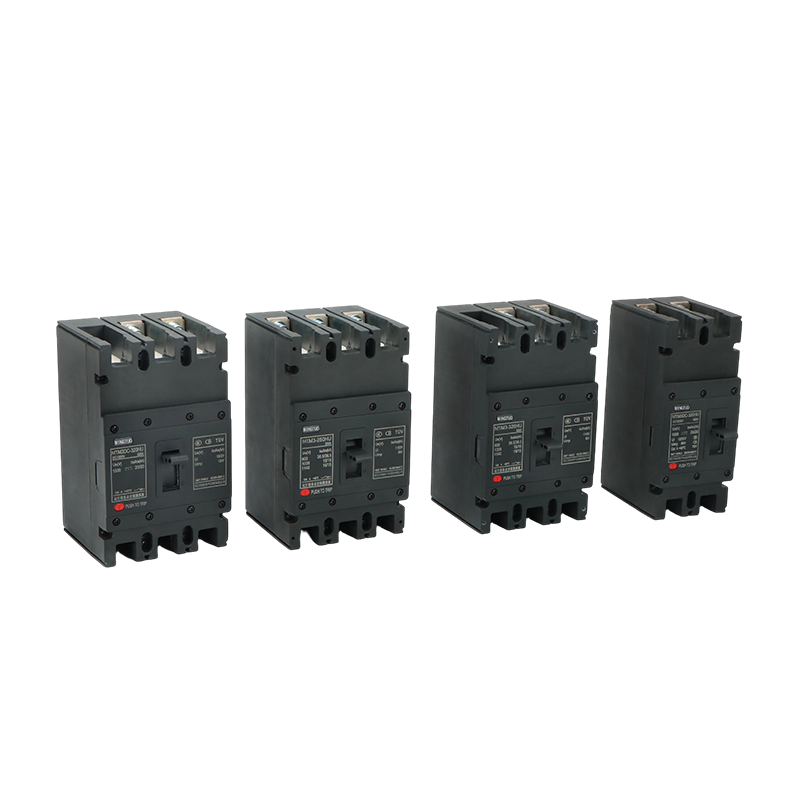 Solar PV DC MCCB Suppliers, DC MCCB in Solar Photovoltaic SystemsMingtuo-DC Molded Case Circuit Breakers Suppliers and Solar PV DC MCCB Factory in China, offer Wholesale PV DC MCCB 1000V 630A Solar Circ...View Product →
A practical selection sequence keeps the process manageable. Work through the load, the curve, the current, the fault level, and the pole count in that order.
If you need a broader look at how MCBs sit in a complete distribution network, our low- and medium-voltage protection guide explains the relationship between MCBs, MCCBs, and other protection devices.
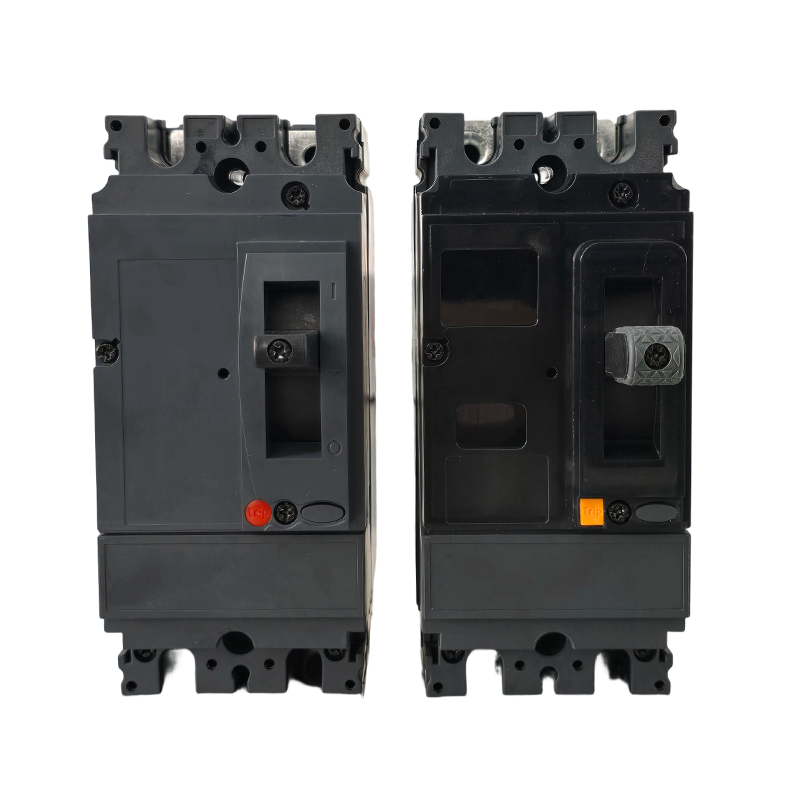
MCBs are compact and cost-effective for final circuits up to about 125 A with fault currents up to 10 kA or slightly higher. Beyond that, molded case circuit breakers (MCCBs) take over. MCCBs offer higher current ratings, adjustable trip settings, and higher breaking capacities, making them suitable for distribution feeders, industrial panels, and main switches in commercial buildings.
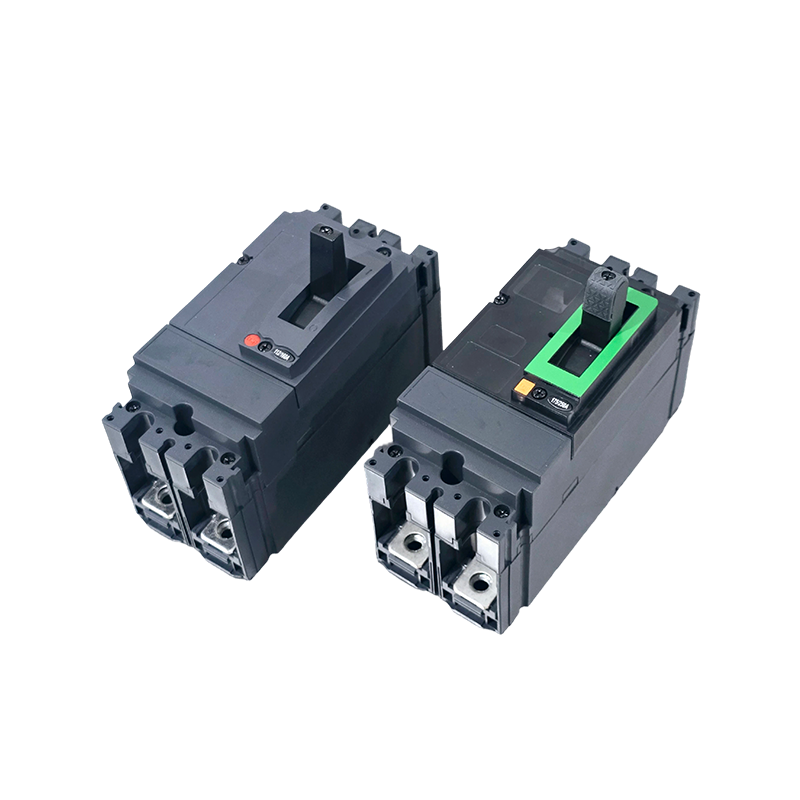
For a low-voltage distribution board that needs 100 A to 1600 A protection, the EZC series molded case circuit breaker is a direct step up from the MCB range. It provides the same overload and short-circuit protection in a larger frame designed for panel mounting.
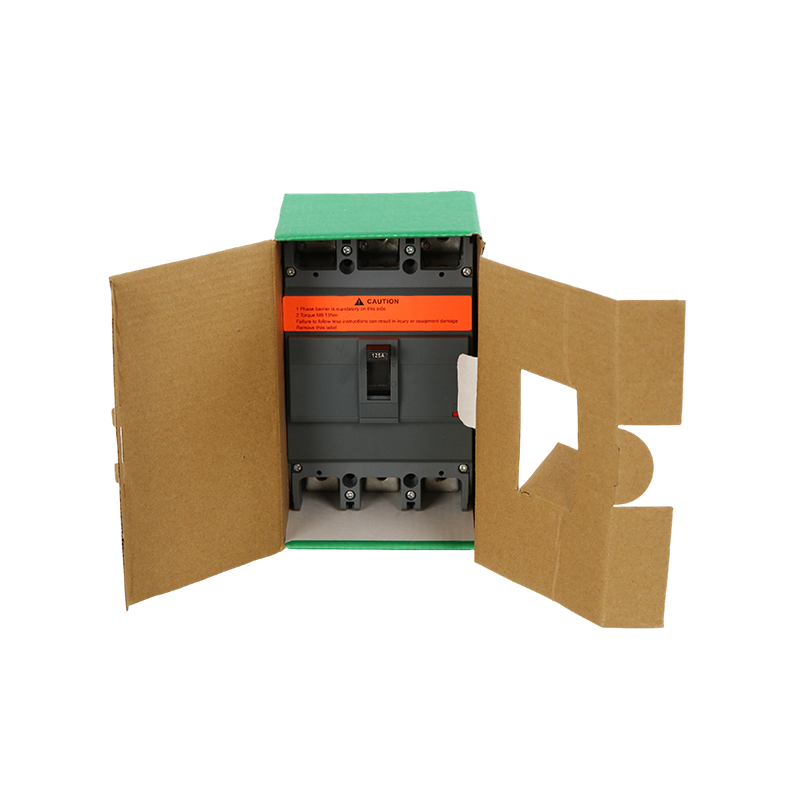 EZC Molded Case Circuit Breaker 100A–1600A for Low-Voltage Power Distribution SuMingtuo, China Wholesale EZC Molded Case Circuit Breaker 100A–1600A for Low-Voltage Power Distribution Suppliers and EZC Molded Case Circ...View Product →
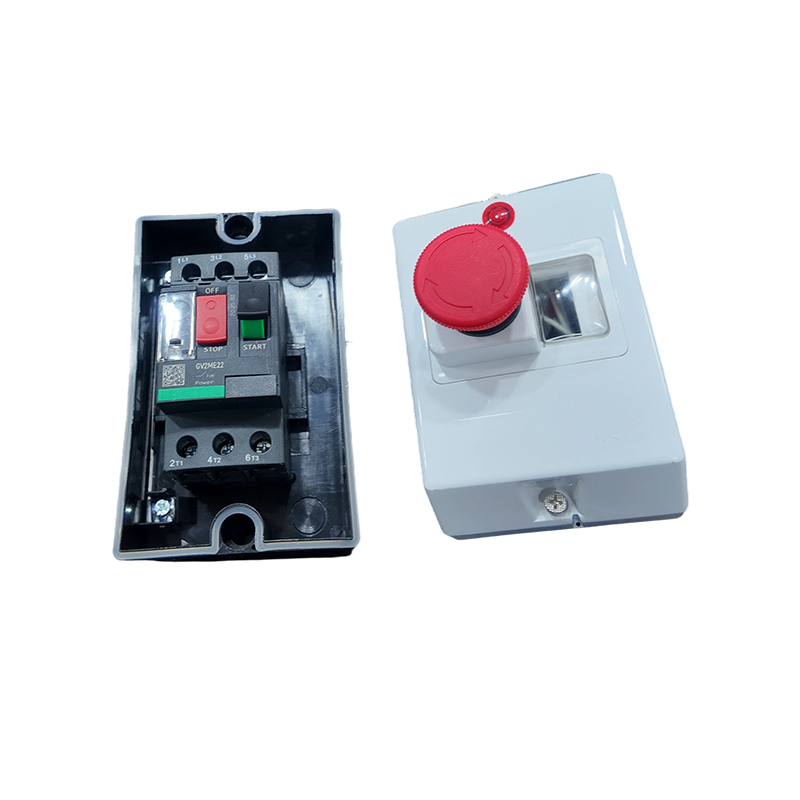
Another specialised case is motor protection. A motor feeder often requires both short-circuit protection and adjustable overload protection. A motor protection MCCB with thermal overload relay combines these functions in one device, which reduces panel space and simplifies wiring compared with separate components.
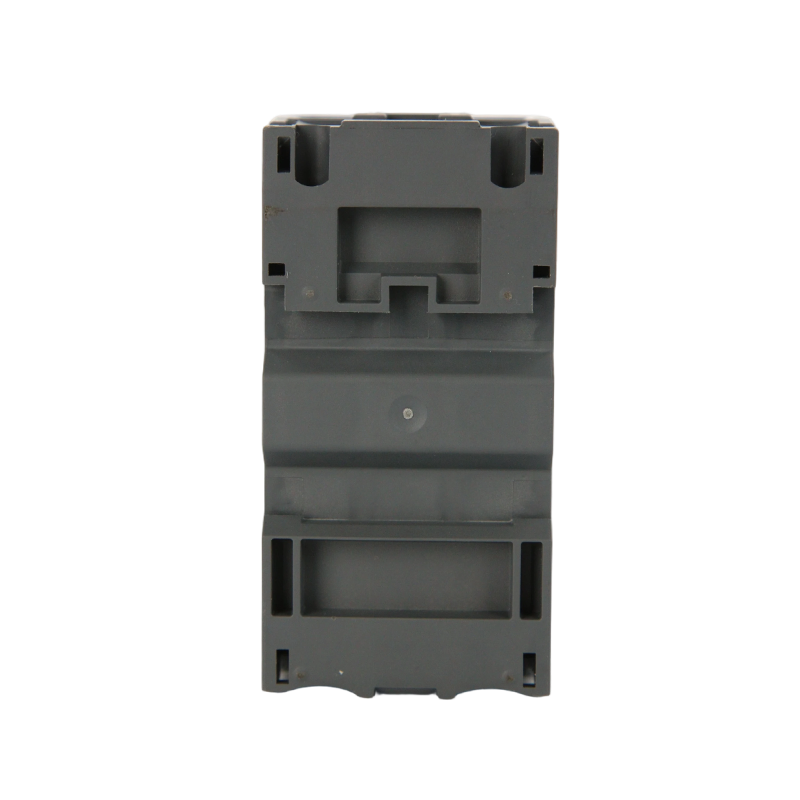 MT-GV2 Motor Protection Combo: MCCB and Thermal Overload Relay for 0.1–32A MotorMingtuo, China Wholesale MT-GV2 Motor Protection Combo: MCCB and Thermal Overload Relay for 0.1–32A Motors Suppliers and MT-GV2 Motor Pro...View Product →
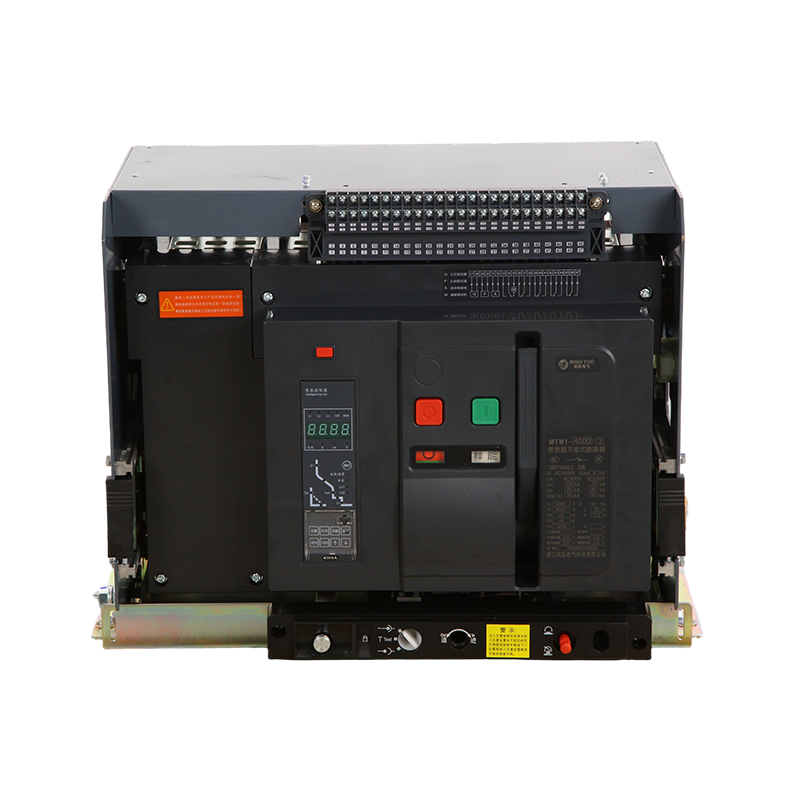
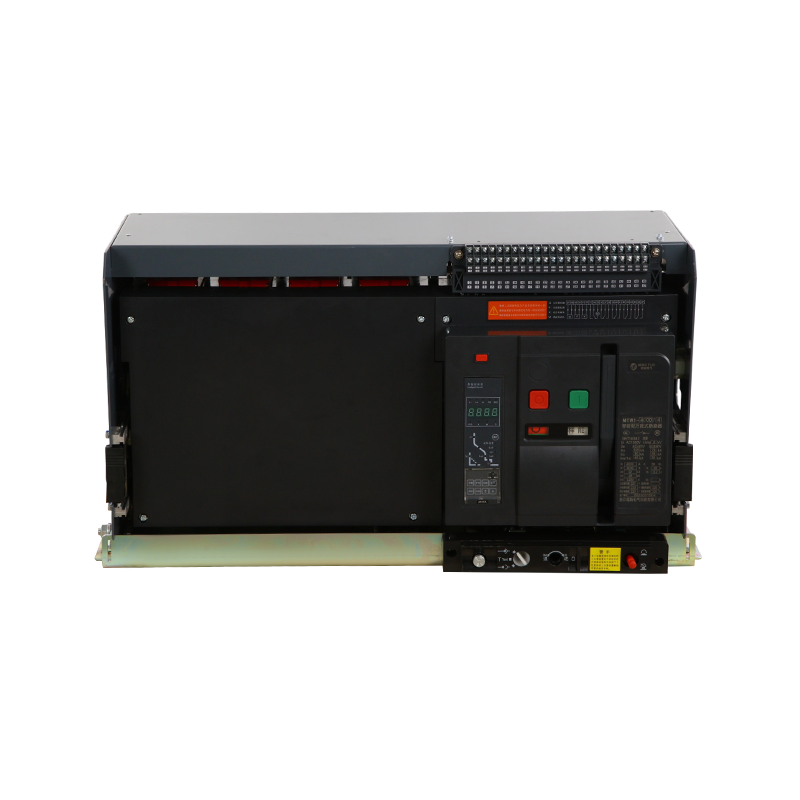
If you are designing or retrofitting a plant, it also helps to understand the role of air circuit breakers, because high-current switchboards above 1600 A typically use ACBs. Our air circuit breaker selection guide covers that territory.
Our engineering team at Mingtuo Electric works with industrial, commercial, and residential distribution projects. You can find more about our manufacturing capabilities on our about page.
The MCB type is not an afterthought. It determines how quickly the breaker clears overloads, whether nuisance trips appear during motor starts, and whether the device can safely interrupt a DC fault. Start by matching the trip curve to the load, then verify the current rating, breaking capacity, and pole count.
When the circuit current or fault level exceeds the MCB range, move to MCCB products. For DC solar and motor protection, use dedicated breakers. With the right type, the breaker becomes a dependable part of the electrical system instead of a recurring headache.
Zhejiang Mingtuo Electrical Technology Co., Ltd. All Rights Reserved.
Electrical Protection Circuit Breakers Medium Voltage Circuit Breakers Manufacturers Low Voltage Circuit Breakers Factory
