 English
 Français
 Español
 عربى
عربىDescription: The MINGTUO ZN85 12kV Outdoor Vacuum Circuit Breaker (VCB) is a high-perform...


Outdoor Vacuum Circuit Breakers Manufacturers
-
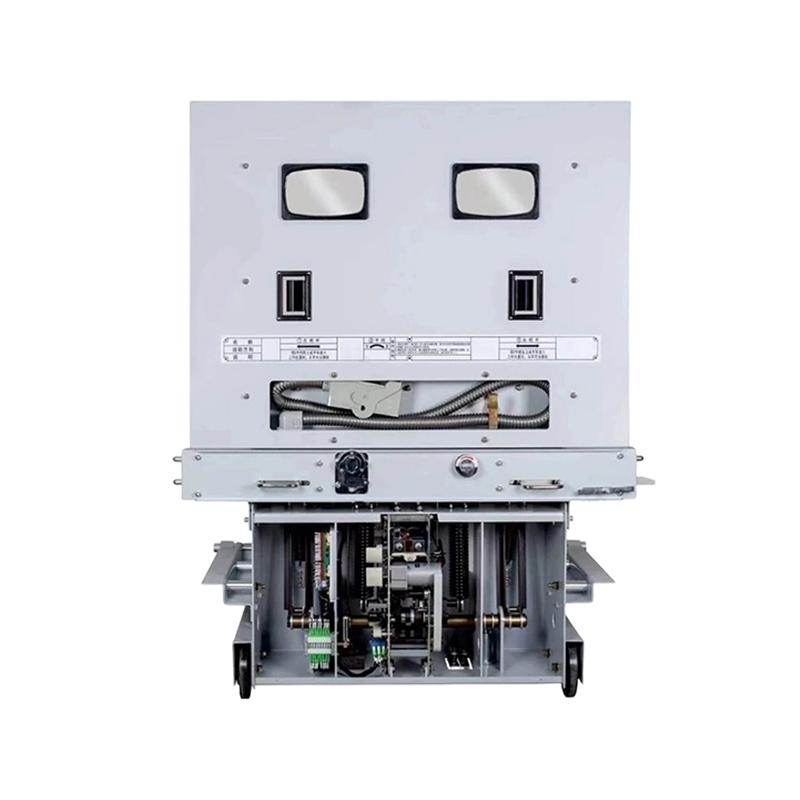 ZN85 12kV Outdoor Vacuum Circuit Breaker, 630A, Pole-Mounted
 -
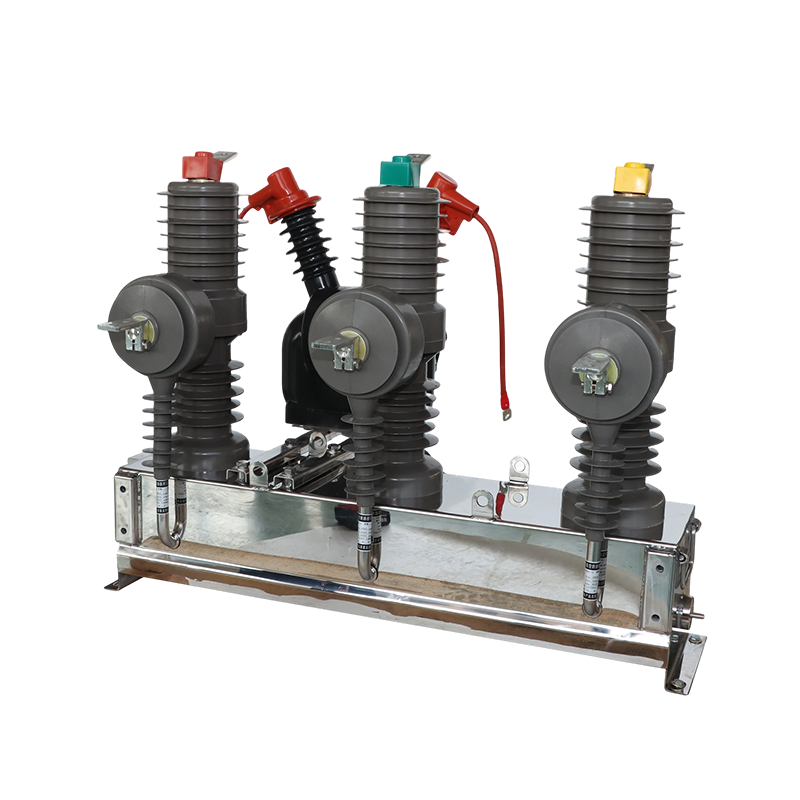 ZW32 Outdoor Vacuum Circuit Breaker for Pole-Mounted Medium Voltage Distribution
Description: ZW32 vacuum circuit breaker is applied outdoors and is generally installed at...
-
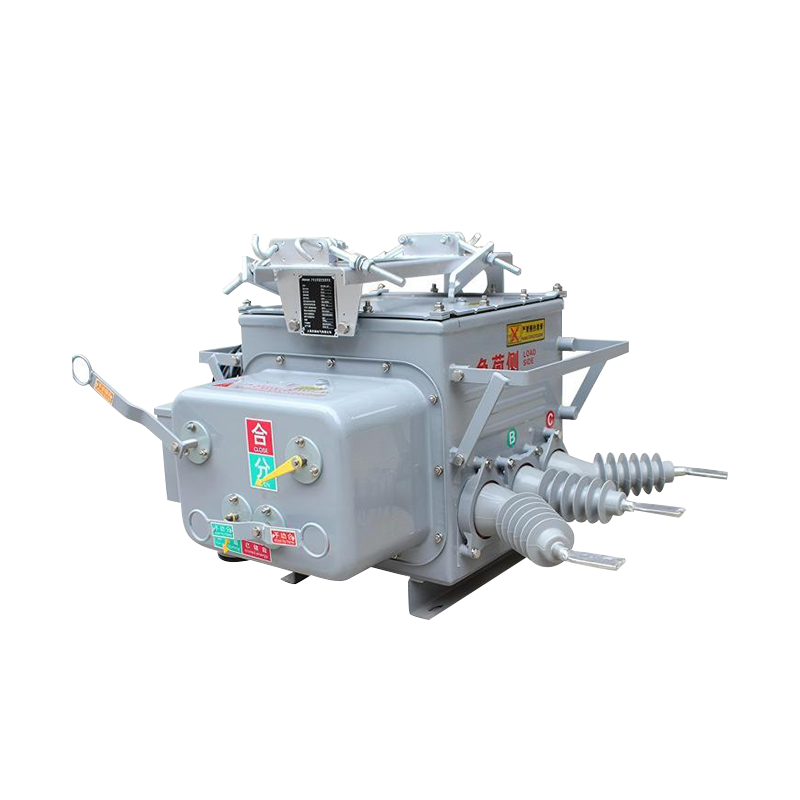 ZW20 Outdoor Vacuum Circuit Breaker for Pole-Mounted Medium Voltage Distribution
Description: This product is a 12kV high-voltage vacuum circuit breaker designed specifica...
-
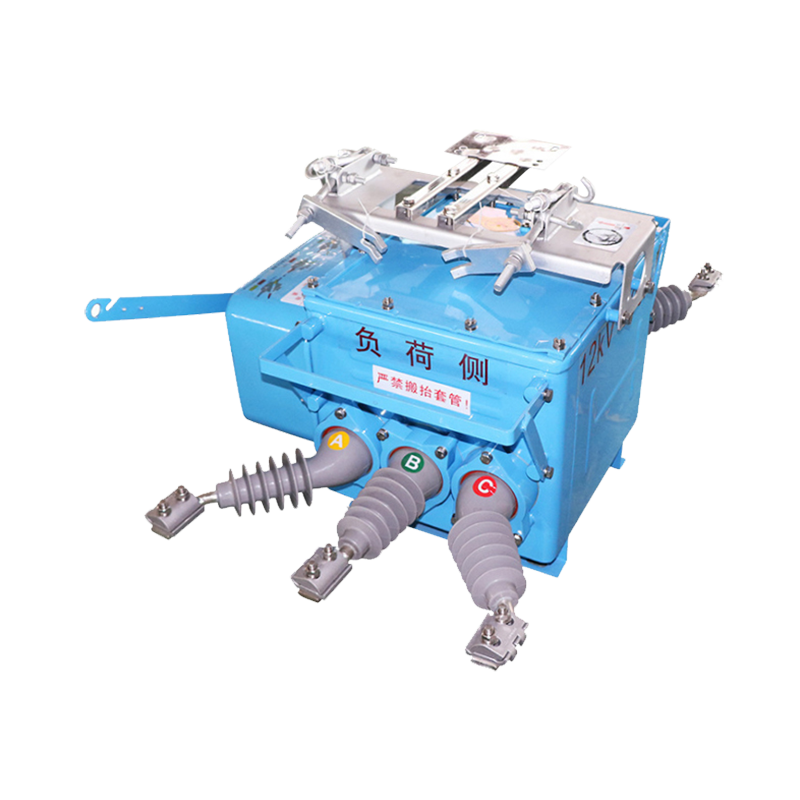 ZW28 Outdoor Vacuum Circuit Breaker for Pole-Mounted Medium Voltage Distribution
Description: ZW28 vacuum circuit breaker is applied outdoors and is generally installed at...
MingTuo Outdoor Vacuum Circuit Breakers are designed for harsh outdoor environments, offering excellent rain, dust, and UV resistance. Featuring vacuum or SF₆ arc extinguishing technology, they deliver stable operation under extreme temperatures and weather conditions. Ideal for substations, line sections, and outdoor distribution networks, these breakers ensure reliable protection and continuous power supply.
Message Feedback
About Us
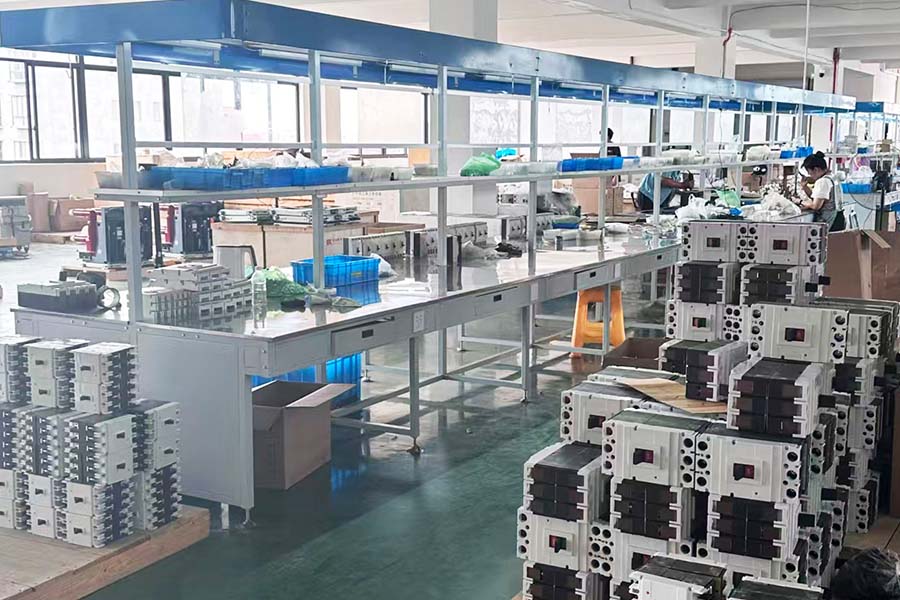
Zhejiang Mingtuo Electrical Technology Co., Ltd.
Zhejiang Mingtuo Electrical Technology Co., Ltd. is a technology-driven enterprise specializing in the research, development, and manufacturing of low-voltage and medium-voltage circuit breakers. Leveraging Liushi's comprehensive electrical industry chain and local advantages, we provide reliable and safe electrical protection products along with customized solutions for global industrial, commercial, and residential power distribution systems.
Outdoor Vacuum Circuit Breakers Manufacturers and Outdoor VCB Circuit Breakers Company in China. Our products are exported to over 30 countries worldwide, including Europe, the Middle East, Southeast Asia, and Africa. Our diverse clientele encompasses power distribution cabinet manufacturers, engineering contractors/EPC firms, electrical distributors and agents, system integrators, and OEM customers. We provide our partners with a comprehensive one-stop service, spanning from technical support, solution alignment, and prototype development to mass production delivery. Custom Outdoor VCB Breakers.
We are committed to becoming a trusted electrical protection partner for global customers through professional engineering capabilities, consistent manufacturing quality, and flexible customization services.
Outdoor Vacuum Circuit Breakers Manufacturers and Outdoor VCB Circuit Breakers Company in China. Our products are exported to over 30 countries worldwide, including Europe, the Middle East, Southeast Asia, and Africa. Our diverse clientele encompasses power distribution cabinet manufacturers, engineering contractors/EPC firms, electrical distributors and agents, system integrators, and OEM customers. We provide our partners with a comprehensive one-stop service, spanning from technical support, solution alignment, and prototype development to mass production delivery. Custom Outdoor VCB Breakers.
We are committed to becoming a trusted electrical protection partner for global customers through professional engineering capabilities, consistent manufacturing quality, and flexible customization services.
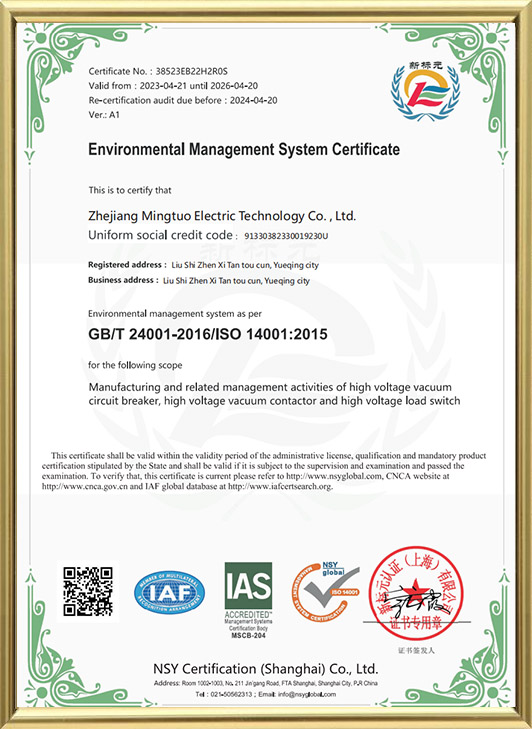
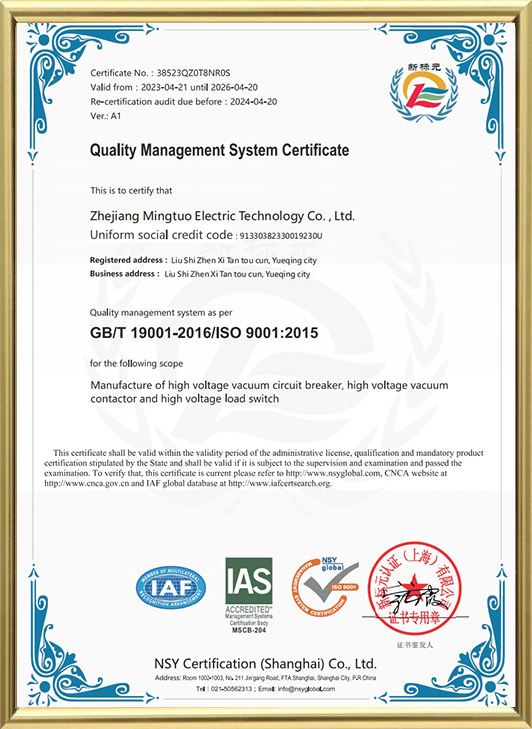
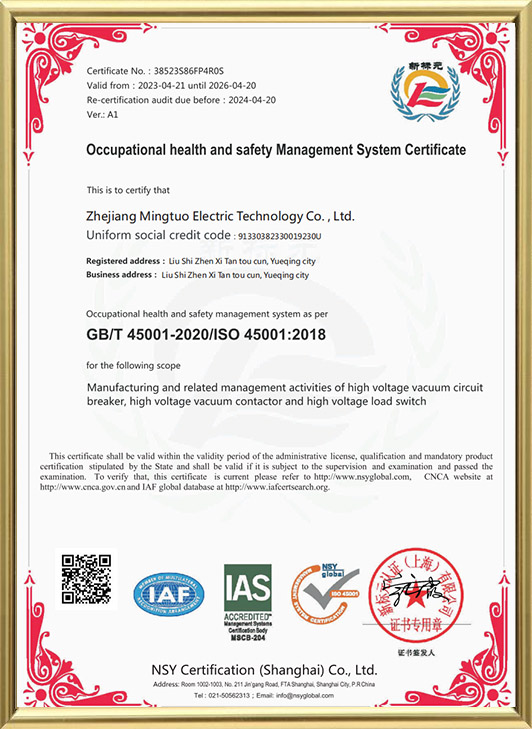
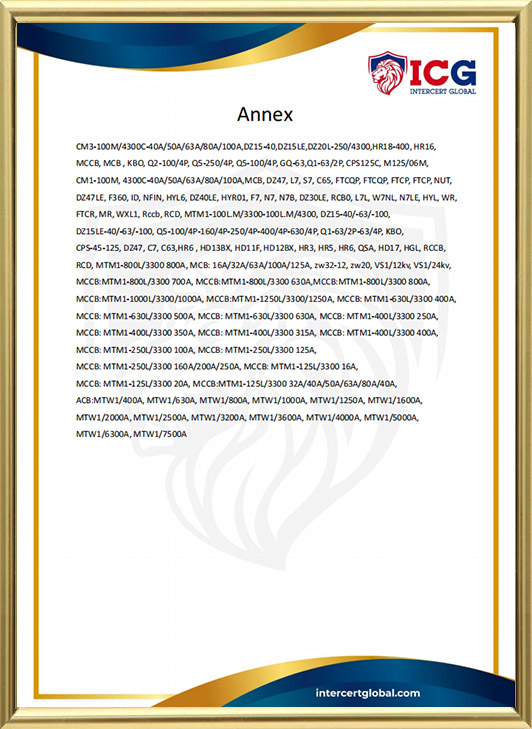
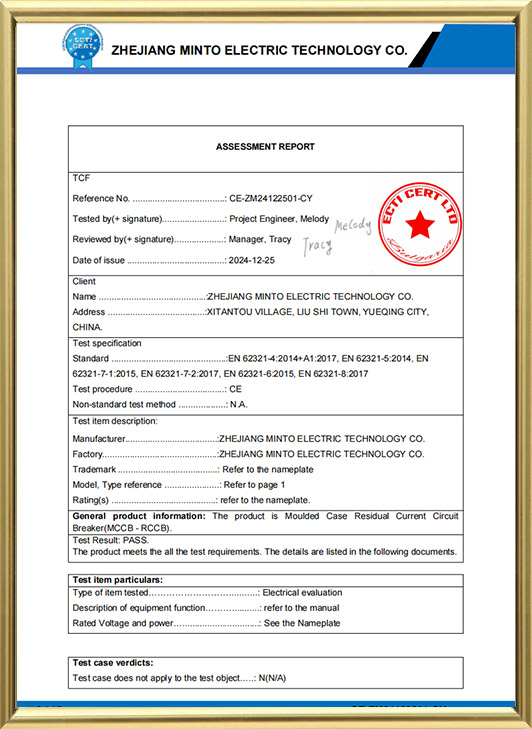
Certificate


News
-
A maintenance crew arrives at an industrial control panel to replace a failed motor contactor. The electrician turns the handle of the disconnect switch to the off position, sees the visible air gap inside, applies a lockout tag, and only then starts working. Thirty meters away, a circuit breaker h...
Read More -
Why Miniature Circuit Breaker Construction Decides Protection Performance Imagine a wiring fault in a final distribution circuit. The prospective short-circuit current can rise to 6 kA or more in under 10 ms, and the miniature circuit breaker (MCB) has only a few milliseconds to interrupt it. Wheth...
Read More -
Why Modular Design Is the Key to Lower VCB Lifecycle Cost A facility engineer responsible for a 12 kV switchgear line sees the same pattern at every inspection cycle. The feeder breaker reaches its service interval, the cubicle is shut down, the interrupter chamber is unbolted, and the operating me...
Read More
Industry knowledge
How Outdoor Vacuum Circuit Breakers Actually Interrupt an Arc
Most buyers know that vacuum circuit breakers extinguish arcs in a near-perfect vacuum, but the mechanics behind that process are worth understanding — they directly explain why the technology outperforms oil or SF₆ alternatives in many outdoor installations.
When the contacts inside the vacuum interrupter begin to separate, a metallic arc forms from vaporized contact material. Because the surrounding pressure is typically below 10⁻³ Pa, there are almost no gas molecules to sustain ionization. The arc plasma expands rapidly, cools, and collapses at the first current zero — usually within half a cycle. This gives vacuum interrupters a dielectric recovery rate roughly 10× faster than air-break designs at the same voltage class.
Key factors that determine interruption quality
- Contact material composition — copper-chromium (CuCr) alloys are the industry standard for balancing conductivity with arc erosion resistance
- Contact gap at full open position — typically 8–12 mm for 12 kV class breakers, sufficient to withstand lightning impulse voltages above 75 kV
- Bellows design — the stainless-steel bellows must accommodate thousands of mechanical operations without vacuum leakage; rated service life is commonly 30,000 mechanical cycles
- Shield geometry — vapor condensation shields protect the ceramic or glass envelope from metallic deposits that would degrade insulation
Understanding these internals matters when comparing interrupter quality across suppliers — a lower-cost unit may use inferior contact alloys or a thinner bellows wall, shortening service life well before the rated cycle count is reached. Our manufacturing process subjects every interrupter to helium leak detection and high-voltage withstand tests before assembly, which is one reason our field return rate stays consistently low.
Outdoor Installation Environments and the Protection Ratings That Matter
Selecting an outdoor vacuum circuit breaker based on voltage class alone is insufficient. The enclosure's ability to resist humidity, pollution, UV radiation, and mechanical impact determines whether the breaker performs reliably through its entire service life. The table below summarizes the IEC-defined pollution degrees and how they map to typical outdoor deployment scenarios.
| Pollution Degree | IEC 60071 Definition | Typical Outdoor Application | Recommended Creepage (mm/kV) |
|---|---|---|---|
| PD2 | Non-conductive pollution, occasional condensation | Suburban substations, light industry | 20 |
| PD3 | Conductive pollution or dry non-conductive pollution | Coastal areas, chemical plants, farmland | 25 |
| PD4 | Persistent conductive pollution with condensation | Offshore platforms, heavy industrial zones, desert with salt fog | 31+ |
Beyond creepage distance, the enclosure IP rating governs ingress protection. IP65 is the practical minimum for outdoor pole-mounted breakers; installations near ocean spray or in high-pressure wash-down environments should specify IP67 or higher. Anti-condensation heaters are a low-cost addition worth specifying for regions with large day-night temperature swings, as moisture tracking on internal surfaces is a leading cause of premature insulation failure.
UV-stabilized polymer housings and hot-dip galvanized or powder-coated steel frames are standard on well-engineered outdoor units. Ask suppliers for salt-spray test reports (IEC 60068-2-52) if the installation is within 5 km of a coastline.
Operating Mechanism Types and Their Maintenance Implications
The operating mechanism is the component most likely to require attention over the breaker's service life, yet it receives less scrutiny than the interrupter during procurement. Outdoor vacuum circuit breakers use one of three principal mechanism types, each with distinct trade-offs.
Spring-charged mechanism
The dominant design for distribution-class outdoor breakers. A pre-charged closing spring releases energy to close the contacts; a separate opening spring handles tripping. Closing and opening operations are independent of the supply voltage once the spring is charged, which is a significant reliability advantage. Maintenance intervals typically center on spring fatigue inspection every 2,000–5,000 operations and lubrication of cam and latch surfaces.
Permanent magnet mechanism (PMM)
PMMs use a permanent magnet to hold contacts in both open and closed positions, with brief coil pulses to switch states. They have far fewer moving parts than spring mechanisms — no latches, cams, or charging motors — which translates to rated mechanical lives exceeding 100,000 operations in some designs. The trade-off is sensitivity to auxiliary supply quality; a degraded capacitor bank can result in insufficient switching energy. Capacitor health monitoring is therefore a recommended addition for remote or unattended installations.
Hydraulic or pneumatic mechanism
Less common in the medium-voltage outdoor segment today, primarily used in transmission-class equipment. Higher maintenance burden due to seals, fluid degradation, and temperature sensitivity makes this a poor fit for most distribution applications.
When evaluating mechanism reliability, request the supplier's data on minimum trip voltage (typically ≤ 70% of rated control voltage) and confirm that auxiliary contacts provide clear open/closed position feedback for SCADA integration. Our R&D team has standardized on a spring mechanism with an anti-pump circuit and motor-charged redundancy, specifically to meet the reliability expectations of industrial and utility customers who operate with minimal on-site maintenance staff.
Protection Coordination: Where Outdoor VCBs Fit in the Selectivity Chain
An outdoor vacuum circuit breaker does not operate in isolation — its tripping characteristics must coordinate with upstream and downstream protective devices to achieve selective fault clearance: isolating only the faulted segment while keeping the rest of the network energized. Poor coordination is one of the most common causes of unnecessary outages in medium-voltage distribution systems.
Time-current coordination basics
Coordination relies on time-current curves (TCCs). The breaker closest to the fault should clear it before any upstream device operates. Typical grading margins between series devices are:
- 0.2–0.4 s between an electromechanical relay-controlled breaker and an upstream recloser
- 0.1–0.2 s between digital (numerical) relay-controlled breakers where relay operating time is well-characterized
Vacuum circuit breakers with numerical protection relays (IEC 61850-compatible units are increasingly standard) offer definite-time and inverse-time overcurrent elements, earth fault protection, and auto-reclose sequences — all configurable without hardware changes. This flexibility is essential when network topology changes seasonally or following load growth.
Reclosing and transient fault management
Overhead distribution lines experience a high proportion of transient faults — tree contact, bird strikes, lightning — that self-clear if the arc is briefly de-energized. Auto-reclose functionality built into the breaker's relay allows the breaker to open, pause (dead time typically 0.3–1 s for the first shot), and reclose. If the fault has cleared, supply is restored automatically. If it persists, the breaker locks out after a configurable number of attempts (commonly 3 shots).
Specifying a outdoor vacuum circuit breaker with a rated short-circuit making capacity (Ima) and breaking capacity (Isc) matched to the actual available fault current at the installation point — not simply the highest rated unit available — prevents unnecessary over-engineering while ensuring the device can handle worst-case conditions. Always verify the X/R ratio of the system: high X/R networks (common near large transformers) impose asymmetric fault currents that standard symmetrical ratings do not fully capture.
We work directly with project engineers and EPC contractors to provide application-specific TCC overlays and relay setting recommendations — part of the customized solution support that differentiates a technical partner from a simple product vendor.
Zhejiang Mingtuo Electrical Technology Co., Ltd. All Rights Reserved.
OEM/ODM Outdoor Vacuum Circuit Breakers Manufacturers Outdoor VCB Circuit Breakers Company
