 English
 Français
 Español
 عربى
عربىDrawer Type Air Circuit Breakers Company
Home / Products / Air Circuit Breakers / MingTuo Air Circuit Breakers(ACB) / Drawer Type Air Circuit Breakers


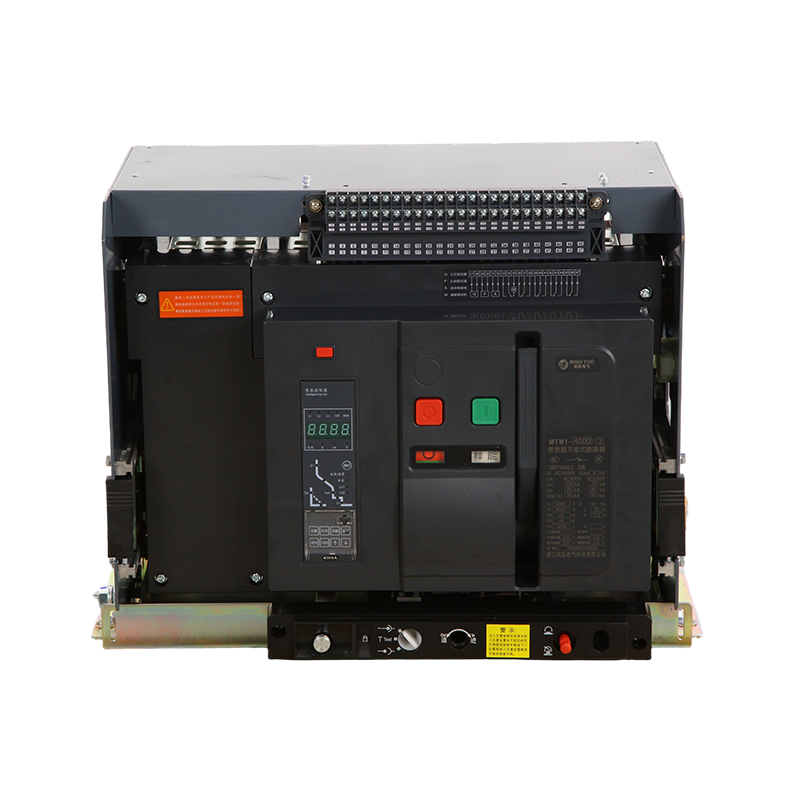
Description: Product Overview The MT Series Draw-Out Air Circuit Breaker is designed for l...
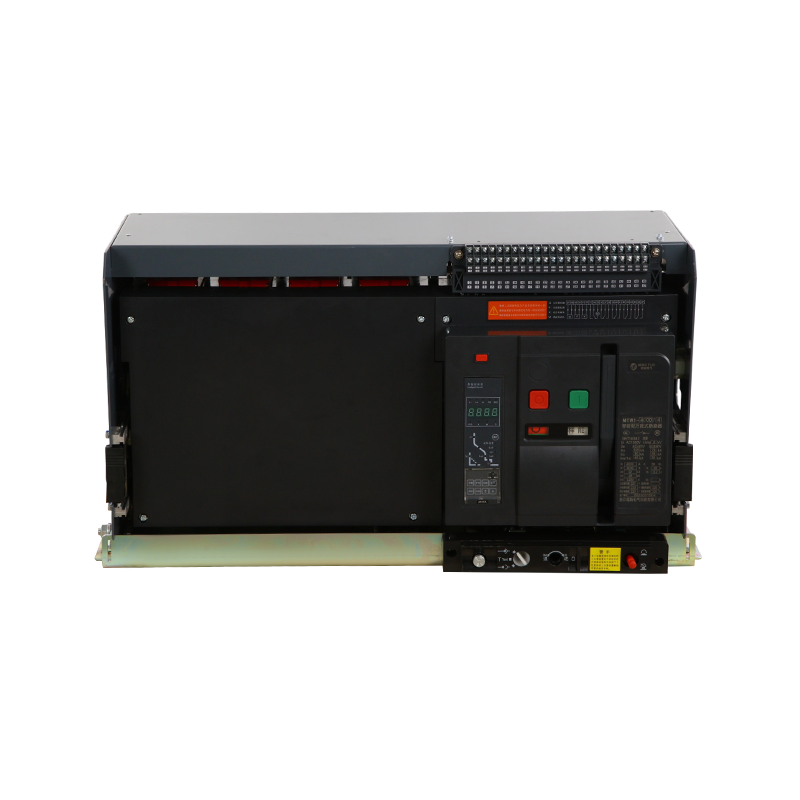
Description: Product Overview The MT Series Draw-Out Air Circuit Breaker is designed for l...
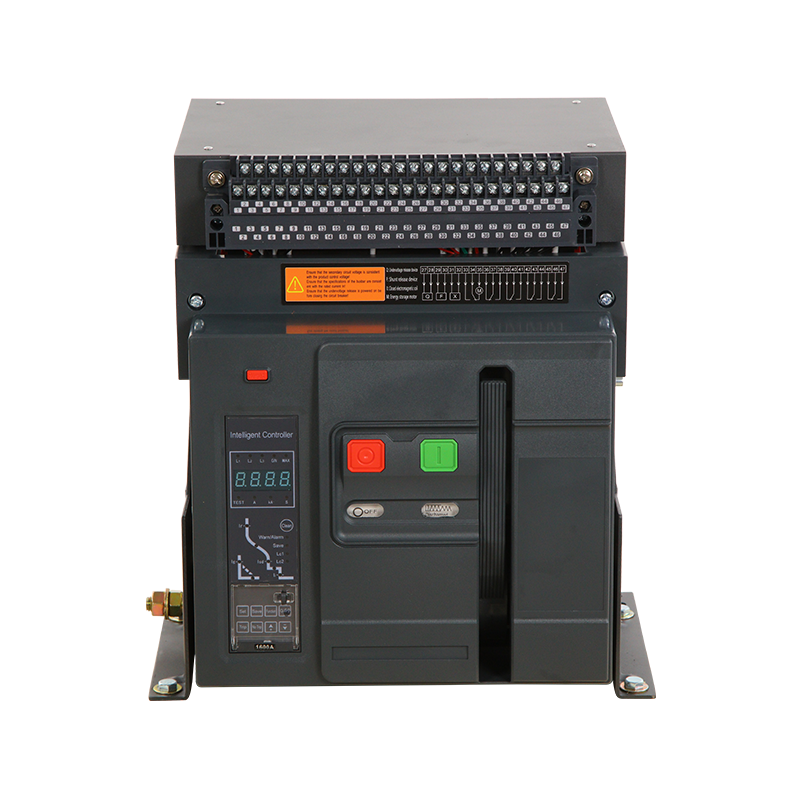
Description: Product Overview The MT Series fixed-type Air Circuit Breaker (ACB) is develo...
Drawer Type Air Circuit Breakers are designed with a withdrawable structure that allows the breaker to be easily inserted, removed, or isolated from the system without disconnecting the main wiring. This design simplifies installation, inspection, and maintenance while improving operational safety. They are commonly used in low-voltage power distribution systems where frequent maintenance, system flexibility, and reduced downtime are required.
Picture a rooftop photovoltaic array feeding a battery storage system. A faulty connection inside a combiner box starts to overheat, and the direct current keeps flowing with no safe way to stop it. A DC miniature circuit breaker (DC MCB) is the component that interrupts that current automatically,...
Read MoreWhen a maintenance engineer opens a distribution panel and sees an MCCB with terminals marked 1, 3, 5 and 2, 4, 6, the molded case circuit breaker diagram is what makes the wiring safe to understand. In short, an MCCB diagram tells you where the incoming and outgoing connections go, which internal ...
Read MoreInside a 1000 V photovoltaic combiner box, the fault current never passes through the natural zero that alternating current reaches every half cycle. An AC breaker clears most faults because the current collapses periodically; a DC breaker receives no such assistance. That is why a DC molded case c...
Read MoreThe defining feature of drawer type air circuit breakers is their three-position withdrawable mechanism: connected, test, and disconnected (isolated). Understanding what happens at each position helps engineers plan maintenance windows and assess operational risk more accurately.
A key safety detail: the breaker must be in the open (tripped) state before the draw-out mechanism will allow movement between positions. Mechanical interlocks enforce this, preventing accidental withdrawal under live load — a design discipline we build into every unit we manufacture.
The decision between drawer type and fixed-mounted air circuit breakers is not purely technical — it involves lifecycle cost, application criticality, and maintenance strategy. The table below outlines the practical trade-offs:
| Factor | Drawer Type (Withdrawable) | Fixed Mounted |
|---|---|---|
| Replacement time | Minutes (hot-swap cradle) | Hours (rewiring required) |
| In-panel testing | Yes — via test position | No — full de-energization needed |
| Initial cost | Higher | Lower |
| Interchangeability | High (same frame size = compatible) | Low |
| Ideal application | Main incomer, bus coupler, critical feeders | Non-critical branch circuits |
| Maintenance access | External, no bus exposure | Requires panel opening |
For facilities where uptime is a contractual or safety obligation — data centers, hospitals, continuous manufacturing lines — the draw-out design's ability to swap a faulty unit in minutes without rewiring justifies the cost premium over the full equipment lifecycle.
Modern drawer type air circuit breakers are typically supplied with either an electronic (microprocessor-based) trip unit or an older thermal-magnetic type. Electronic trip units dominate current industrial installations for good reason, but the range of protection functions listed in datasheets can be confusing. Here's what the common designations mean operationally:
When specifying a breaker for a main distribution board, LSIG coverage is generally the baseline for sites that require full coordination studies. Our engineering team is available to assist customers in mapping protection functions to their specific network topology — this is part of the customized solution support we provide.
The withdrawable design of drawer type air circuit breakers simplifies maintenance access, but a common mistake is equating "easy to remove" with "low maintenance frequency." Mechanical and electrical degradation still follows predictable patterns tied to operating environment and switching cycles.
A practical advantage of the drawer configuration is that a spare breaker of the same frame size can be kept on the shelf and swapped in within minutes while the pulled unit undergoes bench testing — a strategy that eliminates the need to schedule extended shutdowns for routine maintenance. Our consistent manufacturing tolerances ensure that replacement units from the same series are dimensionally and electrically interchangeable, supporting exactly this kind of spare-unit strategy.
Zhejiang Mingtuo Electrical Technology Co., Ltd. All Rights Reserved.
Drawer Type Air Circuit Breakers Suppliers Custom Drawer Type Air Circuit Breakers Company
