 English
 Français
 Español
 عربى
عربىIndustry News
Home / News / Industry News / Modular VCB Design Benefits: Maintenance, Flexibility, and Cost Efficiency


Content
A facility engineer responsible for a 12 kV switchgear line sees the same pattern at every inspection cycle. The feeder breaker reaches its service interval, the cubicle is shut down, the interrupter chamber is unbolted, and the operating mechanism is stripped down for lubrication and contact wear measurement. The job consumes a full day, and the team has to re-run every functional test before the feeder is returned to service. That routine is normal with conventional monolithic breaker construction, and it is precisely the problem that modular vacuum circuit breaker design was created to solve.
The conclusion is straightforward: modular construction turns a vacuum circuit breaker into a set of replaceable, independently serviceable units. The benefits that follow — shorter maintenance windows, lower spare-part cost, easier rating upgrades, and simpler engineering for switchgear builders — become visible almost immediately after installation. For anyone specifying new 12 kV switchgear, modularity is not a cosmetic feature; it is the main lever on long-term ownership cost.
Modular architecture in a vacuum circuit breaker is not a single feature but a design philosophy applied across the whole product. The vacuum interrupter chamber is built as a sealed, self-contained assembly that can be exchanged without disturbing the operating mechanism. Because the interrupter does not share adjustment points with the mechanism, replacing it does not force full re-commissioning of the breaker.
The operating mechanism, typically a spring-charged unit or a magnetic actuator, is a separate module with standardized mounting interfaces. In a properly designed modular unit, the mechanism can be removed and bench-tested while the breaker body stays in the cubicle. The low-voltage compartment is equally isolated: auxiliary contacts, trip units, position switches, and communication modules sit behind a dedicated panel, so a protection upgrade never requires access to the high-voltage section.
The most visible expression of modularity is the draw-out chassis. The breaker body rides on a wheeled frame with guided rails, allowing the unit to be racked from the connected position to an isolated or test position, or removed from the cubicle altogether. That single mechanical feature changes the service workflow from repair-in-place to dock-and-swap.
Downtime is where modular design earns its keep. With a fixed-mount breaker, an internal check means de-energizing the panel, removing covers, disconnecting primary conductors, and working inside a confined high-voltage compartment. A draw-out VCB changes that equation: the operator racks the unit out, places it on a service cart, and inspects it in safe, well-lit conditions while the busbar remains energized.
If the interrupter shows contact wear beyond tolerance, only the sealed chamber is replaced. If the mechanism fails, it is exchanged as a module; the rest of the breaker does not move. For operators maintaining several feeders, keeping one spare interrupter and one spare mechanism on the shelf covers an entire switchgear room instead of forcing a stock of complete breakers.
Racking out a breaker creates a visible isolation point, and technicians no longer need to reach into live compartments for routine checks. Utilities and industrial plants increasingly list this as a standard safety requirement for incoming and tie feeders. For feeder and transformer protection, the VS1 12 kV drawer-type vacuum circuit breaker is a common choice among panel builders who value rapid service access.
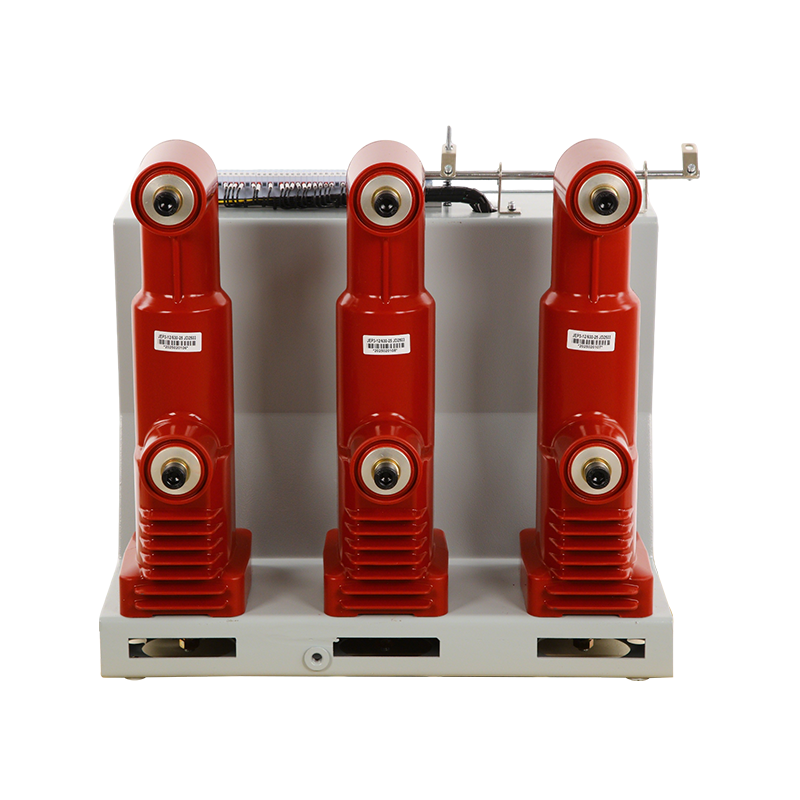 VS1 12kV Medium-Voltage Indoor Drawout Vacuum Circuit Breaker, 31.5kA Suppliers,Mingtuo, China Wholesale VS1 12kV Medium-Voltage Indoor Drawout Vacuum Circuit Breaker, 31.5kA Suppliers and VS1 12kV Medium-Voltage Indo...View Product →
Modular construction also keeps future options open. When connected load grows, a modular interrupter can be replaced with a higher-rated unit, provided the cubicle and busbar system were designed with that margin. Control modules can be swapped to add protection functions, communication interfaces, or remote monitoring without touching the primary circuit.
The same mechanism family adapts to different installation formats, which helps project teams standardize on one supplier. For new or retrofit indoor work, the MTHVX 12 kV indoor vacuum circuit breaker covers 630 A and 1250 A ratings in a compact housing, keeping panel dimensions uniform across a project even when feeder loads differ. When a project includes both indoor and outdoor sections, reviewing the complete range of indoor and outdoor vacuum circuit breakers from our product catalog helps an electrical designer compare form factors and ratings side by side before committing to a switchgear layout.
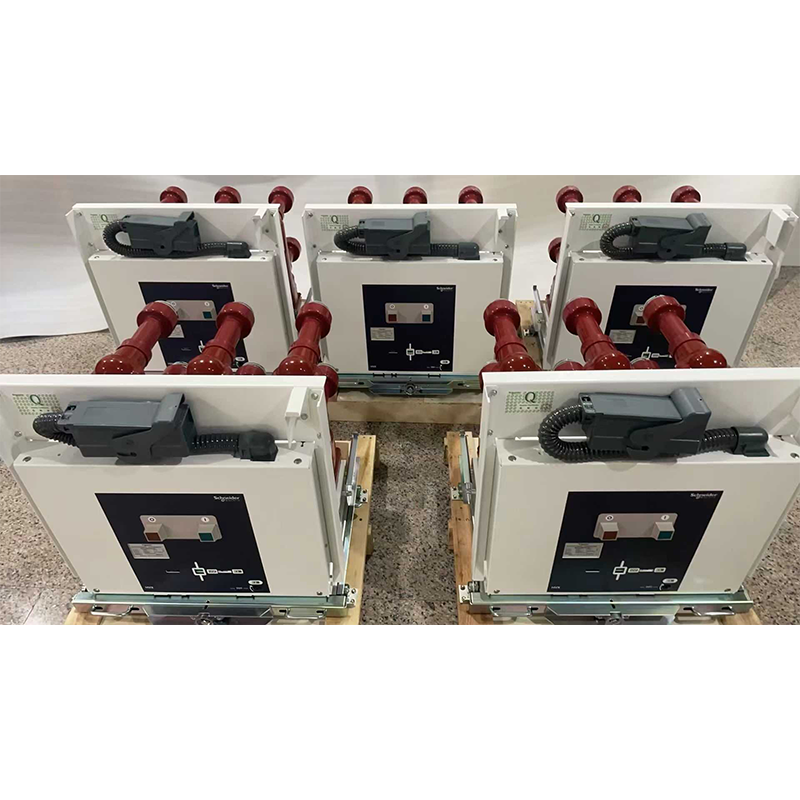 MTHVX 12kV Medium-Voltage Indoor Vacuum Circuit Breaker, 630A–1250A Suppliers, FMingtuo, China Wholesale MTHVX 12kV Medium-Voltage Indoor Vacuum Circuit Breaker, 630A–1250A Suppliers and MTHVX 12kV Medium-Voltage Indo...View Product →
Modular breakers are typically more compact than their fixed-mount counterparts because each module is optimized for its own function. The vacuum interrupter is inherently small, which keeps the overall breaker light, and the draw-out guide frame standardizes panel widths and depths. A switchgear lineup can therefore be built with identical cubicles regardless of the interrupting rating installed, which simplifies busbar layout, cable termination, and relay arrangement.
Space savings translate directly into building cost. A shorter, shallower breaker permits a smaller switchgear room, shorter cable runs, and simpler ventilation. In retrofit projects, where the existing footprint is fixed, modular units often fit into an old panel envelope without structural modification — a significant advantage when replacing oil or older air-break equipment in existing buildings.
Fixed-mount breakers still have valid roles in low-budget radial feeders and installations with tight dimensional limits. For most 12 kV distribution duties, however, the modular format pays back its price premium through faster service and easier planning.
| Consideration | Modular draw-out VCB | Fixed-mount VCB |
|---|---|---|
| Service access | Rack out and inspect on a service cart | Open the panel and work in place |
| Isolation before service | Visible isolation created by racking out | Requires upstream feeder isolation |
| Component replacement | Interrupter and mechanism replaced as separate modules | Usually involves the complete breaker |
| Spare-parts strategy | Module-level stock covers several feeders | Complete breaker or large subassembly |
| Panel standardization | Uniform cubicle envelopes across ratings | Feeder-specific layouts |
| Typical role | Incoming, tie, and critical feeders | Simple radial feeders |
Before integrating a modular VCB into a project, work through the following points so that the design benefits survive contact with real operating conditions.
Confirm that both the interrupter and the draw-out cradle are rated for the system voltage, typically 12 kV, and for the feeder current. Match the symmetrical breaking capacity, for example 25 kA or 31.5 kA, to the calculated fault level at the installation point. Spring mechanisms are the established default, while magnetic actuators reduce moving parts but change service routines, so factor in the familiarity of the maintenance team.
Ask exactly which components are independently replaceable — interrupter, mechanism, control module, auxiliary compartment — and how long a replacement is designed to take. Require type test reports and routine test records for the exact configuration, including the draw-out cradle and auxiliary scheme. A fixed-form modular unit covers most of these points without the cradle. The VD4 12 kV indoor vacuum circuit breaker, for example, combines a compact envelope with an interchangeable interrupter and a separate mechanism module for projects where racking-out is not required but serviceability still matters. Engineers who want to compare working principles and type variants in more depth will find a practical selection guide for vacuum circuit breakers useful before finalizing a specification.
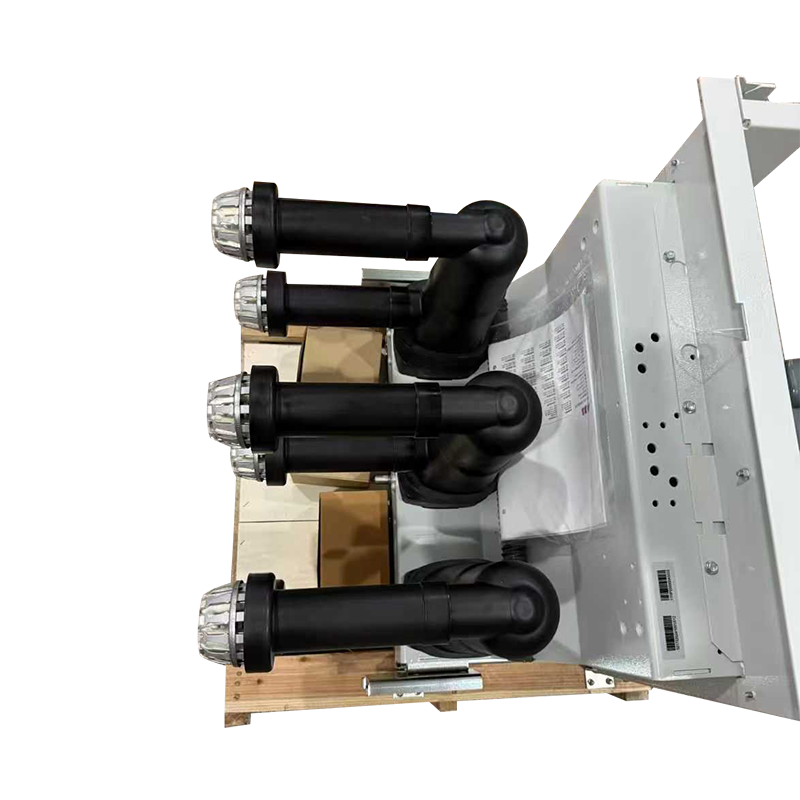 VD4 12kV Medium-Voltage Indoor Vacuum Circuit Breaker, 630A–1250A Suppliers, FacMingtuo, China Wholesale VD4 12kV Medium-Voltage Indoor Vacuum Circuit Breaker, 630A–1250A Suppliers and VD4 12kV Medium-Voltage Indoor V...View Product →
Modular design delivers benefits only when every module is manufactured to tight tolerances. Inconsistent contact force, misaligned guide rails, or variation in replacement parts will destroy the dock-and-swap advantage within a few years. This is where supplier capability makes or breaks a purchasing decision.
Zhejiang Mingtuo Electrical Technology Co., Ltd. builds low- and medium-voltage breakers in its Liushi facility with a complete manufacturing chain from component processing to final assembly. The factory operates under a 7S management system and emphasizes high pass rates and low return rates — practical conditions that make interchangeable modules genuinely interchangeable. When evaluating a supplier, ask how interchangeable components are controlled during production, which routine tests are performed on every breaker, and how spare modules are packaged and documented for long-term storage. The answers predict whether the modular advantages described above will materialize over a service life that can exceed two decades.
If you have a specific switchgear project in mind, discuss your application with our engineering team to confirm ratings, mounting configuration, and delivery time.
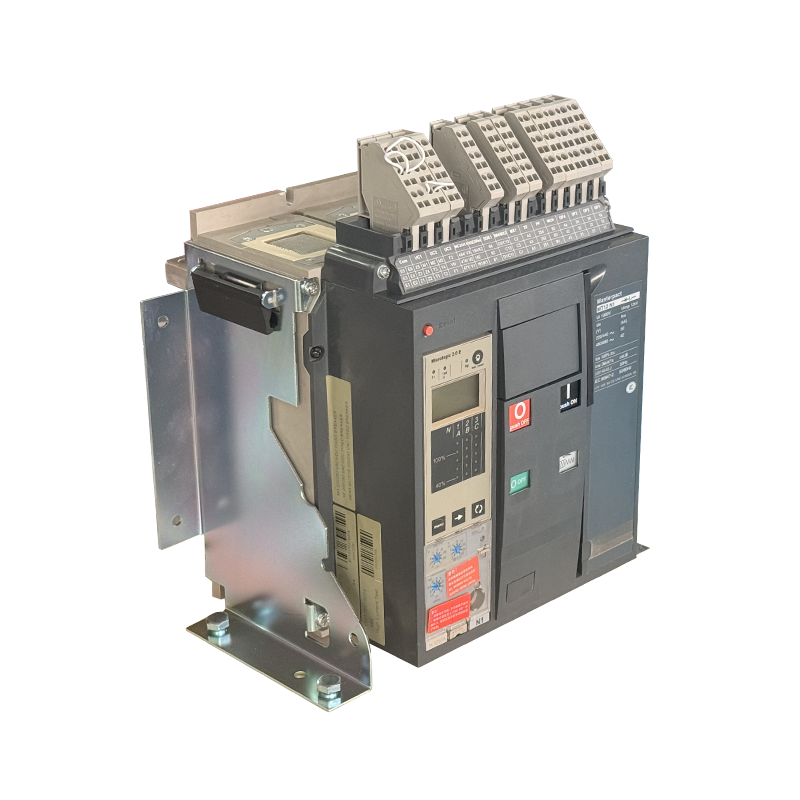
Zhejiang Mingtuo Electrical Technology Co., Ltd. All Rights Reserved.
Electrical Protection Circuit Breakers Medium Voltage Circuit Breakers Manufacturers Low Voltage Circuit Breakers Factory
