 English
 Français
 Español
 عربى
عربى

Vacuum Circuit Breakers: How They Work, Types & Selection Guide
Content
- 1 What Is a Vacuum Circuit Breaker?
- 2 How Vacuum Circuit Breakers Work
- 3 Key Components of a Vacuum Circuit Breaker
- 4 Types of Vacuum Circuit Breakers
- 5 Vacuum vs. SF₆ vs. Air Circuit Breakers: A Practical Comparison
- 6 Key Technical Ratings to Understand Before Buying
- 7 Common Applications of Vacuum Circuit Breakers
- 8 Advantages and Limitations of Vacuum Circuit Breakers
- 9 Maintenance Best Practices for Vacuum Circuit Breakers
- 10 How to Select the Right Vacuum Circuit Breaker
- 11 Market Trends and Future Developments
What Is a Vacuum Circuit Breaker?
A vacuum circuit breaker (VCB) is a switching device that interrupts electrical current by extinguishing the arc inside a sealed vacuum interrupter, where the dielectric strength of vacuum (~10⁻⁶ torr) makes it nearly impossible for an arc to sustain. This makes VCBs the dominant choice for medium-voltage applications ranging from 3 kV to 38 kV, covering the vast majority of industrial substations, utility distribution networks, and large commercial facilities worldwide.
In plain terms: when the contacts separate inside the vacuum bottle, any arc formed is extinguished almost instantly — typically within the first current zero crossing — because there are no gas molecules to sustain ionization. The result is fast, reliable, and low-maintenance fault interruption.
How Vacuum Circuit Breakers Work
Understanding the operating principle helps engineers select and maintain VCBs correctly. The process unfolds in three stages:
Contact Separation and Arc Initiation
When the breaker trips, the moving contact withdraws from the fixed contact. A metallic vapor arc forms between the contact surfaces, sustained by the ionized metal vapor emitted from the contacts themselves. Because there is no surrounding gas, the arc is composed entirely of this metal vapor.
Arc Extinction at Current Zero
At the natural current zero of the AC cycle — occurring every 10 ms on a 50 Hz system — the metallic vapor rapidly condenses back onto the contact surfaces. With no gas medium to sustain the arc, dielectric recovery is extremely fast, typically completing within microseconds. This gives vacuum interrupters a decisive interrupting advantage over air or oil breakers.
Dielectric Recovery and Contact Gap
After current zero, the gap between contacts must withstand the recovery voltage. VCBs achieve this with a contact travel of only 10–20 mm, compared to hundreds of millimeters required by air-blast or SF₆ breakers at the same voltage class. This compact design directly contributes to the smaller footprint and simpler mechanism of VCBs.
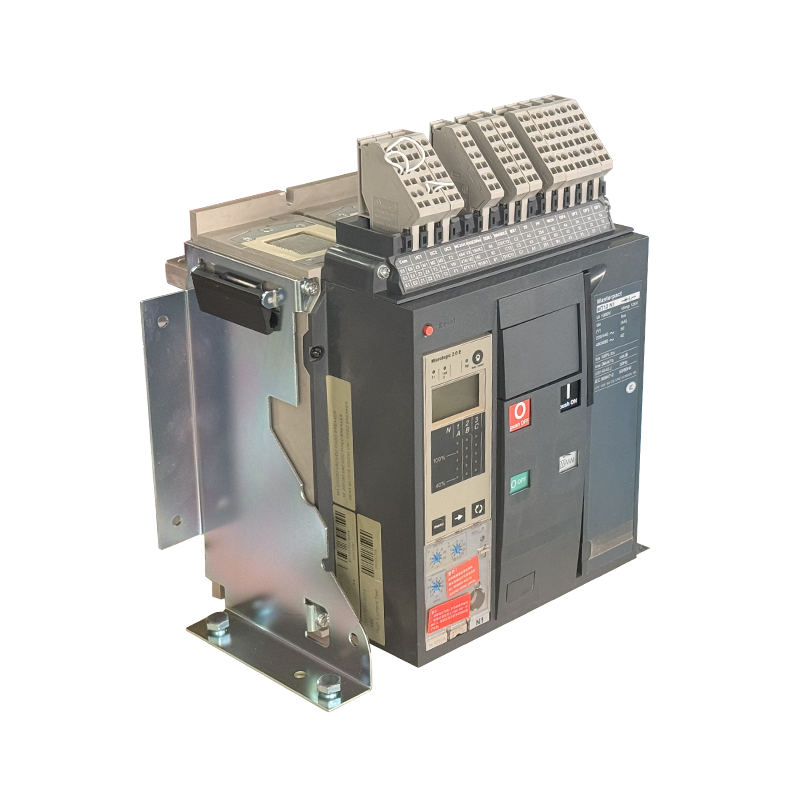
Key Components of a Vacuum Circuit Breaker
- Vacuum Interrupter (VI): The sealed bottle containing the contacts. Its integrity is critical — a loss of vacuum reduces interrupting capability dramatically and requires immediate replacement.
- Operating Mechanism: Usually a spring-charged mechanism (stored energy type) that ensures fast, consistent contact opening speeds of approximately 1–2 m/s regardless of operator action.
- Contact Material: Copper-chromium (CuCr) alloy is the industry standard, offering high dielectric strength, low contact resistance, and excellent arc erosion resistance.
- Bellows Assembly: Flexible metallic bellows maintain the vacuum seal while allowing the moving contact to travel, typically rated for 30,000 or more mechanical operations.
- Shield (Arc Shield): A metallic cylinder surrounding the contacts that captures metal vapor deposits, preventing them from coating the insulating ceramic or glass envelope.
- Insulating Envelope: Either borosilicate glass or alumina ceramic, providing the mechanical housing and electrical insulation of the VI.
Types of Vacuum Circuit Breakers
VCBs are classified by installation configuration, which affects space requirements, maintenance access, and operational flexibility.
| Type | Configuration | Typical Application | Key Advantage |
|---|---|---|---|
| Fixed-Mounted | Bolted into switchgear panel | Cost-sensitive industrial plants | Lower cost, simpler structure |
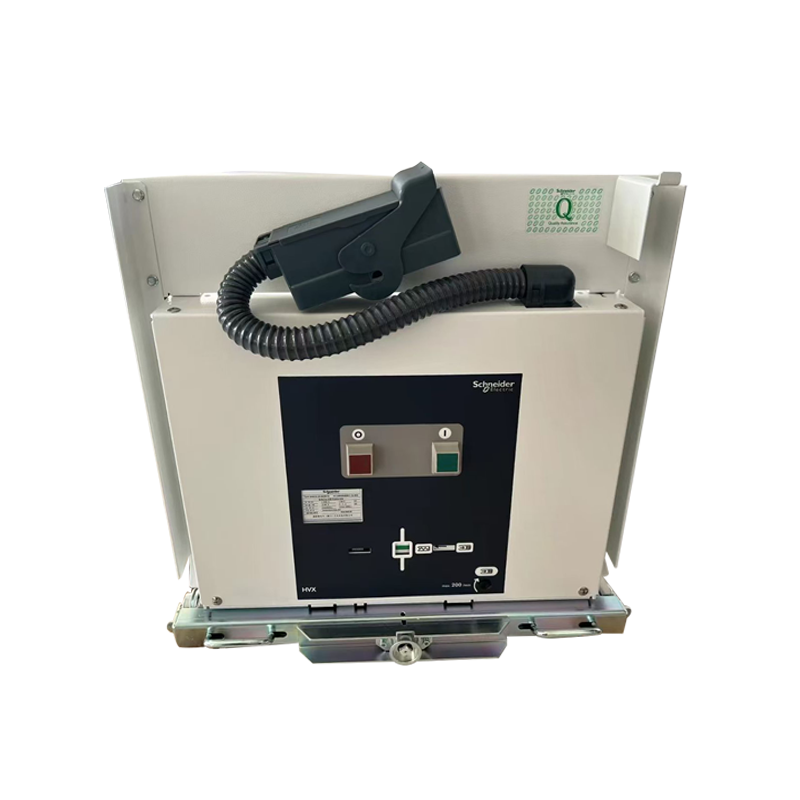
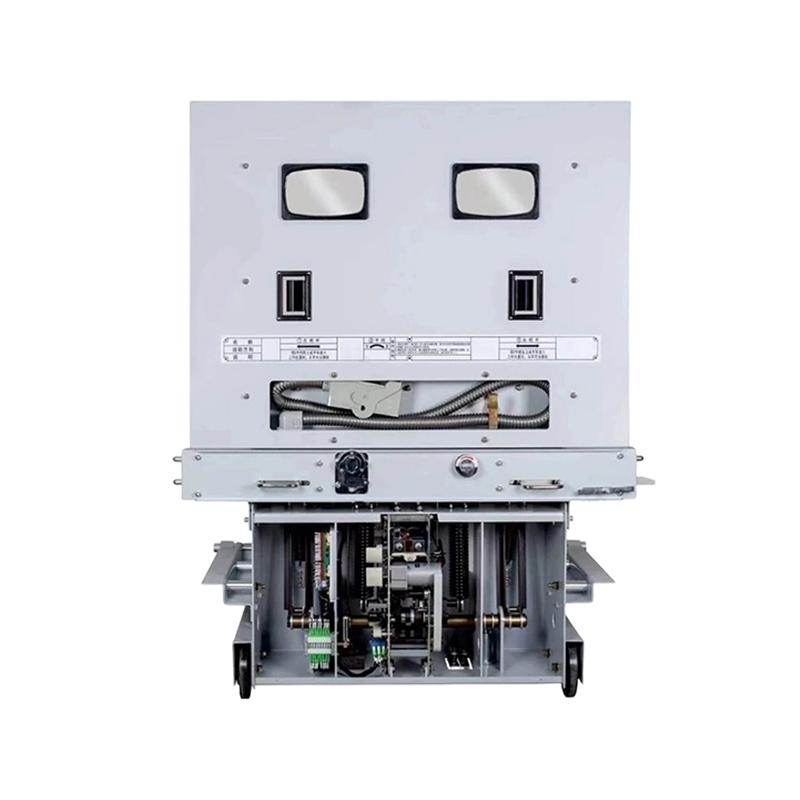
| Withdrawable (Draw-out) | Rolls out on chassis for service | Utilities, critical facilities | Live maintenance, fast replacement |
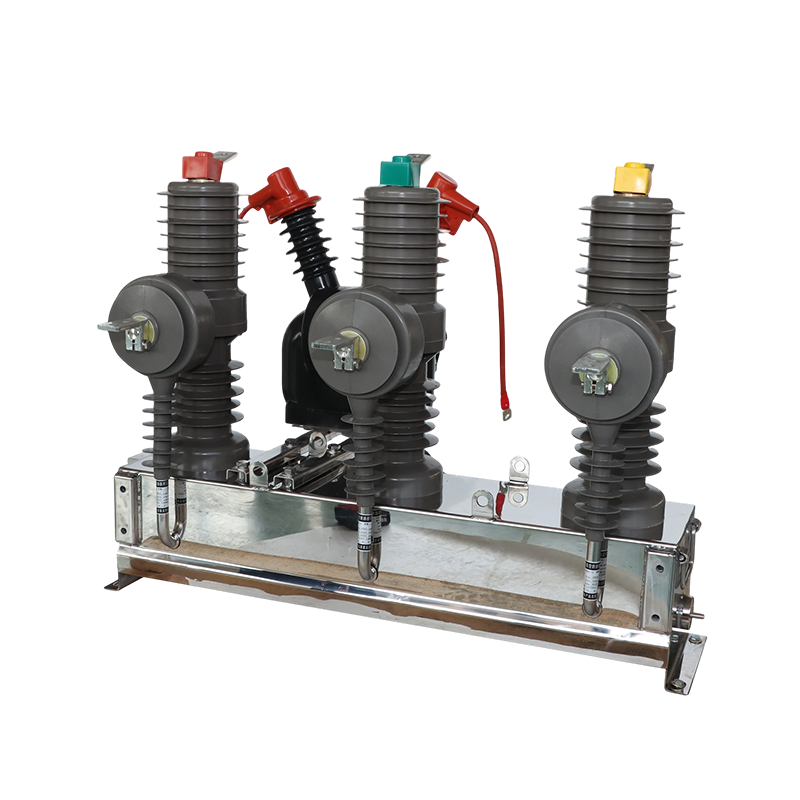
| Outdoor (Pole-Mounted) | Weather-resistant housing on poles | Distribution feeders, rural grids | IP65+ protection, no substation needed |
| Generator Circuit Breaker (GCB) | Installed between generator and transformer | Power plants, large co-gen | Handles high asymmetrical fault currents |
Vacuum vs. SF₆ vs. Air Circuit Breakers: A Practical Comparison
Choosing between VCB and its main alternatives — SF₆ (sulfur hexafluoride) and air circuit breakers (ACB) — depends on voltage level, environmental policy, maintenance philosophy, and total cost of ownership.
| Parameter | Vacuum (VCB) | SF₆ | Air (ACB) |
|---|---|---|---|
| Voltage Range | 3–38 kV (up to 145 kV emerging) | Up to 1,100 kV (HV/EHV) | Up to 1,000 V (LV) |
| Interrupting Medium | Vacuum (~10⁻⁶ torr) | SF₆ gas (pressurized) | Ambient air |
| Environmental Impact | None | GWP = 23,500 (regulated/banned in EU by 2030) | None |
| Maintenance Interval | ~10,000 fault operations or 20 years | Gas monitoring required; 10–15 years | Frequent arc chute inspection |
| Fire/Explosion Risk | Very low | Low (but toxic decomposition products) | Moderate (arc exhaust) |
| Noise Level | Low | Low | High (arc blast) |
The EU F-Gas Regulation (EU 2024/573), which phases out SF₆ switchgear for new installations by 2030, is accelerating VCB adoption in European markets and influencing global procurement decisions. Many utilities are already specifying vacuum or clean-air alternatives for medium-voltage projects.
Key Technical Ratings to Understand Before Buying
Specifying the wrong rating is a common and costly mistake. These are the parameters that matter most:
Rated Voltage and Insulation Level
Standard IEC 62271-100 voltage classes for VCBs are 3.6, 7.2, 12, 17.5, 24, and 36 kV. Each class has associated power-frequency withstand and lightning impulse withstand voltage (BIL) requirements. Never select a VCB rated below the system's highest operating voltage.
Rated Normal Current
This is the continuous current the breaker can carry without exceeding temperature limits. Common ratings are 630 A, 1,250 A, 2,000 A, and 3,150 A. Derating is necessary when the ambient temperature exceeds 40°C or when installed in enclosed, poorly ventilated panels.
Rated Short-Circuit Breaking Current (Isc)
This is arguably the most critical rating. It defines the maximum fault current the VCB can safely interrupt. Typical values range from 16 kA to 63 kA (rms symmetrical). The system prospective fault level must be calculated — not estimated — using a proper short-circuit study per IEC 60909 before selection.
Rated Short-Time Withstand Current (Ik)
The breaker must withstand fault current for a defined duration (typically 1 second or 3 seconds) without damage, to allow downstream protective devices to clear the fault first. This rating is critical for coordination studies and selectivity design.
Operating Duty and Mechanical Endurance
IEC 62271-100 defines standard operating sequences (O–CO–CO). Mechanical endurance classes M1 (2,000 operations) and M2 (10,000 operations) describe how many open-close cycles the mechanism is rated for. For applications with frequent switching — such as motor feeders or capacitor banks — specify M2 class as a minimum.
Common Applications of Vacuum Circuit Breakers
VCBs are found across virtually every sector that operates medium-voltage equipment. The following are the most frequent use cases and their specific requirements:
- Utility Distribution Substations: Protecting 11 kV and 33 kV feeders. Draw-out VCBs are preferred for operational flexibility and live bus maintenance capability.
- Industrial Motor Feeders: VCBs rated for frequent switching (Class E2 per IEC 62271-111) protect large motors above ~200 kW, typically used with vacuum contactors for lower-voltage starting circuits.
- Transformer Protection: Installed on the primary (MV) side of distribution transformers to provide short-circuit and overload protection, often coordinated with fuses or relays on the secondary.
- Capacitor Bank Switching: Requires VCBs with low pre-strike characteristics and controlled closing to manage transient inrush currents. Not all VCBs are suitable — check the manufacturer's capacitor switching class (C1 or C2 per IEC 62271-100).
- Renewable Energy (Wind and Solar): Collector system breakers at wind farm substations and PV plant step-up transformers rely heavily on VCBs due to their reliability, low maintenance, and environmental suitability.
- Data Centers and Critical Infrastructure: Where downtime is unacceptable, VCBs with electronic trip units, condition monitoring, and arc flash detection are increasingly specified.
Advantages and Limitations of Vacuum Circuit Breakers
Advantages
- Minimal maintenance: The sealed vacuum interrupter requires no inspection or refilling. Many manufacturers guarantee the interrupter for the life of the breaker (typically 25–30 years).
- Compact size: A 12 kV / 25 kA VCB can fit in a panel roughly 600 mm wide × 600 mm deep, far smaller than equivalent oil or air-blast designs.
- High operational reliability: Absence of combustible or pressurized media significantly reduces failure modes. MTBF figures from field data consistently exceed 100,000 hours for major brands.
- Fast interruption: Arc extinction typically occurs within one half-cycle (10 ms on 50 Hz), limiting thermal stress on protected equipment.
- Environmentally clean: No SF₆, no oil, no toxic byproducts under normal operation.
Limitations
- Voltage chopping and transient overvoltages: VCBs can "chop" small inductive currents before current zero, generating steep transient overvoltages (typically 2–4 pu) that may stress transformer windings or motor insulation. Surge arresters or RC snubbers are often required in sensitive circuits.
- Vacuum integrity cannot be visually verified: A loss of vacuum is not detectable without a hi-pot test or dedicated vacuum integrity tester. Periodic testing (every 5–10 years) is recommended practice.
- Voltage ceiling: Practically limited to ~38 kV for mature, cost-competitive products. At transmission voltages (110 kV and above), SF₆ or clean-air alternatives currently remain the dominant choice, though 72.5 kV and 145 kV vacuum interrupters are emerging from manufacturers such as ABB, Siemens, and Eaton.
- Interrupter replacement cost: When a vacuum interrupter does fail or degrade, replacement typically requires specialist labor and the cost of the VI itself, which can be $500–$3,000 per pole depending on rating.
Maintenance Best Practices for Vacuum Circuit Breakers
While VCBs are genuinely low-maintenance, "low maintenance" does not mean "no maintenance." A structured inspection program extends service life and prevents unexpected failures.
- Annual visual inspection: Check for mechanical damage, corrosion, contamination of insulators, and evidence of loose connections or overheating (discoloration, smell).
- Contact resistance measurement: Use a micro-ohmmeter (DLRO) to verify contact resistance remains within manufacturer limits, typically ≤ 50–100 µΩ per pole. Rising resistance indicates contact erosion or contamination.
- Mechanical operation test: Perform several open-close-open operations to verify mechanism function, trip coil operation, and auxiliary contact continuity.
- Vacuum integrity test: Every 5 years (or after any suspected arc event), apply a hi-pot test per manufacturer specification — typically 80% of the rated power-frequency withstand voltage across the open contacts — to confirm vacuum integrity.
- Contact erosion check: Monitor contact travel or use the manufacturer's wear indicator. Copper-chromium contacts in a 12 kV / 25 kA interrupter typically allow 30–50 full short-circuit interruptions before replacement is needed.
- Spring mechanism lubrication: Apply manufacturer-specified grease to operating mechanism linkages every 5 years or per the operations counter.
How to Select the Right Vacuum Circuit Breaker
Selection should follow a systematic process rather than defaulting to the cheapest available rating. The following steps reflect standard engineering practice:
- Determine system voltage: Confirm the highest system voltage (Um) and select the next standard IEC voltage class above it.
- Calculate fault level: Conduct a short-circuit analysis (IEC 60909) to determine the prospective symmetrical fault current at the installation point. Add a margin of at least 10–20% for future network expansion.
- Identify load current: Calculate the maximum continuous load current including demand growth over the equipment's expected service life (25–30 years).
- Evaluate switching duty: Identify if the load involves motors, capacitors, reactors, or transformers, as each may require specific VCB capabilities (E2, C2, L1 classes).
- Choose installation type: Fixed or draw-out based on maintenance philosophy, operational requirements, and whether live-bus work is permitted.
- Specify protection and communication: Modern VCBs integrate electronic trip units (ETUs) with ANSI/IEC protection functions and IEC 61850 GOOSE messaging for digital substation integration. Specify these requirements upfront.
- Verify standards compliance: Ensure the equipment is type-tested to IEC 62271-100 (the primary standard for AC circuit breakers above 1 kV). For switchgear assemblies, require IEC 62271-200 (metal-enclosed) or IEC 62271-201 compliance as applicable.
Market Trends and Future Developments
The global vacuum circuit breaker market was valued at approximately USD 4.2 billion in 2023 and is projected to grow at a CAGR of around 6–7% through 2030, driven primarily by grid modernization, renewable energy buildout, and SF₆ phase-out regulations.
Several notable technology directions are shaping the next generation of VCBs:
- Higher voltage vacuum interrupters: ABB's 145 kV vacuum interrupter, demonstrated at scale, could eventually displace SF₆ in high-voltage transmission applications — a segment currently worth billions globally.
- Solid-state and hybrid breakers: Combining vacuum interrupters with power electronics (IGBTs or thyristors) enables current-limiting operation and DC fault interruption — essential for DC microgrids and offshore wind HVDC collector systems.
- Condition monitoring and predictive maintenance: Embedded sensors measuring contact travel, spring energy, trip coil current signatures, and partial discharge allow remote health assessment and predictive maintenance, integrating with utility asset management systems via IEC 61850.
- Eco-design and circular economy: Manufacturers including Schneider Electric and Siemens are launching "green" VCB lines with recyclable enclosures, reduced copper content, and carbon footprint declarations (EPDs) to meet procurement sustainability requirements.
Recommended Products
Zhejiang Mingtuo Electrical Technology Co., Ltd. All Rights Reserved.
Electrical Protection Circuit Breakers Medium Voltage Circuit Breakers Manufacturers Low Voltage Circuit Breakers Factory
