 English
 Français
 Español
 عربى
عربىIndustry News
Home / News / Industry News / Insulated Case Circuit Breaker Systems: How They Work and How to Choose


Content
An engineer working on a new low-voltage switchboard once described the classic dilemma for a 1,600 A feeder: a molded case breaker that barely covered the rating, or a full air circuit breaker that felt like overkill. The insulated case circuit breaker (ICCB) sits in the middle, and it solves that exact problem in thousands of installations. In practical terms, an ICCB system is a high-performance molded case breaker in a fully insulated case, normally equipped with electronic trip protection and often arranged in a drawout cradle. This article explains what the category means, how it compares with molded case and air circuit breakers, and what to verify before you specify one.
An insulated case circuit breaker is, at its core, a heavy-duty molded case circuit breaker. The name describes the housing: all current-carrying parts sit inside an insulated case molded from thermoset resin or glass-reinforced polyester. This construction keeps the unit compact while containing the arc during interruption. Most ICCBs operate in the 800 A to 5,000 A range, with common frame sizes at 800 A, 1,600 A, 2,000 A, 3,200 A, and 4,000 A. They share the basic switching mechanics of an MCCB, but add the performance margin and serviceability that critical feeders demand.
Three features separate an ICCB from a standard MCCB. First, a two-step stored-energy mechanism delivers consistent opening and closing regardless of how slowly the operator moves the handle. Second, an electronic trip unit replaces the thermal-magnetic trip, offering adjustable long-time, short-time, instantaneous, and ground-fault settings. Third, larger frames are available with drawout construction, so the breaker can be withdrawn for inspection or replacement without unbolting busbars. Together these features make an ICCB behave more like an air circuit breaker while preserving a molded case footprint.
The word "system" in insulated case circuit breaker systems is not incidental. In a switchboard, the breaker never works alone. It is paired with a trip unit, drawout cradle, mechanical interlocks, auxiliary contacts, shunt trip or undervoltage releases, ground-fault sensors, and sometimes a communication module. The electronic trip unit is the heart of the arrangement. Adjustable long-time and short-time pickup and delay values make selectivity possible: a fault on a downstream feeder clears before the main breaker trips. Without coordination, a single fault can darken an entire facility.
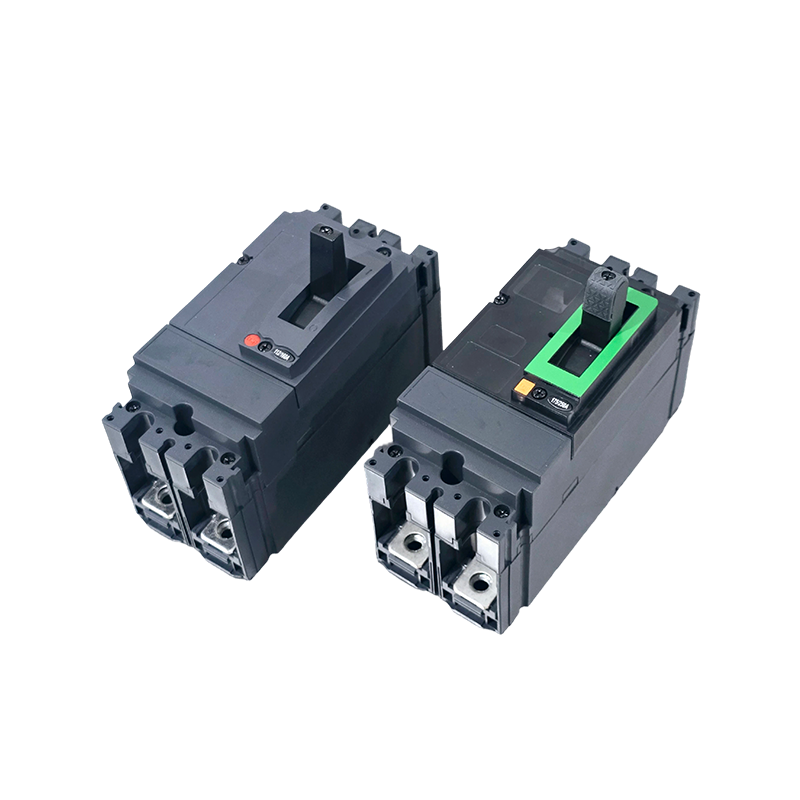
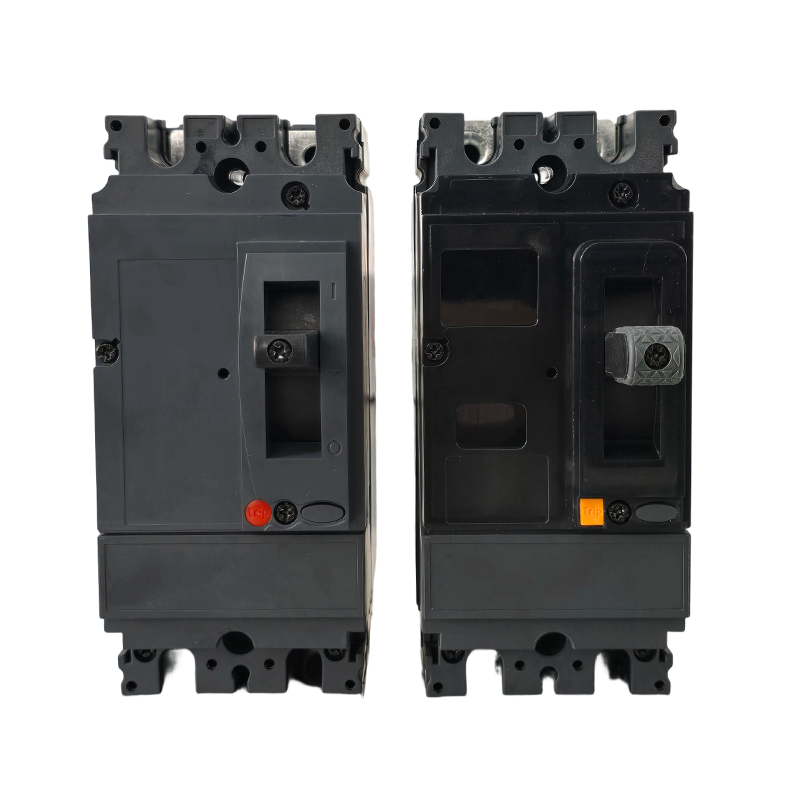
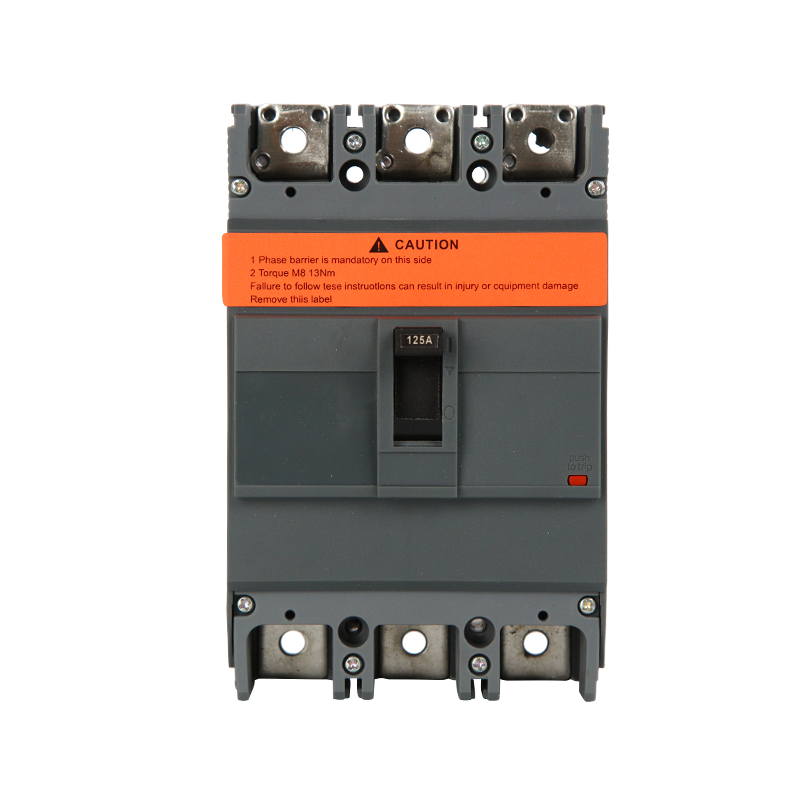
When a specification calls for LSIG protection or remote monitoring, a thermal-magnetic MCCB cannot deliver it, but a breaker with a microprocessor-controlled trip unit can. Many switchboard builders now use the molded case class as the default for fixed-mount feeders and reserve drawout positions for mains and ties. A modern power distribution breaker such as the 100 A to 1,600 A MTNSX molded case circuit breaker covers a large share of these feeder duties with a footprint that fits compact compartments.
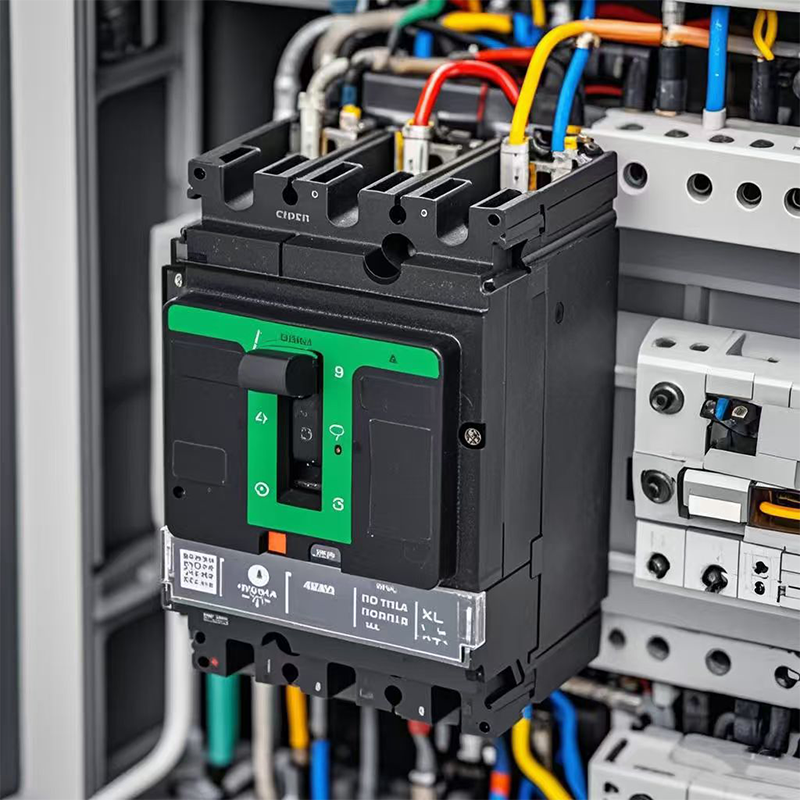 MT-NSX 3/4P 100A-630A AC Molded Case Circuit Breaker for Industrial & CommercialMingtuo, China Wholesale MT-NSX 3/4P 100A-630A AC Molded Case Circuit Breaker for Industrial & Commercial Distribution Suppliers and MT-N...View Product →
A direct comparison clarifies where each technology fits in low-voltage distribution.
| Characteristic | MCCB | ICCB | ACB |
|---|---|---|---|
| Typical current range | 15 A to 1,600 A | 800 A to 5,000 A | 800 A to 6,300 A |
| Housing | Molded insulating case | Fully insulated case | Metal or insulated open frame |
| Trip unit | Thermal-magnetic or electronic | Electronic with LSI and ground fault | Electronic with LSI and ground fault |
| Drawout option | Usually fixed | Available on large frames | Standard in switchgear |
| Interrupting rating | Moderate for frame size | High for frame size | Very high |
| Maintenance style | Typically replace | Serviceable | Serviceable |
| Typical role | Branch and feeder protection | Main, tie, large feeder | Main, tie, generator |
The table makes one point clear: ICCBs occupy the space between high-performance molded case breakers and air breakers. They provide most of the serviceability and selectivity of an ACB in a package that integrates easily into compact switchgear. The trade-offs appear at the extremes. Below roughly 800 A, a well-built MCCB is more economical. Above 3,200 A, or when the switchboard is already dimensioned around standard ACB compartments, an air circuit breaker becomes the practical choice.
ICCB systems are rarely the cheapest option, but they become the right option when three conditions overlap: the feeder needs real current-carrying margin, the protection study demands adjustable curves, and maintenance without prolonged shutdown is expected. Typical installations include:
In each case, the deciding factor is the trip unit and the switchgear configuration. If a fixed thermal-magnetic breaker cannot provide the coordination curve, the project moves to an electronic trip class. If the switchboard layout also demands drawout construction, you are effectively specifying an ICCB system or an air breaker.
A specification that looks like a simple current rating can hide several engineering details. Work through these points before committing to a breaker class.
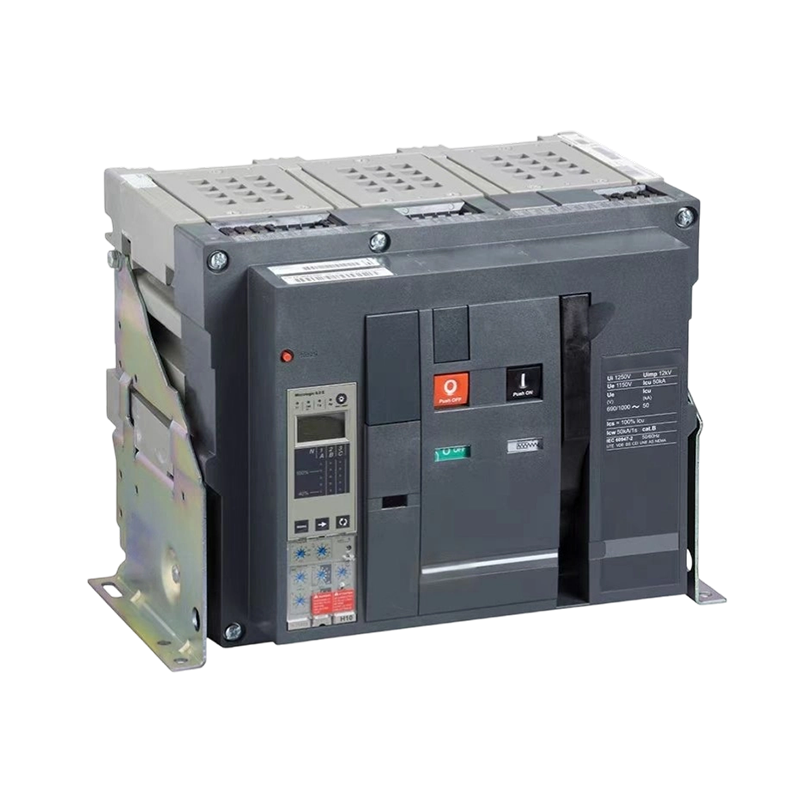
For applications in the upper ICCB band, or when the switchboard is built around air breaker compartments, the natural alternative is a drawout air circuit breaker. Mingtuo Electric's MT-2000-3200A draw-out air circuit breaker for low-voltage distribution covers the 2,000 A to 3,200 A range with the drawout construction and interrupting performance expected of a main breaker in that class.
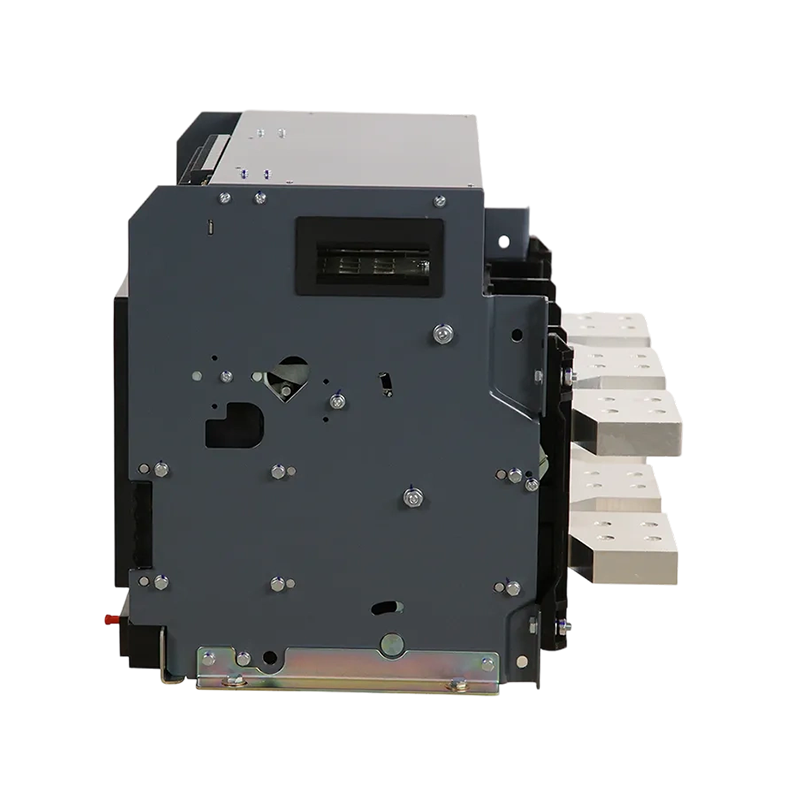 Low Voltage Distribution Air Circuit Breaker Suppliers,FactoryMingtuo is Wholesale 2000–3200A Draw-Out Low-Voltage Distribution Air Circuit Breaker Suppliers and Low Voltage Air Circuit Breaker Manuf...View Product →
The best class is rarely the most expensive one. A fixed-mount, high-performance MCCB handles many feeders economically. An ICCB system with an electronic trip fits when selectivity and adjustability matter. A drawout ACB wins when the switchboard is large, the current exceeds roughly 3,200 A, or the maintenance strategy favors full withdrawability. Each step up in class adds cost and footprint, so fault level, coordination, and service needs should drive the decision.
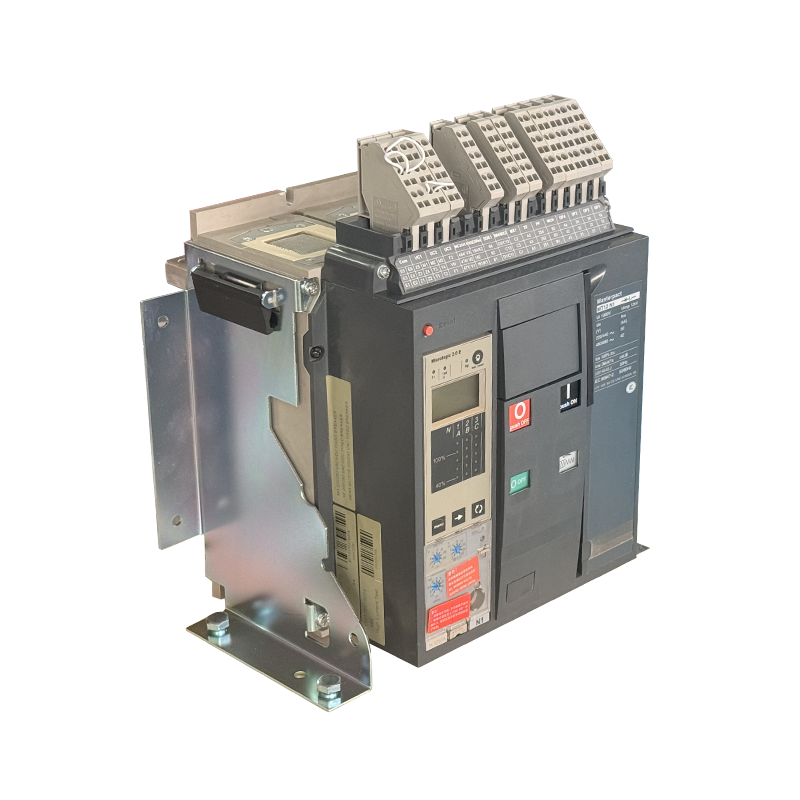
The product range available from a single manufacturer can simplify that decision. On the molded case side, the MTNSX series covers power distribution from 100 A to 1,600 A for fixed-mount feeder applications. On the air side, the NT/NW advanced air circuit breaker rated 1,600 A to 6,300 A serves fixed and drawout main and tie positions, extending beyond the practical limits of ICCB frames.
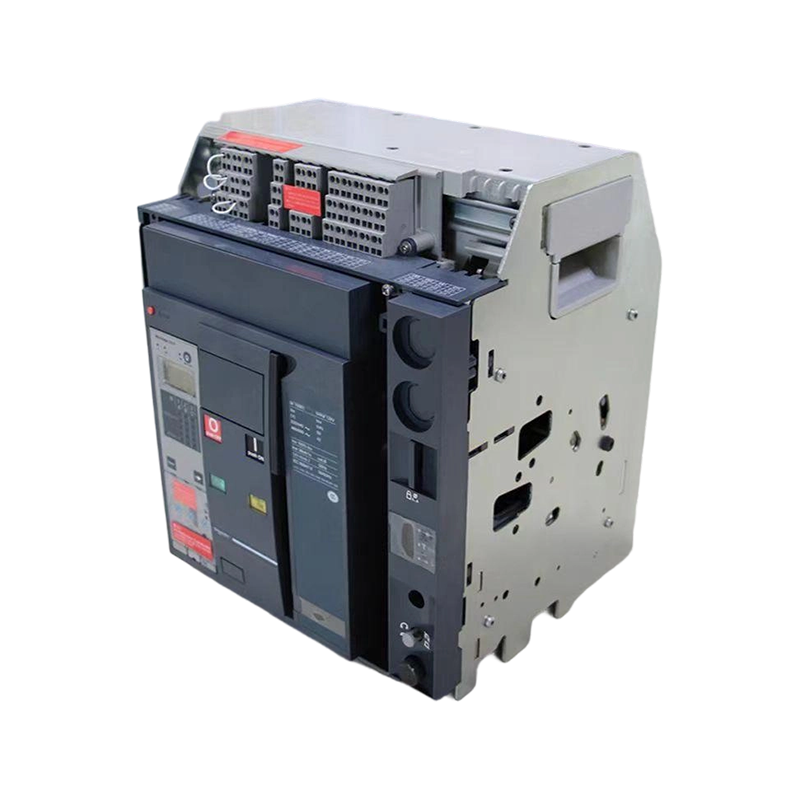 Advanced Air Circuit Breaker 1600A–6300A for Fixed and Drawout Installations SupMingtuo, China Wholesale Advanced Air Circuit Breaker 1600A–6300A for Fixed and Drawout Installations Suppliers and Advanced Air Circuit ...View Product →
Understanding insulated case breaker systems matters because the category sits exactly where many real projects need protection: high enough in performance to provide selectivity and serviceability, compact enough to fit actual electrical rooms, and well documented enough to be specified with confidence. Start with fault calculations and a selectivity study, and the ICCB class often turns out to be neither a compromise nor a luxury, but the right fit. Our low-voltage and medium-voltage circuit breaker selection guide walks through the full range from MCCB to ACB to vacuum breaker. For specific switchboard requirements, the engineering team at Mingtuo Electric can review frame sizes, trip units, and drawout arrangements against your load profile.
Zhejiang Mingtuo Electrical Technology Co., Ltd. All Rights Reserved.
Electrical Protection Circuit Breakers Medium Voltage Circuit Breakers Manufacturers Low Voltage Circuit Breakers Factory
