 English
 Français
 Español
 عربى
عربىDescription: The MINGTUO 12kV Indoor Vacuum Circuit Breaker (VCB) is specifically designe...


Medium-Voltage Indoor Vacuum Circuit Breakers Manufacturers
-
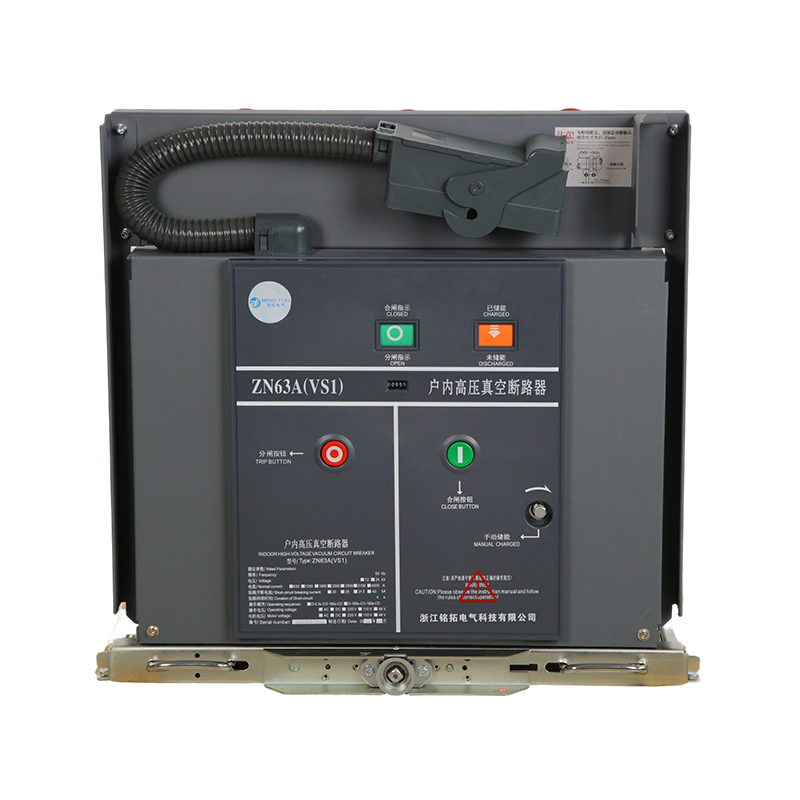 VS1 Medium-Voltage Indoor Vacuum Circuit Breaker 12kV 1250A for MV Switchgear
 -
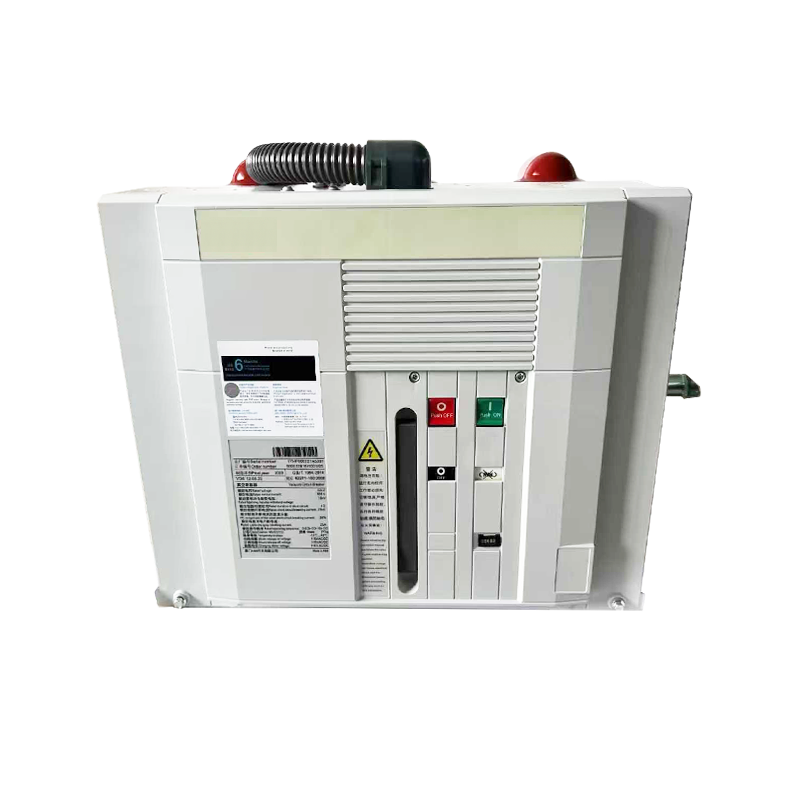 VD4 12kV Medium-Voltage Indoor Vacuum Circuit Breaker, 630A–1250A
Description: The MINGTUO VD4 12kV Vacuum Circuit Breaker (VCB) is a medium-voltage indoor ...
-
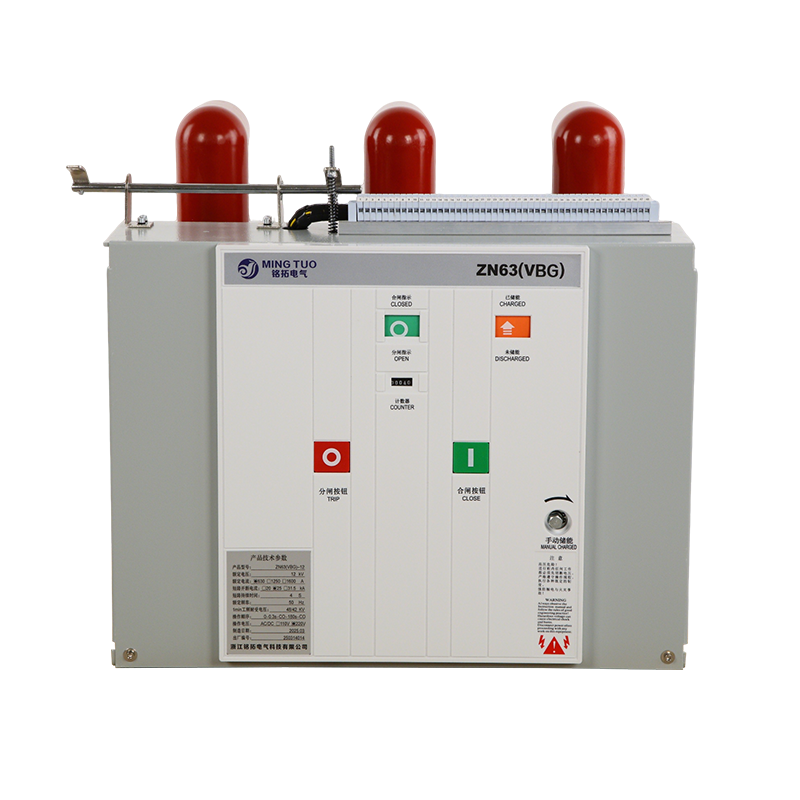 VS1 12kV Medium-Voltage Indoor Drawout Vacuum Circuit Breaker, 31.5kA
Description: The MINGTUO 12kV Indoor Vacuum Circuit Breaker (VCB) is specifically designe...
-
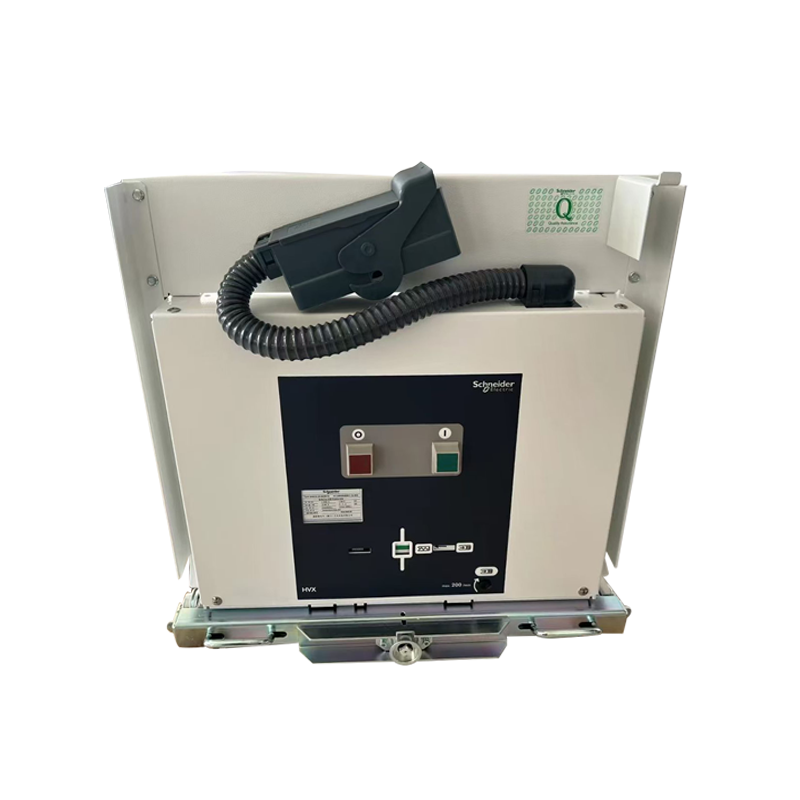 MTHVX 12kV Medium-Voltage Indoor Vacuum Circuit Breaker, 630A–1250A
Description: The MINGTUO 12kV Indoor Vacuum Circuit Breaker (VCB) is specifically designe...
MingTuo Indoor Vacuum Circuit Breakers provide reliable protection for indoor medium-voltage distribution systems. Featuring vacuum arc extinguishing technology, compact structure, and stable switching performance, they quickly isolate faults to safeguard equipment. With low maintenance requirements and long service life, they are ideal for substations, industrial plants, and commercial buildings.
Message Feedback
About Us
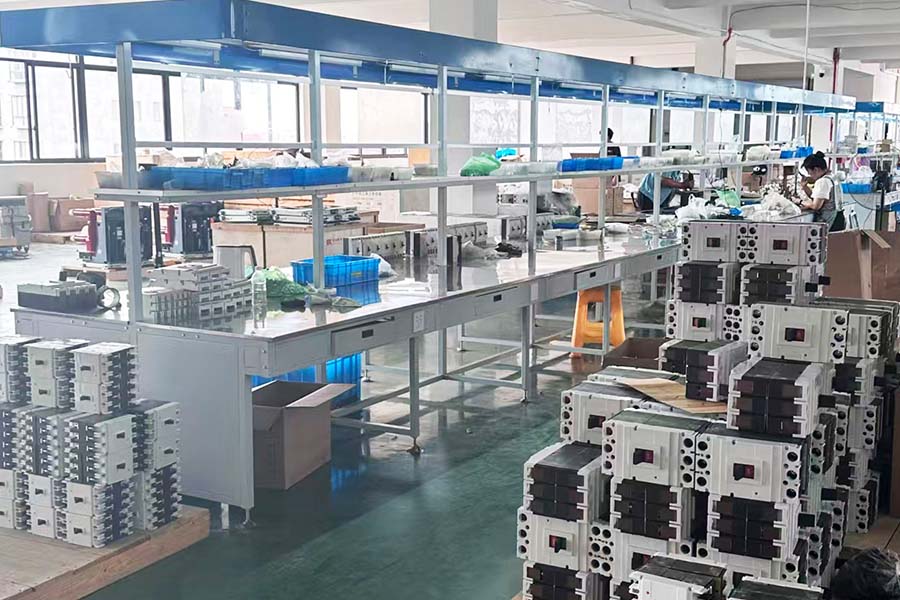
Zhejiang Mingtuo Electrical Technology Co., Ltd.
Zhejiang Mingtuo Electrical Technology Co., Ltd. is a technology-driven enterprise specializing in the research, development, and manufacturing of low-voltage and medium-voltage circuit breakers. Leveraging Liushi's comprehensive electrical industry chain and local advantages, we provide reliable and safe electrical protection products along with customized solutions for global industrial, commercial, and residential power distribution systems.
Indoor Vacuum Circuit Breakers Manufacturers and Medium-Voltage Vacuum Circuit Breakers Factory in China. Our products are exported to over 30 countries worldwide, including Europe, the Middle East, Southeast Asia, and Africa. Our diverse clientele encompasses power distribution cabinet manufacturers, engineering contractors/EPC firms, electrical distributors and agents, system integrators, and OEM customers. We provide our partners with a comprehensive one-stop service, spanning from technical support, solution alignment, and prototype development to mass production delivery. Custom Indoor Medium-Voltage Vacuum Circuit Breakers.
We are committed to becoming a trusted electrical protection partner for global customers through professional engineering capabilities, consistent manufacturing quality, and flexible customization services.
Indoor Vacuum Circuit Breakers Manufacturers and Medium-Voltage Vacuum Circuit Breakers Factory in China. Our products are exported to over 30 countries worldwide, including Europe, the Middle East, Southeast Asia, and Africa. Our diverse clientele encompasses power distribution cabinet manufacturers, engineering contractors/EPC firms, electrical distributors and agents, system integrators, and OEM customers. We provide our partners with a comprehensive one-stop service, spanning from technical support, solution alignment, and prototype development to mass production delivery. Custom Indoor Medium-Voltage Vacuum Circuit Breakers.
We are committed to becoming a trusted electrical protection partner for global customers through professional engineering capabilities, consistent manufacturing quality, and flexible customization services.
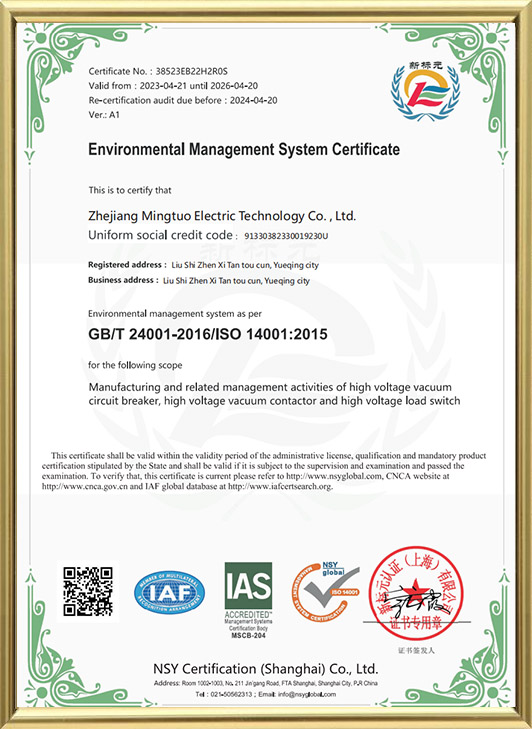
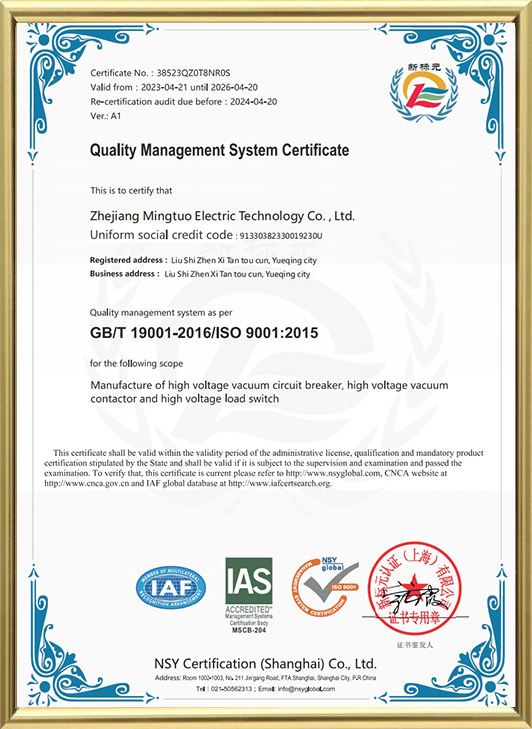
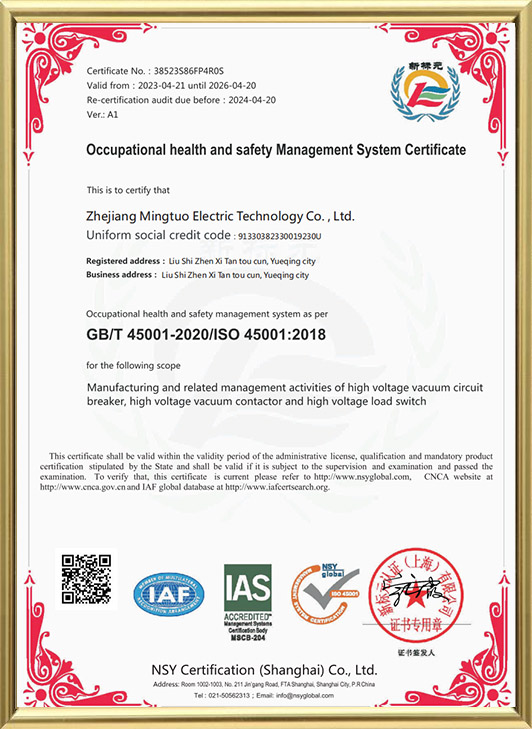
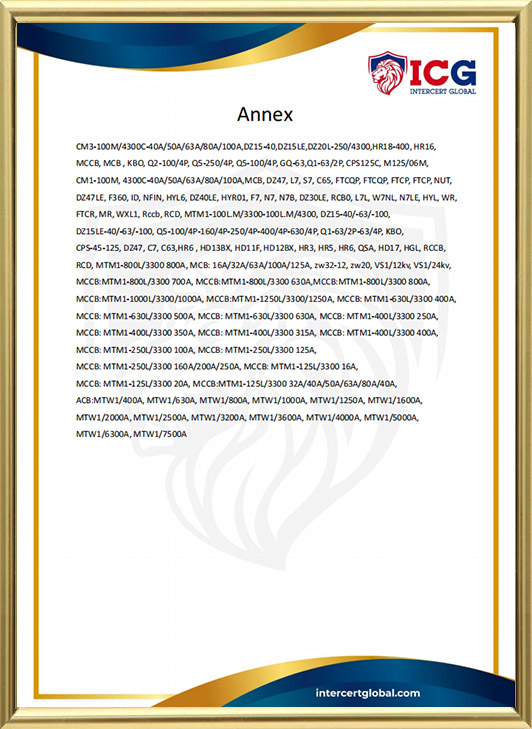
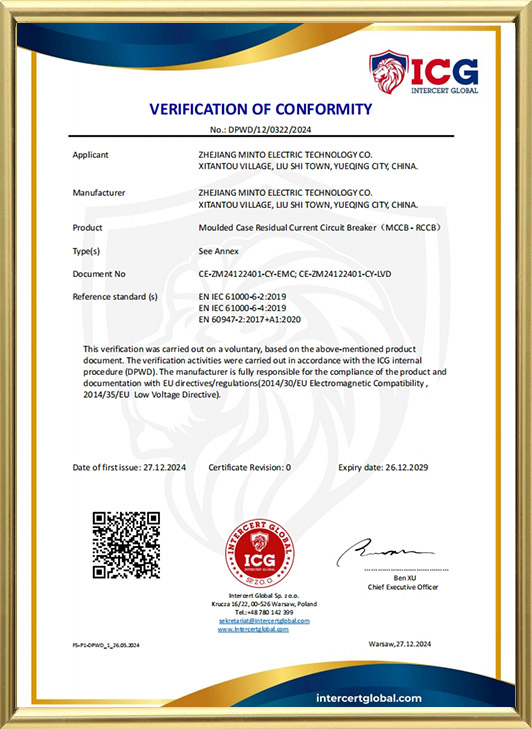
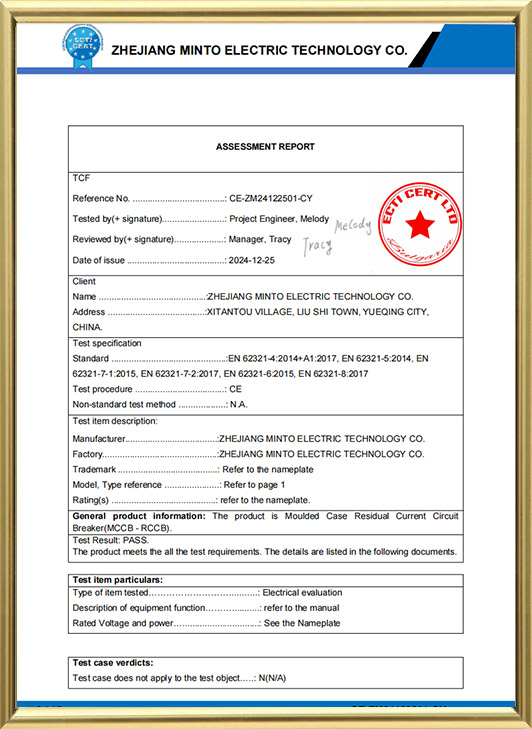
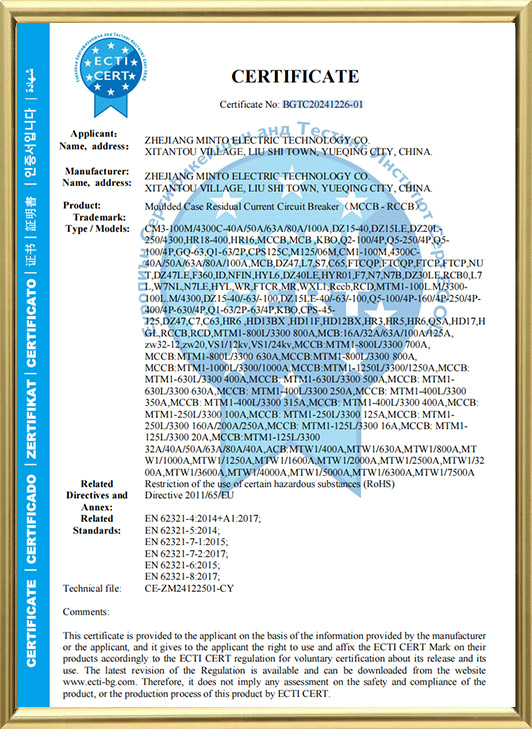
Certificate
News
-
What Is a Vacuum Circuit Breaker and How Does It Work? A vacuum circuit breaker (VCB) is a switching and protection device used primarily in medium voltage electrical distribution systems — typically in the range of 1kV to 38kV — that interrupts fault currents and isolates electrical circuits by ext...
Read More -
Amid the global cross-border e-commerce "New Trade Festival" in full swing this March, Mingtuo Electric has officially launched its "March Expo" promotional campaign. The event showcases the company's flagship product series, offering competitive professional electrical solutions and exclusive procu...
Read More -
What Circuit Breakers Do and Why Choosing the Right One Matters A circuit breaker is an automatic protective switching device that detects abnormal electrical conditions — overcurrent, short circuit, or earth fault — and interrupts current flow before equipment is damaged or personnel are endangere...
Read More
Industry knowledge
Vacuum Interrupter Degradation: How to Assess Remaining Service Life Without Replacement
The vacuum interrupter is the core functional element of any Medium-Voltage Vacuum Circuit Breaker, and its integrity is the single most important determinant of the breaker's continued operational safety. Unlike oil or SF₆ breakers where the interrupting medium can be sampled and tested chemically, vacuum integrity cannot be assessed by conventional chemical analysis — the vacuum itself must be verified. The standard field method is the high-potential (hi-pot) withstand test, where a specified AC or DC voltage is applied across the open contacts of the interrupter. A vacuum that has degraded below approximately 10⁻² Pa will exhibit partial discharge or a full breakdown at voltages well below the rated withstand level, indicating that replacement is necessary before the breaker returns to service.
Contact erosion is the second life-limiting mechanism. Each interruption event vaporizes a small amount of contact material — typically a copper-chromium alloy — from the contact surfaces. The cumulative erosion depth can be measured by checking contact stroke travel against the original specification. Most manufacturers mark a wear indicator on the operating mechanism; when the indicator reaches the replacement threshold, the interrupter must be changed regardless of vacuum integrity. At Zhejiang Mingtuo Electrical Technology Co., Ltd., our Medium-Voltage Vacuum Circuit Breakers are designed with clearly accessible wear indicators and standardized hi-pot test points, making routine service assessment straightforward for maintenance teams without specialized equipment beyond a high-voltage test set.
A less frequently discussed degradation path is X-ray emission from aged vacuum interrupters. At voltages above approximately 20 kV, electron bombardment of contact surfaces inside a vacuum can generate soft X-rays that penetrate the ceramic envelope. While the radiation levels involved are generally low, IEC 62271-100 acknowledges this phenomenon, and maintenance personnel conducting hi-pot tests on Indoor Vacuum Circuit Breakers at 24 kV and above should maintain distance from the interrupter during voltage application. Manufacturers' test procedures for higher-voltage classes specify minimum safe distances for this reason.
Operating Mechanism Types and Their Impact on Switching Reliability in Indoor Vacuum Circuit Breakers
The operating mechanism of an Indoor Vacuum Circuit Breaker is responsible for driving the contacts to close and open at precise velocities — a requirement that is more demanding than it appears. Contact closing velocity that is too low results in contact bounce, which can re-ignite the arc and cause multiple re-strikes during a fault interruption. Closing velocity that is too high generates excessive impact force, accelerating contact wear and potentially damaging the ceramic interrupter envelope. Similarly, opening velocity affects the rate at which the contact gap grows during arc extinction: too slow, and the dielectric recovery of the gap is outpaced by the recovery voltage; too fast, and the mechanical shock transmitted to the switchgear structure increases.
Three mechanism types are in widespread use for Medium-Voltage Vacuum Circuit Breakers, each with distinct maintenance and reliability characteristics:
| Mechanism Type | Energy Source | Key Advantage | Primary Limitation |
| Spring-charged | Mechanically stored energy in closing/opening springs | Operates independently of supply voltage after charging | Spring fatigue over large operation counts; requires charging motor |
| Magnetic actuator (permanent magnet) | Capacitor bank discharged through electromagnet coils | Fewer moving parts; very long mechanical life (>100,000 operations) | Capacitor aging; requires auxiliary power for each operation |
| Solenoid (electromagnetic) | Direct DC solenoid energization | Simple design; low cost | Sensitive to auxiliary supply voltage variation; higher coil power demand |
The permanent magnet actuator has gained significant market share in recent years for Indoor Vacuum Circuit Breakers in applications requiring high operation frequency — such as capacitor bank switching or arc furnace supply circuits — because its near-elimination of mechanical wear components translates directly into extended maintenance intervals and higher long-term reliability. The tradeoff is that capacitor bank health becomes a critical maintenance item in its own right, requiring periodic capacitance and ESR measurement to verify adequate stored energy for reliable operation.
Transient Recovery Voltage and Why It Determines Interruption Difficulty for Medium-Voltage Vacuum Circuit Breakers
Transient Recovery Voltage (TRV) is the voltage that appears across the opening contacts of a Medium-Voltage Vacuum Circuit Breaker immediately after current zero, during the brief window when the arc has been extinguished but the contact gap is still rebuilding its dielectric strength. If TRV rises faster than the gap's dielectric recovery rate, re-ignition occurs and the arc restarts. The peak magnitude and rate of rise of TRV (RRRV, measured in kV/µs) are therefore the key parameters that define how difficult a particular fault condition is to interrupt — not simply the fault current magnitude.
Several network conditions produce TRV characteristics that are particularly severe for vacuum interrupters. Short-line faults — faults occurring a few hundred meters from the switchgear on an overhead line — generate a very steep initial TRV rise due to the traveling wave behavior of the line, which can exceed the withstand capability of a breaker rated for terminal faults at the same current level. IEC 62271-100 defines specific TRV test duties (T10, T30, T60, T100) corresponding to different percentages of the rated short-circuit current, because the TRV waveform changes with fault current level. Counter-intuitively, interrupting at 10–30% of rated short-circuit current (the T10/T30 duties) is often harder than interrupting the full rated current, because lower currents result in a smaller arc that extinguishes earlier in the cycle, at a point where the rate of change of the supply voltage — and therefore the initial TRV slope — is steepest.
Vacuum interrupters are particularly susceptible to a related phenomenon called current chopping, where the arc extinguishes before the natural current zero due to instability at low current levels. The abrupt current interruption in an inductive circuit generates a voltage spike whose magnitude is proportional to the chopping current level multiplied by the square root of the circuit inductance-to-capacitance ratio. For transformer and motor switching applications, current chop overvoltages can reach 3–5 times the system voltage if the circuit lacks adequate surge suppression. Modern copper-chromium contact materials have reduced chopping current levels from the 10–15 A typical of earlier tungsten contacts to 2–5 A, significantly limiting chop overvoltages, but the issue remains relevant for circuits with high inductance-to-capacitance ratios.
Switchgear Bus Arrangements and How They Shape Indoor Vacuum Circuit Breaker Specification
The bus arrangement of a medium-voltage switchgear installation fundamentally determines which operational roles the Indoor Vacuum Circuit Breakers within it must fulfill — and therefore which performance characteristics must be prioritized in specification. A simple single busbar arrangement, the most common configuration in industrial distribution substations, places every circuit breaker in the role of either an incomer (connecting the transformer to the bus) or a feeder (connecting the bus to load circuits). In this arrangement, breaker-to-breaker discrimination is the central protection coordination challenge, and the key specification parameters are rated short-circuit breaking current and the selectivity relationship between incomer and feeder protection relays.
Double busbar arrangements, common in utility and large industrial substations requiring high supply continuity, introduce bus-coupler breakers and bus-section breakers whose switching duties are fundamentally different from feeder breakers. A bus-coupler breaker may be required to close onto a live and potentially faulted bus — a demanding closing duty that requires the breaker to withstand peak making current. The rated short-circuit making capacity (Icm) is the relevant parameter here, expressed as a peak value equal to the asymmetrical fault current at the instant of contact touch, typically 2.5× the rated symmetrical breaking current at 50 Hz. This distinction matters because a breaker correctly sized for breaking duty may not meet the making duty requirement if the two values are not explicitly cross-checked during specification.
H-arrangement and ring-main configurations introduce additional complexity: breakers must be capable of safe operation in any network state, including partial ring closure and open-ring reconfiguration under load. The IEC 62271-100 rated normal current and rated short-time withstand current (Icw) become critical in these configurations, as bus-tie breakers may carry full load current continuously for extended periods while also being required to withstand through-fault currents without tripping during downstream fault clearance by other protection zones. We design our Indoor Vacuum Circuit Breakers at Zhejiang Mingtuo with rated short-time withstand current fully verified through type-test documentation, enabling confident use in complex bus configurations where this parameter directly affects system reliability.
Insulation Coordination for Indoor Vacuum Circuit Breakers: Choosing Between Air, Solid, and Gas Insulation
For Indoor Vacuum Circuit Breakers, the vacuum interrupter handles arc extinction, but the phase-to-phase and phase-to-earth insulation of the live parts outside the interrupter is a separate design domain that significantly affects the switchgear's physical size, environmental tolerance, and long-term maintenance requirements. Three insulation technologies compete in the medium-voltage indoor market, and the choice between them has practical consequences beyond initial purchase cost.
Air Insulation (AIS)
Air-insulated switchgear uses creepage distance along solid insulation surfaces and clearance through open air as the primary insulation media. This approach is well-understood, requires no special handling of insulating media, and allows visual inspection of live parts. Its disadvantage is size: maintaining adequate clearance at 12 kV requires roughly 125 mm phase-to-earth clearance, and at 24 kV this rises to 270 mm, making air-insulated panels physically large. Contamination — dust, condensation, salt deposits — on insulator surfaces reduces the effective creepage distance and can lead to flashover in polluted environments. Air-insulated indoor switchgear is therefore generally restricted to clean, climate-controlled indoor substation environments.
Solid Insulation (SIS / C-GIS variants)
Solid-insulated switchgear encapsulates the live conductors, busbars, and often the vacuum interrupter contacts within epoxy resin or cast resin. The result is a panel that is highly resistant to condensation, pollution, and small animal ingress, with a much smaller footprint than an equivalent air-insulated design. Solid insulation is increasingly favored for installations in humid tropical climates, tunnels, offshore platforms, and urban underground substations where space and environmental conditions make air insulation impractical. The limitation is repairability: a flashover within a solid-insulated assembly typically damages the resin irreparably, requiring replacement of the entire module rather than cleaning and recoating as might be possible with an air-insulated busbar. Aging of epoxy resin under thermal cycling and partial discharge stress is also a long-term concern that requires tracking through partial discharge monitoring during service.
SF₆ Gas Insulation (GIS)
SF₆-insulated switchgear achieves the smallest physical footprint of any insulation technology at medium voltage, due to SF₆'s dielectric strength approximately 2.5× that of air at atmospheric pressure. However, SF₆ is a potent greenhouse gas with a global warming potential of 23,500 times that of CO₂ over 100 years, and its use in new switchgear installations is facing increasing regulatory pressure in Europe and other jurisdictions. Alternative gases including clean air, dry air, and fluoronitrile-based mixtures (such as g³ and Clean Air technologies from various manufacturers) are now available as SF₆-free alternatives for indoor medium-voltage switchgear, though these alternatives have different dielectric and thermal properties that require design adjustments. For Medium-Voltage Vacuum Circuit Breakers specified today for a 30–40 year service life, the trajectory of SF₆ regulation is a legitimate factor in insulation technology selection.
Protection Relay Integration and Secondary Wiring Quality in Indoor Vacuum Circuit Breaker Panels
The operational intelligence of a medium-voltage switchgear panel resides in its protection relay and secondary wiring — a domain that is entirely separate from the vacuum interrupter's physics but equally critical to system reliability. An Indoor Vacuum Circuit Breaker can have a perfectly functional interrupter and operating mechanism and still fail to clear a fault if the protection relay does not issue a trip signal correctly, or if the secondary wiring between the CT secondary terminals and the relay input is open-circuit or has high-resistance connections. This interdependence means that commissioning and maintenance of the secondary circuit deserves the same rigor as testing of the primary switching equipment.
Current transformer (CT) secondary circuits present a specific hazard that must be understood by all maintenance personnel working on indoor switchgear. A CT secondary circuit must never be open-circuited while the primary conductor carries current. The CT secondary winding attempts to maintain the ampere-turn balance established by the primary current; with no secondary burden, the full magnetomotive force drives flux into deep saturation, generating voltage spikes across the open terminals that can reach several kilovolts — sufficient to cause fatal electric shock and to destroy CT insulation permanently. Before any secondary wiring work near CTs in service, the CT secondary must be short-circuited at the CT terminal block using a dedicated shorting link, not merely at the relay input terminals.
Modern numerical protection relays used with Medium-Voltage Vacuum Circuit Breakers incorporate extensive self-monitoring and event recording capabilities that are frequently underutilized in practice. Every relay trip, alarm, and binary input state change is time-stamped and stored in the relay's event log at millisecond resolution. After a fault event, this data provides a precise reconstruction of the protection operation sequence — which element picked up first, whether auto-reclose operated, whether the breaker's auxiliary contact feedback confirmed successful opening within the expected time. Systematic review of relay event logs as part of scheduled maintenance, rather than only after incidents, allows early identification of degrading CT circuits, coil resistance changes in the operating mechanism, or relay setting drift before they cause a protection failure.
Capacitor Bank and Motor Switching: Specific Duties That Standard-Rated Indoor Vacuum Circuit Breakers May Not Handle
Not all switching duties within a medium-voltage network are equivalent, and two load types — capacitor banks and large motors — impose switching stresses on Indoor Vacuum Circuit Breakers that are distinct from, and in some cases more demanding than, fault interruption. IEC 62271-100 addresses this by defining specific rated duties: C1 and C2 for capacitor switching, and E1 and E2 for motor switching, with C2 and E2 representing more onerous conditions requiring type-test verification beyond the standard short-circuit tests.
Capacitor bank switching generates high-frequency inrush currents at closing, whose peak magnitude and frequency depend on the capacitor bank size and the inductance between the source and the capacitor. Back-to-back capacitor bank switching — closing one bank while others are already energized — is the most severe case, as the already-charged capacitors discharge into the incoming bank through very low impedance, producing inrush currents that can reach 20–100 times the rated current at frequencies of 300 Hz to several kilohertz. Standard breakers are not tested for this duty; a C2-rated Indoor Vacuum Circuit Breaker with verified inrush current and frequency capability is required. Closing resistors or pre-insertion inductors are sometimes added to the circuit to limit inrush in installations where the prospective inrush exceeds even C2-rated capability.
Motor switching imposes a different stress pattern. At opening, the motor's rotating magnetic field sustains voltage at a frequency that decays as the machine slows. If the source-side voltage and the motor's back-EMF are out of phase when reclosing — as occurs in fast auto-reclose or transfer switching schemes — the instantaneous voltage across the opening contacts can exceed twice the rated voltage. This condition, called out-of-phase switching or voltage escalation in multiple re-strike scenarios, can damage the vacuum interrupter envelope if the breaker is not rated for the E2 duty applicable to frequent motor switching. Zhejiang Mingtuo offers application-specific guidance for customers specifying Medium-Voltage Vacuum Circuit Breakers for capacitor bank or motor-feeder duties, ensuring that the selected device carries the appropriate IEC duty rating for the actual switching conditions rather than relying on generic fault-interruption ratings alone.
Zhejiang Mingtuo Electrical Technology Co., Ltd. All Rights Reserved.
OEM/ODM Indoor Vacuum Circuit Breakers Manufacturers Custom Medium-Voltage Vacuum Circuit Breakers Factory
