 English
 Français
 Español
 عربى
عربى
Why Are Vacuum Circuit Breakers the Preferred Switching Device in Medium-Voltage Power Systems?
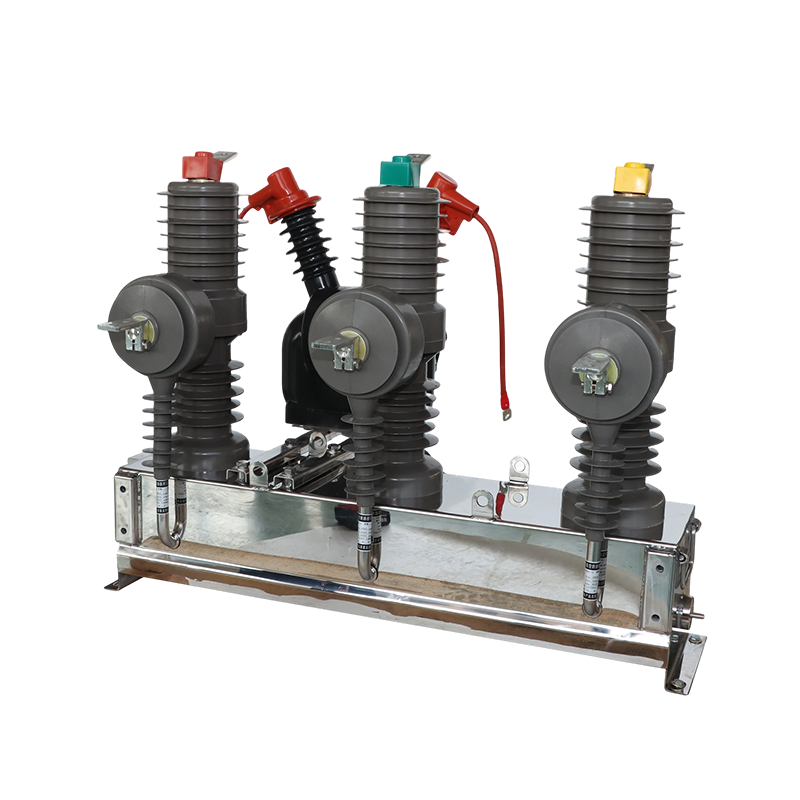
Vacuum circuit breakers have become the dominant technology for medium-voltage switching and protection in electrical distribution networks worldwide. Their rise from a niche laboratory concept in the 1920s to the standard solution for 6 kV to 36 kV applications today reflects a combination of superior arc-quenching performance, minimal maintenance requirements, and environmental advantages over the oil and gas alternatives they replaced. For electrical engineers, facility managers, and utility planners specifying switchgear for industrial plants, substations, and commercial buildings, understanding exactly how vacuum circuit breakers work — and why they outperform alternatives in their voltage class — is essential to making sound equipment decisions.
How Vacuum Circuit Breakers Extinguish Arcs
The operating principle of a vacuum circuit breaker centers on the exceptional dielectric strength of a high vacuum environment. Inside the breaker, each phase is protected by a sealed vacuum interrupter — a cylindrical envelope, typically made of ceramic or glass-to-metal construction, maintained at an internal pressure below 10⁻³ Pa. When the breaker opens under load or fault conditions, an arc is drawn between the two separating contacts within this vacuum chamber.
Unlike arcs in air or oil, which sustain themselves by ionizing the surrounding medium, a vacuum arc exists entirely in the metallic vapor evaporated from the contact surfaces themselves. This vapor — produced from the contact material, typically copper-chromium alloy — conducts current across the gap during the arcing period. When the alternating current passes through its natural zero crossing, the arc extinguishes because the metallic vapor rapidly condenses back onto the contact surfaces in the absence of any gaseous medium to sustain re-ignition. The recombination time in vacuum is measured in microseconds, far faster than in any gas or liquid dielectric, allowing the breaker to interrupt fault currents at the first or second current zero after the contacts separate. This speed is what gives vacuum circuit breakers their exceptional short-circuit interrupting performance relative to their compact physical size.
Construction of the Vacuum Interrupter
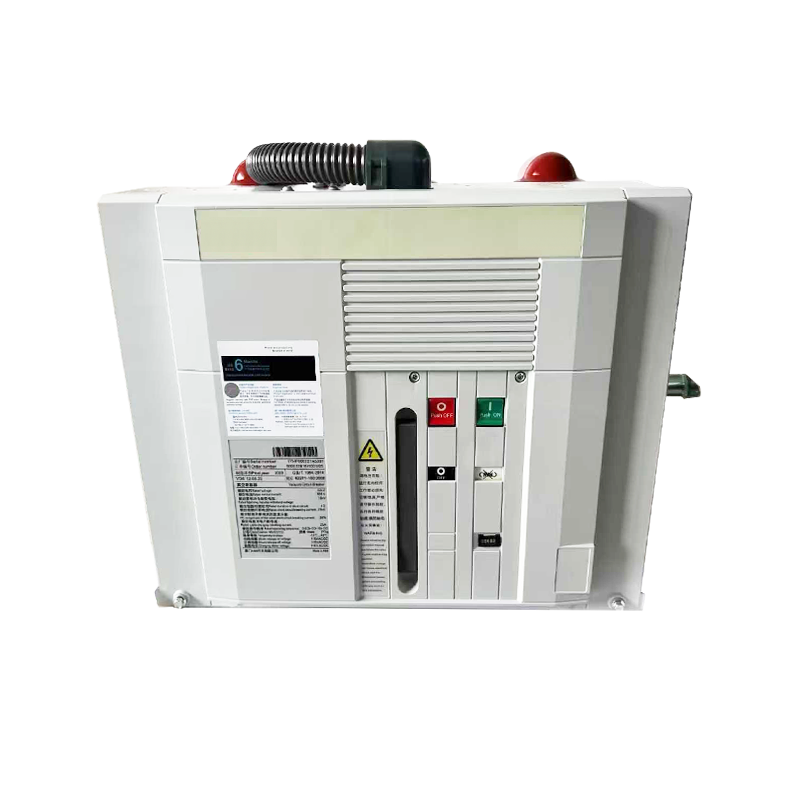
The vacuum interrupter is the most technically refined component in the breaker assembly. Its construction must maintain an ultra-high vacuum seal for the entire 20 to 30 year service life of the equipment without any maintenance access to the sealed chamber. The envelope uses a combination of ceramics and metal end caps joined by brazing in controlled-atmosphere furnaces at temperatures exceeding 800°C, creating hermetic seals capable of withstanding the mechanical stresses of repeated contact operation and the thermal cycling of fault current interruption events.
The contact geometry inside the interrupter is engineered to manage arc behavior during interruption. Two main contact designs are used in practice: the axial magnetic field (AMF) contact and the radial magnetic field (RMF) contact. AMF contacts use a coil geometry behind the contact face to generate a magnetic field parallel to the arc column, which distributes the arc diffusely across the contact surface, preventing concentrated erosion at any single point and maximizing contact service life. RMF contacts use a spiral slot geometry that creates a transverse field, causing the arc to rotate rapidly around the contact circumference — also distributing thermal loading and extending contact life. Both designs allow the same interrupter to interrupt rated short-circuit currents many hundreds of times over its service life before contact erosion reaches the replacement threshold.
Key Technical Parameters and Ratings
Vacuum circuit breakers are specified against a set of standardized parameters defined in IEC 62271-100 and ANSI/IEEE C37 standards. Understanding these parameters is necessary for correct application and procurement. The table below summarizes the principal ratings:
| Parameter | Typical Range (MV) | What It Defines |
| Rated Voltage (Ur) | 6 kV – 36 kV | Maximum system voltage the breaker is designed for |
| Rated Normal Current (Ir) | 630 A – 4000 A | Continuous current capacity without overheating |
| Rated Short-Circuit Breaking Current (Isc) | 16 kA – 63 kA | Maximum fault current the breaker can interrupt |
| Rated Short-Time Withstand Current (Icw) | 16 kA – 63 kA / 1–3 s | Fault current the closed breaker can carry for a defined time |
| Rated Making Current (Ima) | 2.5 × Isc (peak) | Peak current the breaker can close onto without damage |
| Operating Cycle (Duty) | O – 0.3 s – CO – 3 min – CO | Standard sequence for fault clearing and auto-reclosure |
| Mechanical Endurance Class | M1 (10,000) / M2 (30,000 ops) | Number of mechanical operations without major maintenance |
The mechanical endurance classification is particularly significant for applications involving frequent switching operations, such as motor feeders, capacitor bank switching, or arc furnace duty. Class M2 breakers rated for 30,000 mechanical operations are specified in these high-cycle applications, while Class M1 breakers are adequate for standard distribution and protection duties where the breaker operates only a few times per year in normal service.
Advantages Over Oil and SF₆ Circuit Breakers
The transition from bulk oil circuit breakers and minimum oil circuit breakers to vacuum technology in medium-voltage applications was driven by a clear set of operational and environmental advantages. Oil breakers carry inherent fire and explosion risk from the flammable dielectric medium, require periodic oil sampling and replacement, and generate carbon deposits and sludge inside the interrupting chamber that require regular cleaning. Vacuum breakers eliminate these concerns entirely — the sealed interrupter contains no flammable or toxic material, and the contacts inside never require access or cleaning throughout the breaker's service life.
SF₆ (sulfur hexafluoride) gas circuit breakers offer excellent performance at high voltage levels and in switchgear requiring very compact interrupting geometry, but SF₆ is a potent greenhouse gas with a global warming potential approximately 23,500 times that of CO₂ over a 100-year horizon. Regulatory pressure on SF₆ emissions has intensified significantly in the European Union and other jurisdictions, with phasedown schedules mandating reduced use by the late 2020s. At medium voltage levels where vacuum technology performs equally well, the environmental advantage of the vacuum interrupter — which contains zero greenhouse gases — is now a decisive factor in switchgear specification for new installations and replacement projects.
Typical Applications in Power Distribution Networks
Vacuum circuit breakers are applied across the full range of medium-voltage distribution equipment in both utility and industrial contexts. Their versatility reflects the broad operating range covered by their voltage and current ratings:
- Primary distribution substations: Vacuum circuit breakers serve as the incoming feeder breakers and bus section breakers in 11 kV, 22 kV, and 33 kV substations, providing protection and isolation for transformer feeders and outgoing distribution circuits.
- Industrial plant MV switchgear: In petrochemical, mining, cement, steel, and paper plants, vacuum circuit breakers protect high-voltage motor feeders, transformer primaries, and bus ties in 6 kV, 10 kV, and 11 kV switchboards.
- Motor starting and switching: For large motors above 1 MW, vacuum breakers provide the switching device for direct-on-line or soft-start configurations, handling the high inrush currents at start and the repetitive switching cycles over the motor's operating life.
- Capacitor bank switching: Reactive power compensation banks use vacuum circuit breakers for switching duty, taking advantage of the technology's ability to handle the high transient inrush currents and repetitive switching cycles that capacitor energization involves.
- Renewable energy collector substations: Wind farm and solar park collector substations use vacuum circuit breakers in the 11 kV to 33 kV feeders connecting turbine transformers and inverter transformers to the main collector bus.
Maintenance Requirements and Condition Monitoring
One of the most operationally significant advantages of vacuum circuit breakers is their minimal maintenance requirement compared to earlier technologies. The sealed vacuum interrupter needs no maintenance throughout its service life — there is no dielectric fluid to test, no gas pressure to monitor, and no carbon deposits to clean from the interrupting chamber. Routine maintenance focuses on the mechanical drive mechanism: checking spring energy storage systems, lubricating the operating linkage per manufacturer schedules, verifying contact pressure through indirect measurements, and testing the operating times of the close and open coils.
The one vacuum-specific maintenance parameter is contact erosion within the sealed interrupter. Each fault interruption event erodes a small amount of material from the contact surfaces, and after a defined number of short-circuit interruptions — specified by the manufacturer as the electrical endurance rating, typically expressed as a number of operations at rated short-circuit current — the contact gap may have increased beyond the design limit. Manufacturers provide contact wear indicators on the interrupter assembly that allow maintenance personnel to verify remaining contact life without opening the sealed chamber. When the indicator reaches the replacement threshold, the interrupter is exchanged as a complete sealed unit rather than being repaired.
Selection Criteria for Specifying Vacuum Circuit Breakers
Specifying the correct vacuum circuit breaker for a given application requires confirming that the rated parameters exceed the system requirements with appropriate margin, and that the mechanical and electrical endurance classes match the expected operating duty. The following checklist covers the core selection variables:
- System voltage: Select a breaker with rated voltage at or above the maximum system voltage, including any voltage rise conditions. Do not derate a higher-voltage breaker as a cost measure without confirming insulation coordination implications.
- Maximum fault current: The rated short-circuit breaking current must exceed the maximum prospective fault current at the installation point, calculated from the upstream source impedance and transformer ratings. Coordination with upstream protection devices must also be verified.
- Continuous current: The rated normal current must exceed the maximum load current expected in normal and emergency operating conditions, including any planned future load growth.
- Operating duty: For motor feeder, capacitor switching, or arc furnace applications, confirm the breaker's rated electrical endurance for the specific current and power factor of the load, and select Class M2 mechanical endurance if operating frequency exceeds standard distribution duty.
- Standards compliance: Verify that the breaker is type-tested to IEC 62271-100 or the applicable ANSI/IEEE standard for the market, with test certificates available for review during procurement qualification.
Vacuum circuit breakers represent one of the most mature and well-validated technologies in medium-voltage power engineering. Their combination of fast, reliable arc interruption, environmental cleanliness, low maintenance burden, and proven longevity in field service makes them the default specification for the vast majority of new medium-voltage switchgear installations globally — a position they are likely to consolidate further as regulatory pressure on SF₆-based alternatives intensifies over the coming decade.