 English
 Français
 Español
 عربى
عربىIndustry News
Home / News / Industry News / DC Miniature Circuit Breaker Guide: Working Principle, Types, and Selection


Content
Picture a rooftop photovoltaic array feeding a battery storage system. A faulty connection inside a combiner box starts to overheat, and the direct current keeps flowing with no safe way to stop it. A DC miniature circuit breaker (DC MCB) is the component that interrupts that current automatically, protecting both equipment and people. In direct-current systems, this is not a trivial task: unlike alternating current, DC has no natural current zero, so the arc inside the breaker must be forced to extinguish.
The answer is a dedicated device designed for DC characteristics, not an AC breaker used as a substitute. DC MCBs use magnetic blow-out coils, arc splitter plates, and special contact materials to safely break DC circuits. This article explains how they work, where they are used, and what you need to check before buying one.
A DC miniature circuit breaker is a compact protective device that automatically opens a direct-current circuit when it detects an overload or short circuit. It is similar in size and mounting to an AC MCB — most snap onto standard DIN rails — but its internal construction is adapted for DC arcs.
These breakers are widely available with rated voltages of 125V, 250V, 500V, 750V, and even 1000V DC. They protect wiring, switchgear, and loads from thermal damage and prevent arc faults from spreading. Some versions provide visible isolation for maintenance, which is especially useful on PV strings and battery banks.
In an AC circuit, the current changes direction 50 or 60 times per second. Each time the current passes through zero, the arc momentarily loses energy and can be extinguished by the breaker's contacts. In a DC circuit, the current is constant. There is no intrinsic zero crossing, so the arc continues to burn as the contacts separate.
To break a DC current, the breaker must increase the arc voltage above the system voltage. It does this by stretching the arc, cooling it, and splitting it into small arcs with metal plates. Many DC MCBs use permanent magnets or magnetic blow-out coils to push the arc into the arc chute. This is why a DC-rated breaker has a much more robust arc chamber than an AC MCB of the same frame size.
| Characteristic | AC MCB | DC MCB |
|---|---|---|
| Current zero crossing | Yes, every half cycle | No |
| Arc extinction method | Natural decay near zero | Forced cooling, stretching, splitting |
| Poles needed for typical voltages | 1P: 230V AC; 2P: 400V AC | 1P: 125V DC; 2P: 250V DC; 3P: 500V DC; 4P: 750V to 1000V DC |
| Typical rated voltages | 230V AC, 400V AC | 125V, 250V, 500V, 750V, 1000V DC |
| Applications | Residential and commercial AC distribution | Solar PV, battery, DC switchboards, telecom |
Because of these differences, you cannot simply replace an AC MCB with a DC MCB in the same circuit, nor use an AC MCB for a DC circuit unless it is explicitly rated for DC use. The nameplate markings always indicate the DC voltage and current ratings.
DC MCBs are found wherever direct current must be distributed safely. The most common installations include:
Each application has different voltage and current demands. Solar panels operate at high DC voltages, often above 500V, while telecom equipment uses 24V or 48V. A breaker designed for 48V DC has a much shorter arc and can be smaller, but it must still be chosen carefully.
Choosing the right DC MCB is a matter of matching the breaker to the system's electrical parameters. A mistake may lead to nuisance tripping or, worse, failure to clear a fault.
DC breakers use multiple poles in series to increase the total voltage rating. A single pole may be rated at 125V DC; two poles in series can break 250V DC. This series connection helps divide the arc voltage across multiple contact gaps.
| Poles | Maximum DC Voltage (typical) | Common Use |
|---|---|---|
| 1P | 125V DC | Control circuits, small loads |
| 2P | 250V DC | PV strings, small battery banks |
| 3P | 500V DC | DC distribution boards |
| 4P | 750V to 1000V DC | Large PV arrays, DC switchgear |
Always confirm the actual rated voltage printed on the breaker. The maximum voltage can also depend on the brand and the internal arc suppression design.
The rated current (In) should match the maximum continuous load current. For solar strings, the continuous current is typically 1.25 times the module's short-circuit current, per standard practice. Trip curves (B, C, D) determine how quickly the breaker trips on overload. For inductive loads, a higher curve is sometimes needed to avoid nuisance trips during start-up.
Breaking capacity is the maximum short-circuit current the breaker can interrupt without damage. For DC applications, this is expressed in kiloamperes (kA) at a specific DC voltage. A PV string under fault can deliver high fault currents, especially if multiple strings are paralleled. Choose a breaker with a breaking capacity higher than the calculated fault current at the point of installation.
DC MCBs are often installed outdoors or in unheated enclosures. Check the rated ambient temperature range and derate the current rating if the temperature exceeds the reference value (usually 30°C). Similarly, altitude affects heat dissipation and arc quenching; above 2000 meters, a derating is often required.
For any DC miniature circuit breaker, look for certification marks that explicitly cover DC operation. Common references include IEC 60947-2 for low-voltage switchgear and controlgear, and UL 489B for photovoltaic DC circuit breakers. A breaker without a DC rating on its nameplate should not be used in a DC circuit, even if it looks mechanically compatible.
Install the breaker on a DIN rail and tighten the terminals to the torque specified by the manufacturer. Keep the arc chute clean; dust and moisture can reduce its insulating properties. Periodically test the breaker by manually operating it once a year, and check for signs of overheating, such as discolored terminals or a burnt smell. In a PV system, a tripped DC MCB may need to be investigated carefully, because high DC voltages can be present even after the breaker is open unless an isolator is also used.
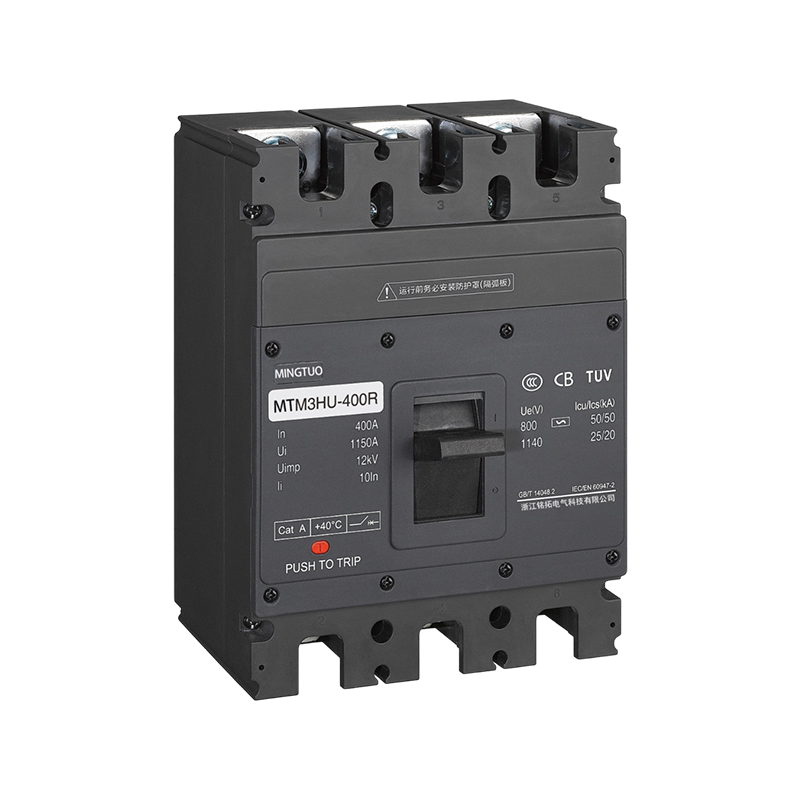
Selecting a DC miniature circuit breaker is not just about reading a catalog number. The device must match the voltage, current, breaking capacity, and ambient conditions of your DC system. When the DC current exceeds the practical range of an MCB — for example, a large combined solar array with 630A of DC current — a different class of protection is required. A dedicated PV DC MCCB rated at 1000V/630A offers that higher thermal capacity while still providing the same overload and short-circuit protection. Always verify the specifications against an authorized datasheet before finalizing your design.
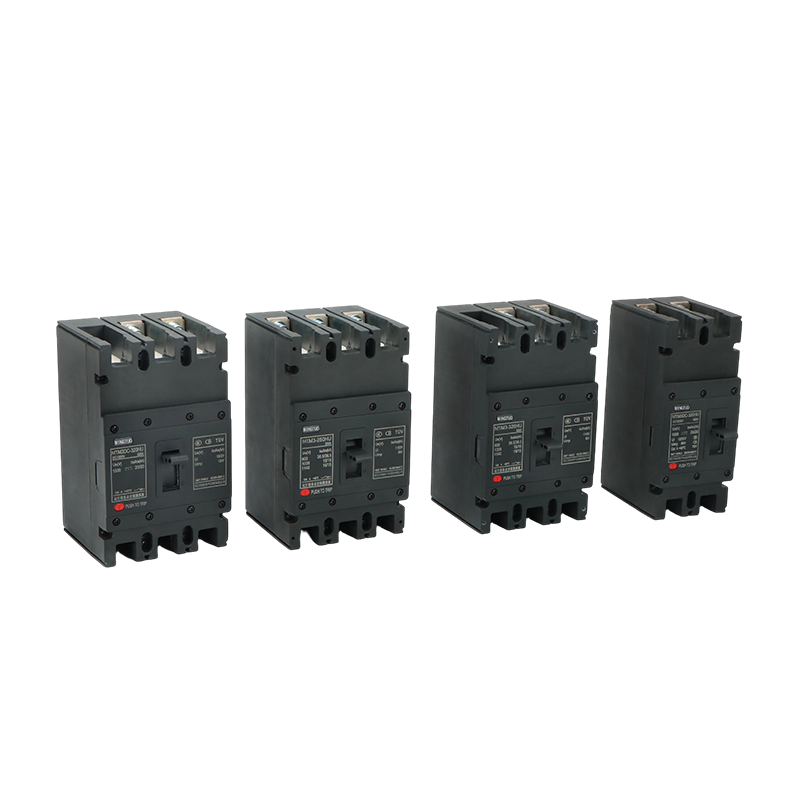 Solar PV DC MCCB Suppliers, DC MCCB in Solar Photovoltaic SystemsMingtuo-DC Molded Case Circuit Breakers Suppliers and Solar PV DC MCCB Factory in China, offer Wholesale PV DC MCCB 1000V 630A Solar Circ...View Product →
Zhejiang Mingtuo Electrical Technology Co., Ltd. All Rights Reserved.
Electrical Protection Circuit Breakers Medium Voltage Circuit Breakers Manufacturers Low Voltage Circuit Breakers Factory
