 English
 Français
 Español
 عربى
عربىDescription: Air circuit breakers (ACBs) are high-performance low-voltage circuit breaker...


NT & NW Air Circuit Breakers Suppliers
-
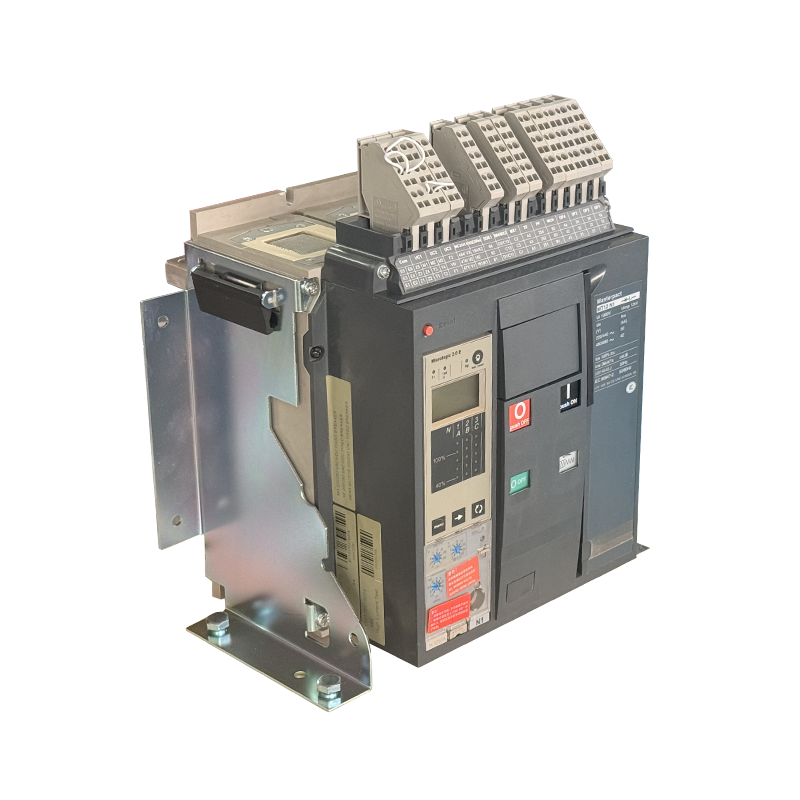 High-Performance Air Circuit Breaker 1600A–6300A, Fixed and Drawout Type
 -
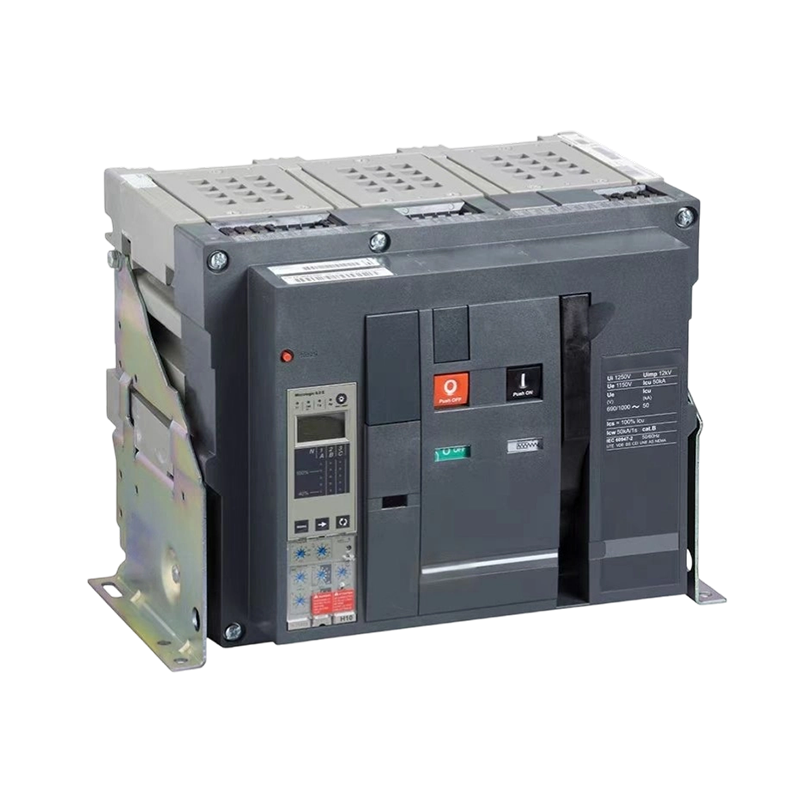 Advanced Air Circuit Breaker 1600A–6300A for Fixed and Drawout Installations
Description: Air circuit breakers (ACBs) are high-performance low-voltage circuit breaker...
NT & NW Air Circuit Breakers integrate intelligent protection with Micrologic units, offering real-time monitoring, fault recording, and remote control. Modular and highly reliable, they provide overload, short-circuit, and ground fault protection. Compatible with Modbus/Ethernet communication modules and auxiliary units, they suit data centers, factories, and large buildings, delivering digital management, energy efficiency, and high safety standards.
Message Feedback
About Us
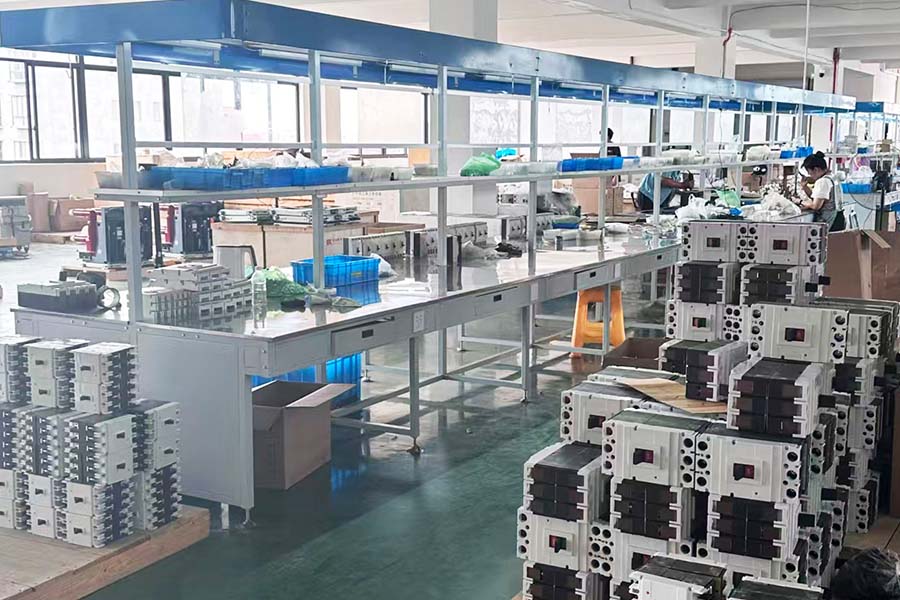
Zhejiang Mingtuo Electrical Technology Co., Ltd.
Zhejiang Mingtuo Electrical Technology Co., Ltd. is a technology-driven enterprise specializing in the research, development, and manufacturing of low-voltage and medium-voltage circuit breakers. Leveraging Liushi's comprehensive electrical industry chain and local advantages, we provide reliable and safe electrical protection products along with customized solutions for global industrial, commercial, and residential power distribution systems.
NT & NW Air Circuit Breakers Suppliers and NT & NW Air Circuit Breakers Company in China. Our products are exported to over 30 countries worldwide, including Europe, the Middle East, Southeast Asia, and Africa. Our diverse clientele encompasses power distribution cabinet manufacturers, engineering contractors/EPC firms, electrical distributors and agents, system integrators, and OEM customers. We provide our partners with a comprehensive one-stop service, spanning from technical support, solution alignment, and prototype development to mass production delivery. NT & NW Air Circuit Breakers Custom.
We are committed to becoming a trusted electrical protection partner for global customers through professional engineering capabilities, consistent manufacturing quality, and flexible customization services.
NT & NW Air Circuit Breakers Suppliers and NT & NW Air Circuit Breakers Company in China. Our products are exported to over 30 countries worldwide, including Europe, the Middle East, Southeast Asia, and Africa. Our diverse clientele encompasses power distribution cabinet manufacturers, engineering contractors/EPC firms, electrical distributors and agents, system integrators, and OEM customers. We provide our partners with a comprehensive one-stop service, spanning from technical support, solution alignment, and prototype development to mass production delivery. NT & NW Air Circuit Breakers Custom.
We are committed to becoming a trusted electrical protection partner for global customers through professional engineering capabilities, consistent manufacturing quality, and flexible customization services.
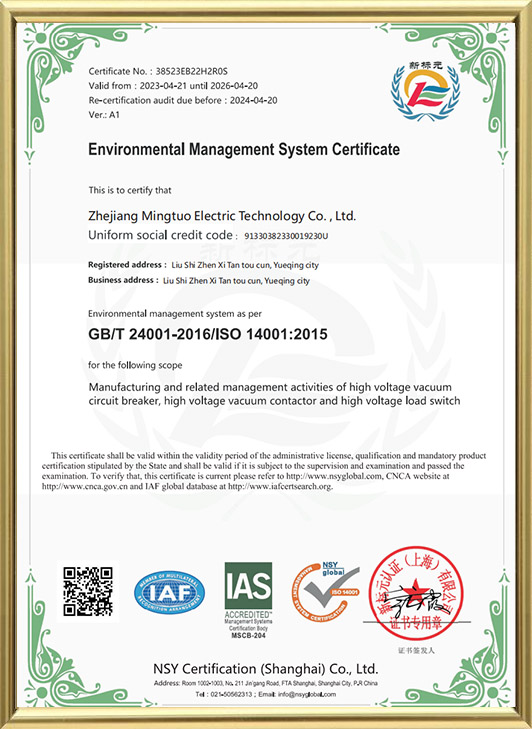
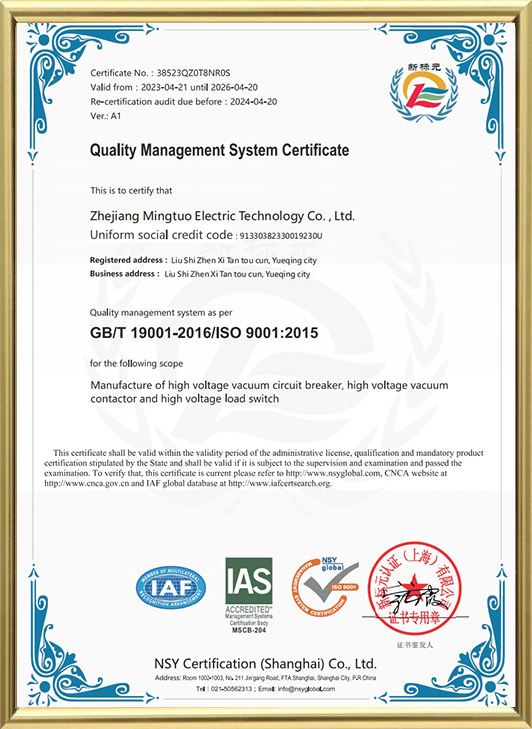
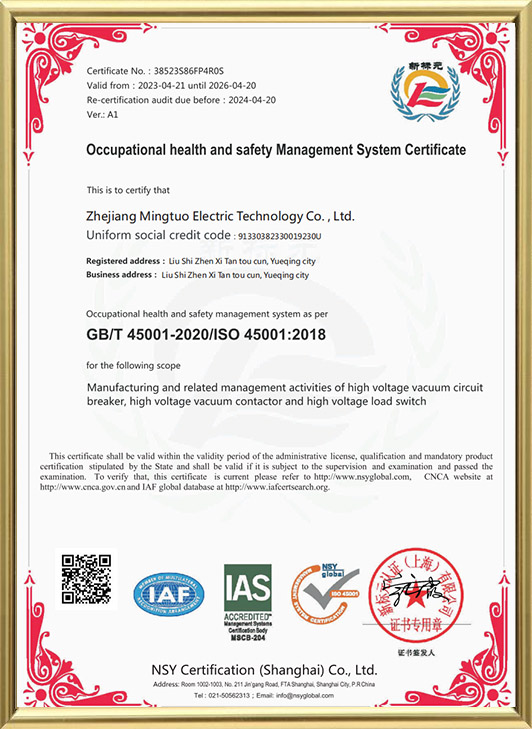
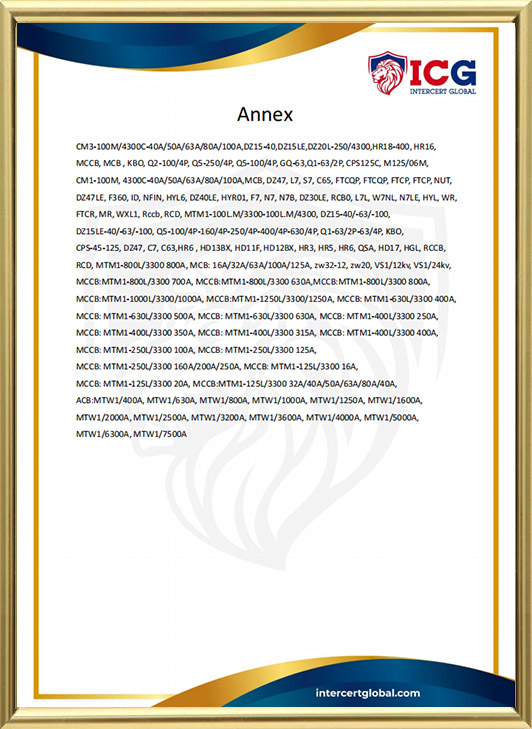
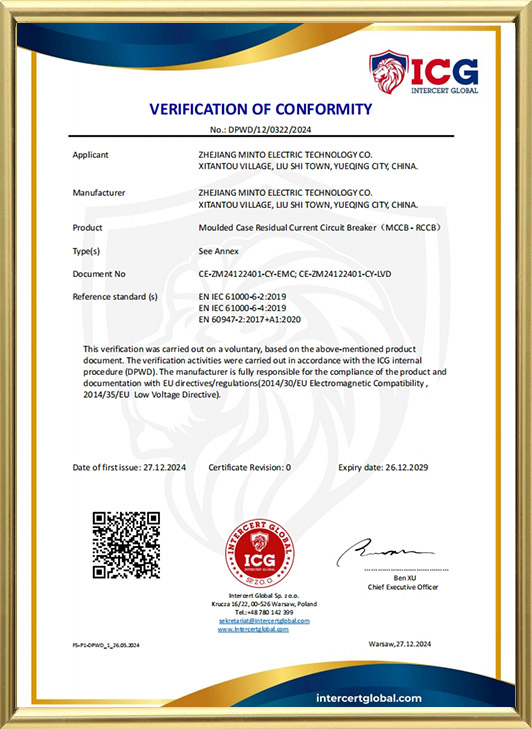
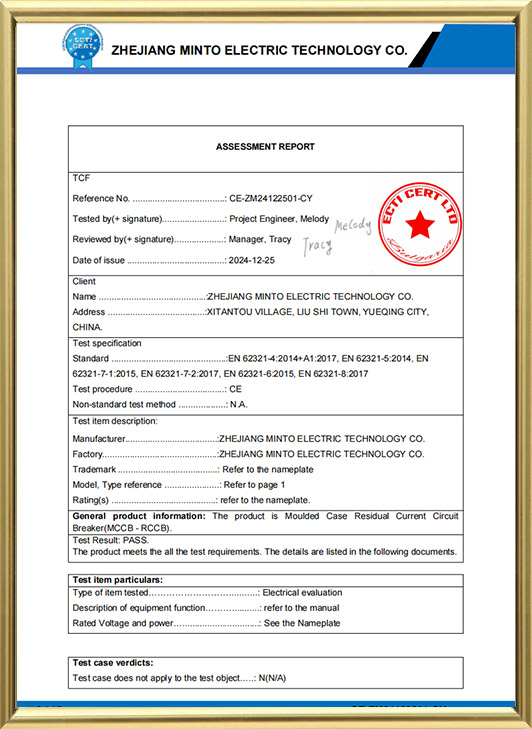
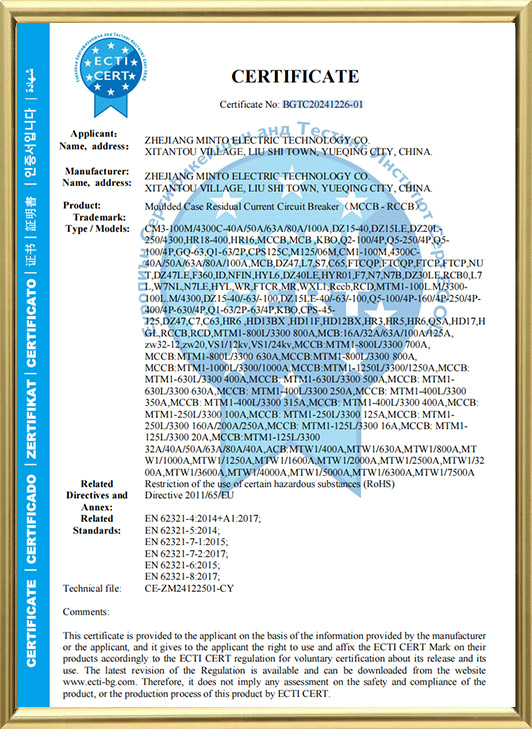
Certificate
News
-
What Is a Vacuum Circuit Breaker and How Does It Work? A vacuum circuit breaker (VCB) is a switching and protection device used primarily in medium voltage electrical distribution systems — typically in the range of 1kV to 38kV — that interrupts fault currents and isolates electrical circuits by ext...
Read More -
Amid the global cross-border e-commerce "New Trade Festival" in full swing this March, Mingtuo Electric has officially launched its "March Expo" promotional campaign. The event showcases the company's flagship product series, offering competitive professional electrical solutions and exclusive procu...
Read More -
What Circuit Breakers Do and Why Choosing the Right One Matters A circuit breaker is an automatic protective switching device that detects abnormal electrical conditions — overcurrent, short circuit, or earth fault — and interrupts current flow before equipment is damaged or personnel are endangere...
Read More
Industry knowledge
How Frame Size Selection Affects System Coordination in NT and NW Breakers
Frame size in NT and NW air circuit breakers is not merely a physical dimension — it directly governs the breaker's current-carrying capacity, the thermal rating of its internal components, and crucially, its ability to participate in selective coordination with upstream and downstream devices. NT breakers are available in frames ranging from 160 A to 630 A, while NW breakers extend this range significantly, covering 800 A up to 6300 A in high-capacity variants. Selecting an oversized frame purely for safety margin can actually undermine coordination: an NW1600 upstream paired with an NT250 downstream may fail selective tripping if the fault current falls within a zone where both devices respond simultaneously, creating unnecessary upstream disconnection.
Proper coordination requires reviewing the time-current characteristic curves (TCC) of both devices on the same log-log graph. The upstream breaker's curve must sit entirely to the right of and above the downstream breaker's curve throughout the overcurrent range. For NT and NW breakers equipped with electronic trip units, this analysis extends to the instantaneous (I) pickup setting — the upstream device's instantaneous threshold should exceed the downstream device's maximum prospective fault current to guarantee selectivity. At Zhejiang Mingtuo, we support our clients through this coordination analysis as part of our customized solution service, ensuring protection schemes are engineered rather than assumed.
Trip Unit Technology: Electronic vs. Thermomagnetic in NT/NW Applications
The trip unit is the intelligence layer of an air circuit breaker, and the choice between thermomagnetic and electronic trip units carries significant consequences for system performance. NT breakers in lower frame sizes are frequently offered with thermomagnetic trip units, which rely on bimetallic strips for thermal (overload) detection and electromagnetic coils for instantaneous short-circuit response. These are robust, require no auxiliary power, and are inherently fail-safe, but their adjustment range is narrow and their tripping characteristics are fixed by manufacturing tolerances rather than precise digital setpoints.
NW breakers, given their application in main distribution boards and bus-tie positions, almost universally employ fully electronic trip units (ETUs). A modern ETU on an NW breaker provides four independently adjustable protection functions:
- Long-time (Ir/Isd): Overload protection with adjustable current pickup and time delay, typically expressed as a multiple of rated current (0.4×In to 1.0×In) with time settings in seconds.
- Short-time (Isd/tsd): Delayed short-circuit protection allowing intentional time grading upstream. Critical for achieving full selectivity without relying solely on instantaneous response.
- Instantaneous (Ii): Non-delayed response for severe fault currents, often settable or defeatable for zones requiring full discrimination.
- Ground fault (Ig/tg): Earth leakage protection for detecting phase-to-ground faults below the short-circuit threshold, essential in solidly grounded systems.
Advanced ETUs on NW-class breakers also incorporate measurement and communication features — true RMS current measurement per phase, harmonic content display, energy metering, and fieldbus interfaces such as Modbus RTU or IEC 61850. These transform the breaker from a passive protection device into an active node in the power management system.
Understanding Breaking Capacity Ratings: Icu, Ics, and Icw Explained
Breaking capacity ratings for NT and NW air circuit breakers are frequently misread, yet they are fundamental to equipment safety certification under IEC 60947-2. Three distinct values appear on the nameplate, each with a different operational meaning:
| Rating | Full Name | Meaning | Post-Fault Condition |
| Icu | Ultimate breaking capacity | Maximum fault current the breaker can interrupt once | Breaker may not be reusable; requires inspection |
| Ics | Service breaking capacity | Fault current the breaker handles while remaining serviceable | Breaker resumes normal operation; expressed as % of Icu |
| Icw | Rated short-time withstand current | Current the breaker can carry (without tripping) for a defined duration (typically 1s) | Critical for achieving time-graded selectivity in NW applications |
For NW breakers deployed in main incomer positions, the Icw rating is particularly important. When a downstream breaker is expected to clear the fault first, the upstream NW breaker must withstand the full fault current for the duration of the downstream device's clearing time — without tripping or sustaining damage. A high Icw rating (e.g., 85 kA for 1 second) is what enables NW breakers to function effectively as bus protection with full back-up selectivity, rather than tripping indiscriminately on every downstream fault event.
Drawout vs. Fixed-Mounted Configurations: Maintenance and Operational Implications
NW air circuit breakers are commonly available in both fixed-mount and drawout (withdrawable) versions, and this choice has lasting implications for maintenance scheduling, system availability, and lifetime cost of ownership. A fixed-mounted NW breaker is bolted directly to the busbar system; any maintenance, testing, or replacement requires the entire distribution board section to be de-energized. In contrast, a drawout NW breaker sits in a cradle with a plug-in contact system that allows the breaker to be racked out — disconnecting it from both the line and load busbars — while the switchboard itself remains energized and the cradle remains live.
Drawout configurations support three defined positions that are central to safe switching operations:
- Connected position: Main contacts and auxiliary circuits fully engaged; breaker is operational.
- Test position: Main contacts disconnected from busbars, but auxiliary and control wiring remains connected. The breaker can be operated electrically for trip testing, relay function verification, and trip unit calibration without live power exposure.
- Disconnected position: Both main contacts and auxiliary circuits are fully isolated; the breaker can be physically removed from the switchboard for maintenance or replacement.
The test position is often underutilized but represents significant value in facilities with stringent uptime requirements — hospitals, data centers, and continuous process manufacturing environments. Routine testing in the test position allows maintenance teams to verify ETU function, auxiliary contact operation, and motor-charging mechanisms on a live board without a planned outage. Our NW series drawout designs are engineered with anti-misplug features and position interlocks to ensure that rack-in and rack-out operations cannot occur unless the breaker is in the open state, aligning with IEC 60947-2 safety requirements.
Arc Flash Hazard Reduction Strategies Using NW Breaker Zone-Selective Interlocking
Arc flash incident energy is directly proportional to the duration a fault is allowed to persist. In conventional time-graded protection schemes, an upstream NW breaker may be set with a 400 ms or longer short-time delay to maintain selectivity with downstream NT breakers. During those 400 ms, an arc flash event at a downstream busbar releases substantially more energy than if the fault had been cleared in under 100 ms — potentially pushing the incident energy level from Category 2 into Category 3 or 4 per NFPA 70E, which corresponds to PPE requirements of arc-rated face shields, heavy-duty arc flash suits, and significant worker risk.
Zone-selective interlocking (ZSI) resolves this conflict between selectivity and arc flash mitigation. In a ZSI scheme, downstream breakers send a restraint signal to the upstream breaker over dedicated hardwired connections. When a fault occurs, the downstream breaker immediately transmits this signal upward while simultaneously beginning its own tripping sequence. As long as the upstream NW breaker receives the restraint signal, it waits out its programmed short-time delay, confident the fault will be cleared downstream. If the downstream breaker fails to clear the fault, the restraint signal disappears, and the upstream NW breaker immediately trips without delay — eliminating the time grading interval and dramatically reducing arc flash energy.
The practical outcome: ZSI maintains full selective coordination under normal conditions while reducing clearing time at the upstream level to approximately 50–80 ms in the event of a downstream breaker failure. This single design feature can reduce arc flash incident energy at the upstream bus by a factor of five or more, enabling facilities to achieve lower PPE category ratings without sacrificing protection coordination.
Motorized Operators and Remote Switching: Practical Deployment Considerations
Both NT and NW air circuit breakers can be equipped with motorized operating mechanisms, enabling remote open/close commands via control wiring or fieldbus. While this sounds straightforward, several practical considerations determine whether a motorized operator performs reliably in service. First, spring-charged mechanisms require the charging motor to complete a full cycle before the breaker can be closed; typical recharging time ranges from 3 to 8 seconds depending on frame size and spring energy. Attempting a close command before recharging is complete will result in either a failed close or engagement of the spring release without sufficient stored energy, risking incomplete contact make.
Second, motorized NW breakers draw significant inrush current during the charging cycle — often 5–10 A peak at 24 VDC or 230 VAC depending on the motor specification. Control power supply sizing must account for simultaneous motor charging across multiple breakers in a switchboard, particularly in automatic transfer switching (ATS) applications where several NW breakers may receive close commands within the same control cycle. Undersized control supplies are a common field failure mode that results in misoperation during generator startup sequences.
Third, anti-pumping protection must be verified in any motorized configuration. Anti-pumping logic prevents a breaker from repeatedly closing onto a persistent fault — a condition that would occur if a remote close command remained asserted while the breaker tripped on fault. IEC 60947-2 mandates anti-pumping performance, and the mechanism must be confirmed functional during commissioning testing, not assumed from nameplate specification alone. As a manufacturer deeply committed to reliable electrical protection, Zhejiang Mingtuo designs its motorized mechanism accessories with integrated anti-pumping relays and close-inhibit feedback to support safe automated switching workflows.
Derating in High-Altitude and High-Temperature Environments
NT and NW air circuit breakers are rated at standard conditions defined by IEC 60947-2: ambient temperature of 40°C (open installation) or 35°C (enclosed installation), altitude up to 2000 m, and relative humidity not exceeding 50% at 40°C. Installations outside these conditions require derating to maintain safe, reliable operation. High altitude is often overlooked: above 2000 m, reduced air density diminishes the arc-quenching effectiveness of the arc chutes and reduces the dielectric strength of air gaps. IEC 60664-1 provides correction factors, with voltage withstand capability decreasing approximately 1.3% per 100 m above 2000 m. For NW breakers at 4000 m altitude — common in Andean or Tibetan industrial sites — this translates to a roughly 26% reduction in dielectric withstand, requiring either uprated insulation or voltage derating of the installation.
Thermal derating for elevated ambient temperature follows a different curve. The current-carrying capacity of NT and NW breakers decreases as ambient temperature rises above the rated 40°C, because the bimetallic trip elements and copper conductors have less thermal headroom before reaching their design temperature limits. As a general guideline, current capacity decreases approximately 1–1.5% per degree Celsius above 40°C for air circuit breakers without forced cooling. For a 2000 A NW breaker in an enclosure where ambient reaches 55°C, the effective rated current may drop to approximately 1700 A — a 15% reduction that must be factored into the switchboard's load schedule to prevent nuisance tripping or premature insulation degradation.
Bus Coupler Applications: NW Breakers in Double Busbar Configurations
In medium and large power distribution systems, double busbar configurations with a bus section coupler are a standard topology for maintaining supply continuity during maintenance or partial system faults. In this arrangement, two incoming NW breakers (one per busbar section) feed independent busbars, and a third NW breaker serves as the bus coupler (or bus tie) between them. Under normal operation, the bus coupler is open and each incomer feeds its own section independently. If one incomer fails or requires maintenance, the bus coupler closes to allow the remaining incomer to supply both sections.
This configuration introduces a critical protection challenge: when the bus coupler is closed and both busbars are energized from a single source, the fault level on the combined bus doubles compared to single-section operation. Protection settings for all three NW breakers must be reviewed under both normal (open coupler) and emergency (closed coupler) operating modes. Fixed instantaneous settings that were valid in split-bus mode may allow through-faults in combined mode, or conversely, settings appropriate for combined mode may be too sensitive for normal split-bus operation. Adaptive protection relays or dual-setting electronic trip units with remote-controlled parameter switching are the preferred solution for facilities where the bus coupler position changes regularly.
Automatic bus transfer (ABT) schemes further automate this topology, using voltage and frequency monitoring relays to detect incomer failure and automatically initiate the sequence: open failed incomer → confirm busbar is de-energized → close bus coupler. Transfer times below 200 ms are achievable with motorized NW breakers and a well-designed ABT controller, enabling near-seamless supply restoration for sensitive loads. We provide NW breaker packages pre-configured for ABT integration, with matched motorized operators, auxiliary contact wiring, and documented interlock logic to simplify system engineering on-site.
Zhejiang Mingtuo Electrical Technology Co., Ltd. All Rights Reserved.
NT & NW Air Circuit Breakers Suppliers Custom NT & NW Air Circuit Breakers Company
