English
 Français
 Español
 عربى
عربىIndustry News
Home / News / Industry News / What Should You Know Before Choosing a Metal Back Waterproof Socket Box for Outdoor or Industrial Use?


Content
A metal back waterproof socket box is an electrical enclosure that combines a metallic rear housing — typically fabricated from die-cast aluminium, galvanised steel, or stainless steel — with a sealed front face carrying one or more electrical socket outlets, designed to protect both the wiring connections and the user from moisture ingress, dust, mechanical impact, and in many cases corrosive atmospheric conditions. Unlike standard plastic surface-mount socket boxes intended for dry indoor use, these units incorporate compression gaskets, threaded cable entry glands, and captive lid closures that together achieve a defined ingress protection (IP) rating verified through standardised testing. The metal backbox provides a rigid, dimensionally stable mounting substrate that resists thermal deformation and physical distortion under the mechanical stresses of repeated plug insertion and withdrawal, making it the preferred enclosure format in outdoor, industrial, agricultural, and marine electrical installations worldwide.
The distinction between a metal back waterproof socket box and a fully plastic weatherproof socket enclosure is significant in demanding environments. Metal enclosures dissipate heat more effectively from the wiring compartment, resist UV degradation that causes plastic to embrittle and crack over years of sun exposure, provide inherent electromagnetic shielding for sensitive instrumentation circuits, and offer a substantially lower risk of enclosure deformation under fire exposure before the protection circuits have time to respond. For these reasons, electrical installation standards in many countries mandate metal enclosures for socket outlets in specific hazardous, outdoor, or high-risk locations.
The ingress protection rating — defined by IEC standard 60529 and expressed as an IP code followed by two digits — is the single most important specification to verify when selecting a metal back waterproof socket box. The first digit rates protection against solid particle ingress on a scale of 0 to 6, and the second digit rates protection against water ingress on a scale of 0 to 9. For outdoor and waterproof applications, understanding which IP rating is genuinely required for the installation environment prevents both under-specification (leading to premature failure) and over-specification (leading to unnecessary cost).
| IP Rating | Solid Protection | Water Protection | Typical Application |
| IP44 | Objects >1mm | Splashing from any direction | Covered outdoor areas, carports |
| IP55 | Dust limited ingress | Water jets from any direction | Exposed outdoor walls, garden areas |
| IP65 | Fully dust-tight | Water jets from any direction | Industrial yards, agricultural buildings |
| IP66 | Fully dust-tight | Powerful water jets | Food processing, wash-down areas |
| IP67 | Fully dust-tight | Temporary immersion up to 1m | Below-deck marine, flood-risk zones |
| IP68 | Fully dust-tight | Continuous immersion (depth specified) | Underwater lighting, submerged installations |
For most standard outdoor socket installations on building exteriors, garden walls, or agricultural outbuildings, IP65 is the widely accepted minimum specification. It ensures the box remains fully dust-tight and resists the water jets that might result from pressure washing nearby surfaces or driving rain at high wind speeds. IP66 adds resistance to more powerful direct water jets and is the appropriate minimum for food processing or livestock wash-down environments. IP67 and IP68 ratings are reserved for genuinely submersion-risk locations and are significantly more demanding — and expensive — to achieve in a socket outlet enclosure because the socket face itself must maintain its seal integrity with a plug partially or fully inserted.
The choice of metal for the backbox body determines the enclosure's corrosion resistance, weight, impact strength, and long-term maintenance requirements. Each material has environments where it performs best and conditions where it deteriorates prematurely if specified incorrectly.
Die-cast aluminium is the most widely used material for metal back waterproof socket boxes in general industrial and outdoor applications. It offers an excellent strength-to-weight ratio, good thermal conductivity, and inherent corrosion resistance through the natural formation of an aluminium oxide surface layer. Most die-cast aluminium socket boxes are supplied with a polyester powder coat finish in grey or black that provides additional corrosion protection and a UV-stable surface. In mild to moderate corrosive environments — coastal areas with moderate salt spray, agricultural buildings with ammonia exposure from livestock, or general outdoor installations — powder-coated die-cast aluminium provides reliable service life measured in decades without significant degradation. In severe marine environments with constant salt spray or in chemical processing facilities with aggressive acid or solvent vapours, aluminium can undergo pitting corrosion beneath damaged coating areas, and a more resistant material should be specified.
Hot-dip galvanised steel backboxes provide very high mechanical impact resistance and are commonly used in industrial installations where physical damage from vehicles, machinery, or equipment is a realistic risk. The zinc coating provides cathodic protection to the steel substrate, meaning that even if the surface is scratched or mechanically damaged, the surrounding zinc sacrificially corrodes to protect the steel beneath. Galvanised steel is heavier than aluminium and requires more careful installation — particularly when drilling fixing holes — to avoid creating ungalvanised cut edges that can become corrosion initiation points. In permanently wet or immersed conditions, galvanised steel is inferior to stainless steel and should not be specified for applications where standing water will contact the box surface.
Stainless steel socket boxes represent the highest-cost but most corrosion-resistant metal enclosure option. Grade 304 stainless steel resists general atmospheric corrosion, fresh water, food acids, and mild chemicals, making it appropriate for food preparation areas, breweries, and pharmaceutical facilities. Grade 316 stainless steel adds molybdenum to its composition, providing significantly enhanced resistance to chloride-induced pitting corrosion — the failure mode that most commonly affects outdoor stainless steel in coastal or marine environments. For seafront installations, boat pontoons, offshore platforms, or swimming pool electrical installations, grade 316 stainless steel is the correct specification. Both grades are easily cleaned and maintain their aesthetic appearance in high-visibility installations where the visual impact of the electrical infrastructure matters alongside its technical performance.
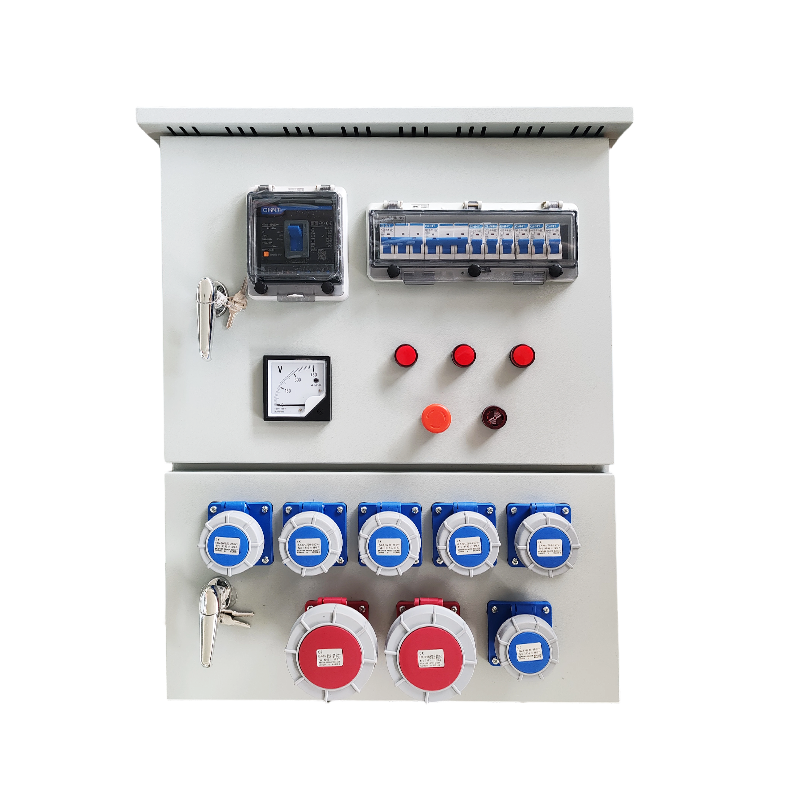
Metal back waterproof socket boxes are available with a wide variety of socket outlet types, gang configurations, and additional functional features that must be matched to the electrical requirements and user expectations of the installation.
Even a correctly specified metal back waterproof socket box will fail prematurely or present safety hazards if installed incorrectly. The installation process must address mounting surface preparation, cable entry sealing, internal wiring practice, and final commissioning verification to ensure the IP rating of the enclosure is achieved in the finished installation — not just on the factory-tested sample.
Cable entry is the most common point of IP rating failure in waterproof socket box installations. The backbox is supplied with either pre-punched knockouts or threaded entry ports that accept compression cable glands. The gland must be selected to match the outer diameter of the cable sheath precisely — a gland rated for 10–14mm cable diameter will not seal reliably around an 8mm cable, allowing water to track along the cable and enter the enclosure. Metallic cable glands with integrated earth continuity clamps are required when the wiring regulation demands that cable armour or screen is earthed at the enclosure entry point. All unused cable entry ports must be sealed with IP-rated blanking plugs rated to the same ingress protection level as the enclosure itself; leaving an unsealed knockout or entry port immediately invalidates the IP rating of the installation regardless of the box's certified rating.
The compression gasket between the socket face plate and the metal backbox body is the primary water exclusion barrier at the front of the enclosure. Before closing the assembly, inspect the gasket for tears, missing sections, or displacement from its groove — any defect at this interface will create a water ingress path that bypasses the IP testing basis of the product. Lid or face plate fixing screws should be tightened to the torque specified by the manufacturer: under-tightening leaves the gasket incompletely compressed and creates gaps; over-tightening can deform the gasket permanently, reducing its sealing effectiveness over subsequent opening and closing cycles during maintenance.
Wall-mounted metal back socket boxes should be positioned so that the cable entry ports face downward where possible, preventing water from pooling at the entry point and reducing the pressure head of any water that does contact the gland seals. In applications where downward-facing entry is not practical — such as conduit-fed surface installations where conduit enters from below — additional attention must be paid to ensuring the conduit seal is watertight and that any water entering the conduit system cannot siphon into the box body. On horizontal surfaces such as floor boxes or deck-mounted marine installations, the enclosure must be specifically rated and designed for horizontal mounting, with seals and closures designed to resist standing water rather than simply splashing or directed jets.
Metal back waterproof socket boxes installed in wired electrical installations must comply with the applicable national wiring regulations and carry the product certifications required by those regulations. In the United Kingdom, socket outlets and enclosures for fixed wiring must comply with BS EN 60670 for boxes and BS EN 60884 for socket outlets, and the installation must comply with BS 7671 (IET Wiring Regulations). In the European Union, the Low Voltage Directive and CE marking apply. In North America, UL and CSA certification is required for listed equipment. Australian and New Zealand installations require SAA approval to AS/NZS standards.
Beyond the minimum regulatory certifications, quality metal back waterproof socket boxes will carry independent third-party testing marks from BEAB, INTERTEK, TÜV, or equivalent bodies that confirm the IP rating has been independently verified rather than self-declared. When reviewing product specifications for procurement, confirming that the IP rating is certified to IEC 60529 by an accredited laboratory — rather than simply stated on the packaging without test evidence — is the most reliable way to ensure that the product will perform as required in service. In safety-critical or high-value installations, requesting the test certificate and confirming the testing laboratory's accreditation status before specifying a product is a straightforward due diligence step that protects both the installer and the end user from the consequences of IP rating misrepresentation.
Zhejiang Mingtuo Electrical Technology Co., Ltd. All Rights Reserved.
Electrical Protection Circuit Breakers Medium Voltage Circuit Breakers Manufacturers Low Voltage Circuit Breakers Factory